The Emperor Has No Clothes
BluebeardThe Emperor Has No Clothes is a phrase Dan Gregory teaches Rabo Karabekian at their first meeting, turning the familiar fable of exposed pretension into a test of obedience and a slogan against modern art. Gregory’s use of it is pointedly ironic: he asks Rabo to denounce false appearances, then supplies the judgment Rabo is expected to repeat rather than form for himself.
Introduction and Lesson
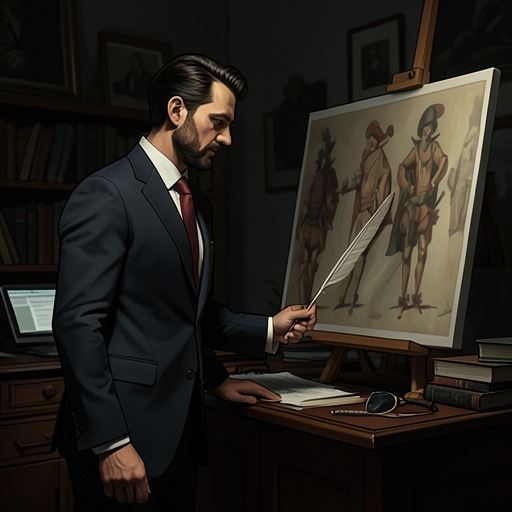
Gregory introduces the sentence after ordering Rabo to paint a super-realistic picture of his studio. He calls it very important and tells Rabo to learn it by heart. The instruction makes the phrase more than a passing reference: it becomes part of Gregory’s early effort to shape his apprentice’s artistic convictions.
Gregory first has Rabo say the sentence several times. Rabo repeats it aloud, and Gregory applauds, praising the performance as fine, topping, and first rate. The episode casts the phrase as a recitation to be judged, not an idea to be examined. Rabo, uncertain how to respond and feeling like Alice in Wonderland, accepts the praise without understanding the oddness of the lesson.
A Slogan Against Modern Art
Gregory specifies when the phrase is to be used: whenever anyone says anything good about so-called modern art, Rabo should say the sentence aloud with the same degree of conviction. Gregory then gives the maxim its intended application, calling modern artists swindlers, lunatics, and degenerates, and treating the public’s growing interest in their work as proof that the world has gone mad.
Rabo answers that he agrees, adding that Gregory’s view sounds right to him. His assent shows how the lesson works in the moment: the authority of the teacher and the staged approval of the recitation supply a ready-made opinion. The phrase ostensibly encourages people to name what others refuse to see; in Gregory’s hands, it trains Rabo to echo a fixed verdict.
Irony and Narrative Significance
The expression’s central irony emerges from the contrast between its plain-speaking moral and Gregory’s method. A line associated with exposing a collective delusion becomes an instrument for enforcing Gregory’s own aesthetic orthodoxy. Rabo is taught to perform conviction before he has developed an independent basis for it, so the scene links the phrase to apprenticeship as both instruction and indoctrination.
Gregory’s next appeal extends that pressure beyond art criticism: he says Mussolini shares his view and asks whether Rabo admires Mussolini as much as he does. The reference reveals the wider ideological company in which Gregory places his condemnation of modern art. The phrase therefore marks an early moment when Rabo’s artistic judgment is being formed through loyalty and repetition, rather than through the independent scrutiny its apparent lesson celebrates.