Survivor’s Syndrome
BluebeardSurvivor’s Syndrome is Circe Berman’s name for the shame and moral dislocation that may follow survival when a person’s relatives and community have been killed. In conversations with Rabo Karabekian, it gives language to his father’s presumed distress, unsettles Rabo’s account of his own wartime survival, and becomes the subject of Circe’s novel The Underground, where the consequences pass from survivors to their children.
Meaning and Family History
Circe proposes that Rabo’s father suffered from Survivor’s Syndrome because he was ashamed not to be dead along with his friends and relatives. Rabo adds a sharper, personal interpretation: he believes his father was ashamed that Rabo had survived too. Circe calls the feeling a noble emotion gone wrong, framing it as grief and loyalty distorted by the fact of remaining alive rather than as simple weakness or selfishness.
Rabo resists this interpretation even as it makes him remember a father he describes as very upsetting. When Circe urges him to forgive, he says that he has done so many times already, and jokes that this time he will get a receipt. The joke makes forgiveness sound like a completed transaction, but the repeated need to perform it suggests that the past has not become settled for him.
Rabo disputes which parent was more entitled to the syndrome. He argues that his mother had the stronger claim because she was caught in the middle of the killings, pretending to be dead beneath other people, amid screams and blood. He remembers her looking at an old woman’s body and at the jewels lying in and below the woman’s open mouth. Rabo connects those jewels to his family’s later life in the United States: without them, he says, he would not have become an American citizen. His account therefore places survival beside inheritance, and turns a catastrophe witnessed by his mother into part of the material history of his own life.
Rabo’s Resistance and Circe’s Test
The subject returns when Circe reads the lines Rabo has typed about Armenians’ achievements in the United States and again says that his father obviously suffered from Survivor’s Syndrome. Rabo rejects the idea as too broad: everyone alive is a survivor, he argues, and he is sick of people proudly calling themselves survivors. His outburst shows that the label troubles him not only as an account of his father but as a public language that can flatten very different experiences.
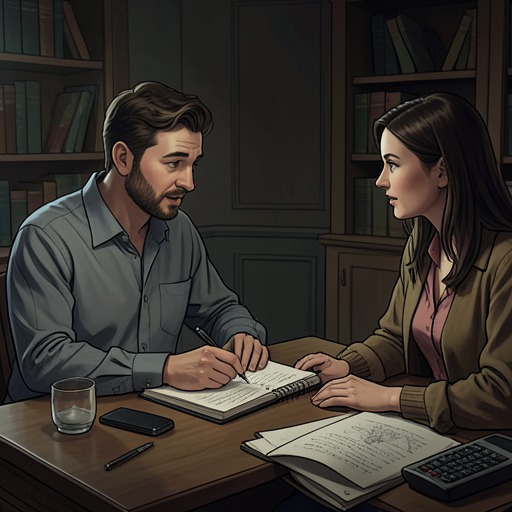
Circe answers that Rabo has not forgiven his father for being what he had to be, and interprets his anger as evidence that he envies his father’s ordeal. Rabo counters that he had an ordeal of his own: he is one-eyed. Circe recalls his own account that the wound caused little pain and healed quickly. He does not remember being hit; what he remembers is a white German tank and soldiers approaching across a snow-covered meadow in Luxembourg. He was unconscious when taken prisoner, remained under morphine until waking in a German military hospital in a church across the border in Germany, and was soon sent to a prisoner-of-war camp. These details let the disagreement turn on a distinction: Rabo’s capture and loss are real, but the physical suffering he reports does not, for Circe, establish that he has the particular psychological condition she is describing.
Circe tests that distinction with two questions about the moral meaning of being alive after good people have died. She asks whether Rabo sometimes believes himself a good person in a world where almost all the other good people are dead, and whether he sometimes suspects that he must be wicked and could clear his name only by dying too. Rabo answers no to both. Circe concludes that he may be entitled to Survivor’s Syndrome but did not acquire it, then offers tuberculosis as a sardonic alternative. Her diagnosis is therefore not that every survivor must carry the same burden: the syndrome depends on a specific conviction about the moral status of the living and the dead.
The Underground and Inherited Belief
When Rabo asks how Circe knows so much about the syndrome, she explains that she wrote a book about people like him: children of a parent who survived some form of mass killing. The book is called The Underground. Circe and her husband had no known European relatives whose deaths in the Holocaust might have shaped their own family history; they came from American families several generations removed from Europe. Her knowledge of the subject, as presented here, comes through the people and patterns she has written about rather than a disclosed family experience of that kind.
Circe describes three schoolgirls in the novel: one Black, one Jewish, and one Japanese. They feel drawn together and apart from their classmates for reasons they cannot explain, and form a small club they call The Underground. The explanation emerges through their family histories. Each has a parent or grandparent who survived a human-made catastrophe and, without intending to, passed down the idea that the wicked were the living and the good were dead. The survivors’ moral confusion thus becomes an inheritance: the children experience its effects before they can name its source.
The three histories locate that inherited belief in distinct catastrophes. The Black girl descends from a survivor of the massacre of the Ibos in Nigeria; the Japanese girl from a survivor of the atomic bombing of Nagasaki; and the Jewish girl from a survivor of the Holocaust. By placing these histories beside one another, Circe’s novel presents the syndrome not as belonging to a single community or historical event, but as a pattern that can recur wherever survival is shadowed by mass death. Rabo admires the title, The Underground, which names the girls’ secret association while also suggesting a hidden history beneath their ordinary school lives.
Narrative Function and Limits
The idea changes shape as it passes between Circe’s analysis, Rabo’s recollections, and the fictional story she recounts. First it offers an explanation for his father’s shame; then it becomes a point of conflict as Rabo resists both the diagnosis and the broad public use of the word survivor; finally, the two questions make the concept more exact by distinguishing wartime survival from a particular belief that goodness belongs to the dead. The conversation does not erase Rabo’s grievance against his father or resolve the family history. It makes their unresolved difference more legible.
Survivor’s Syndrome also names an intergenerational consequence rather than a condition confined to the person who lived through the original catastrophe. In The Underground, the survivors do not deliberately teach their descendants that life is wicked; the belief is passed on without intention, and the children inherit its moral atmosphere before understanding its origin. The term therefore connects private family feeling to historical violence while preserving distinctions among individuals: Rabo can have survived war and lost an eye without sharing the outlook Circe associates with the syndrome, while the children in her novel reveal how that outlook may outlast the event that produced it.