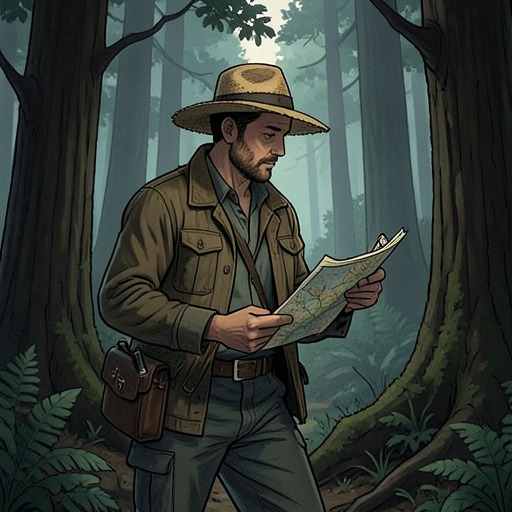
Candide–Cacambo relationship
CandideThe relationship between Candide and Cacambo is an enduring partnership formed on the road: although Cacambo serves Candide as a valet, the narrative presents their bond as one of affection, confidence, and reciprocal reliance. Cacambo’s knowledge and composure repeatedly turn Candide’s distress into action, while Candide’s willingness to spend his great wealth to free his companion shows that their attachment is more than a practical arrangement.
Background and the Basis of Their Bond
Cacambo enters the story as the valet Candide has brought from Cadiz. He is described as a quarter Spaniard, born in Tucuman, and as having worked in an unusually wide range of occupations: singing-boy, sacristan, sailor, monk, pedlar, soldier, and lackey. These successive experiences help explain why he can move through unfamiliar situations with a fluency Candide lacks. The narrative gives a direct basis for his attachment: Cacambo loves Candide because Candide is a very good man.
The relationship is unequal in rank but not emotionally remote. Cacambo calls Candide his master and performs the tasks of a servant, yet Candide’s trust in him grows into intimate friendship. Their partnership depends on complementary qualities. Candide is openly devoted to Cunegonde and readily overwhelmed by fear or grief; Cacambo is more practiced at choosing a route, assessing danger, and carrying out a plan. The episodes that follow make that contrast a recurring feature of their companionship rather than a single act of assistance.
Departure for Paraguay and Shared Risk
When Candide must leave Cunegonde behind, Cacambo urges him to follow the Old Woman’s advice and depart without delay. Candide grieves that he is leaving just as the Governor was going to approve his marriage to Cunegonde, and worries about what will become of her. Cacambo answers with practical reassurance, then helps redirect Candide’s attention toward a possible course of action: they can go to Paraguay, where Cacambo knows the way and has previously served in the College of the Assumption.
His proposal draws on personal experience rather than guesswork. Cacambo says he knows the Jesuit government in Paraguay as well as the streets of Cadiz, and explains that he has seen its workings from service there. His account describes a kingdom in which the Fathers possess everything while the people possess nothing, and points to the contradiction between the Jesuits’ wars against the Spanish and Portuguese monarchies in Paraguay and their professions of allegiance to those rulers in Europe. Cacambo’s knowledge makes him Candide’s guide into a political world that would otherwise be opaque to his master. He turns separation from Cunegonde into a journey with a destination, even as Candide remains distressed at leaving her.
Cacambo’s loyalty is also tested in immediate danger. After Candide kills The Jesuit Baron, Candide believes that they will soon be discovered and killed. Cacambo, who is standing guard, does not lose his head. He takes the Baron’s Jesuit habit and square cap, puts them on Candide, and gets him onto a horse. The disguise gives Candide the appearance of a Jesuit officer riding to direct his men, allowing the pair to try to cross the frontier before anyone can stop them. Cacambo’s intervention is swift and specific: rather than sharing Candide’s panic, he uses the available clothing and their horses to create a chance of escape.
Separation, Trust, and the Surinam Plan
In Surinam, the pair learn that Cunegonde is in Buenos Aires and is the Governor’s favored mistress. Candide is devastated, but turns to Cacambo with a plan that depends on his judgment and reliability. Candide says that each of them has five or six million diamonds, and asks Cacambo to go to Buenos Aires to bring Cunegonde back. He authorizes him to offer the Governor one million, or two if necessary, and proposes to obtain another ship and wait in Venice. Candide’s reasoning includes the danger that might expose him: because Cacambo has not killed an Inquisitor, he believes that Cacambo will not attract the same suspicion.
Cacambo accepts the mission despite the pain of parting from Candide, whom he now regards as an intimate friend. The two embrace in tears, and Candide also charges Cacambo not to forget the Old Woman. Cacambo sets out that very day. This separation makes the relationship’s mutual trust especially clear: Candide entrusts his companion with a large fortune, a dangerous negotiation, and the recovery of the woman he seeks, while Cacambo undertakes the errand out of loyalty to a master from whom he is reluctant to part. The plan does not reunite them quickly. Candide remains in Surinam, hires domestic help, prepares for a long voyage, and eventually leaves with only two sheep still in his possession.
Reunion and Renewed Cooperation
Candide and Cacambo meet again in Venice, after Candide has begun supper with Martin and six strangers. Cacambo approaches him while serving one of the guests. The sight of his friend astonishes and delights Candide, who immediately assumes that Cunegonde must be nearby. Cacambo corrects him: she is in Constantinople. The reunion therefore brings relief without resolving Candide’s central search. Cacambo is again the bearer of information, but the news sends the two companions onward rather than bringing their journey to a close.
Their circumstances have changed sharply. Cacambo is now enslaved and must wait upon his master at table; he tells Candide that he cannot say more and must continue serving. Candide, caught between joy at seeing his friend and grief at learning that Cunegonde is elsewhere, sits down to supper. The servant’s restricted position contrasts with the wealth the pair had once carried and the freedom they had relied on. Yet even under these constraints, their reunion restores the practical alliance: Cacambo conveys what he knows, and Candide prepares to act on it.
At the Bosphorus, Candide pays a very high ransom for Cacambo. He then goes with his companions aboard a galley to search the shores of the Propontis for Cunegonde, however much her appearance may have changed. Cacambo is again beside him as a companion in the search. During the voyage, Candide notices two badly disfigured galley slaves whose features remind him of Pangloss and The Jesuit Baron, whom he believes dead. The scene underscores how much their travels have exposed them to reversals and uncertain recognition, while the ransom itself confirms Candide’s willingness to spend heavily to restore Cacambo’s freedom.
The Partnership at the Conclusion
By the conclusion, Cacambo remains among Candide’s trusted companions. When Candide consults Pangloss, Martin, and Cacambo about the problem posed by The Jesuit Baron’s opposition to his marriage to Cunegonde, each responds according to a different judgment: Pangloss prepares a legal argument, Martin proposes throwing the Baron into the sea, and Cacambo recommends returning him to the galley captain so that he can be sent to the head of the Jesuit Order in Rome. The group adopts Cacambo’s practical plan, and carries it out for a little money. His advice once again joins resourcefulness to an assessment of what can actually be done.
The relationship’s final context is collective work. Candide and his companions agree to cultivate their land according to their different abilities, and their small plot produces plentiful crops. The narrative names particular work for Cunegonde, Paquette, the Old Woman, and Friar Giroflée, but does not assign Cacambo a specific occupation. His place in the ending is instead that of a member of the society they form together. Across the journey, his service has repeatedly meant movement, guidance, rescue, and counsel; at the end, the partnership no longer rests only on urgent travel or Candide’s pursuit of Cunegonde. Cacambo’s continued presence helps mark the shift from a sequence of precarious adventures to a shared, practical life.