Farley Parks
CaughtFarley Parks is a former congressional candidate and Princeton graduate whose political career was derailed by a prostitution-related scandal. His story first appears to Wendy Tynes as one item in a familiar stream of public controversy; its significance changes when she links it to other scandals involving former Princeton classmates and to Phil Turnball’s campaign of revenge. Farley is both a public figure brought down by damaging revelations and a test of the distinction between inventing an accusation and weaponizing real misconduct.
Identity and Political Scandal
Six months before Wendy investigates his name, Farley is running for Congress in Pennsylvania. A scandal involving prostitution forces him out of the race. It receives relatively little press attention, in part because political sex scandals are common, but its political consequence is decisive: he abandons his candidacy. The episode establishes the public version of Farley through the abrupt collision of ambition and scandal, rather than through a sustained account of his political career.
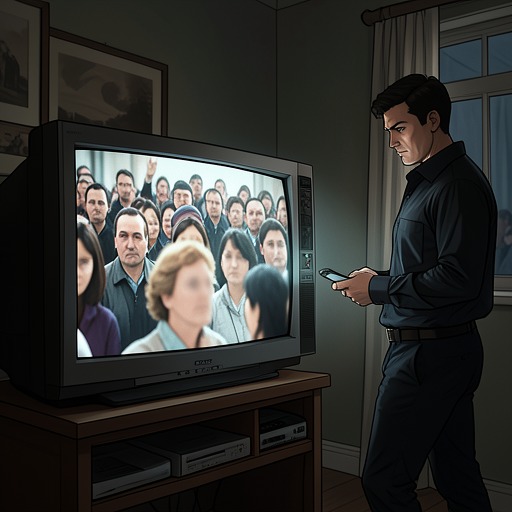
The story reaches the press through a woman identified online as Desire, described as an erotic dancer. She first gives the account to a local newspaper, after which it spreads. Her blog describes encounters with Farley, and a video presents her speaking in silhouette with her voice altered. Wendy examines the material while researching him, but the details do not become the focus of her investigation. What matters to her is the trail from local reporting to online circulation, and the way a single scandal can dominate the information available about a candidate.
Farley’s case also differs from a wholly invented smear in Phil’s later account. Phil says Farley had slept with prostitutes and was a womanizer, and claims that this conduct was already known. He characterizes the scandal as exposure rather than entrapment. That is Phil’s justification, not a neutral resolution of every question about how the story was publicized; nevertheless, it makes Farley’s case morally distinct from an accusation fabricated from nothing. The damage to his candidacy is real even as the account of his conduct is presented as something that predated its public circulation.
Princeton Connections and the Emerging Pattern
Wendy finds that Farley graduated from Princeton twenty years earlier, in the same year as Phil and Dan Mercer. The shared class year turns what might have been an isolated political scandal into a possible pattern. Wendy initially recognizes that coincidence remains a reasonable explanation: wealthy and influential people may be especially exposed to scandal, and the timing alone does not prove coordination. Her investigation proceeds by checking records rather than treating suspicion as certainty.
A Princeton record gives Wendy a more specific connection. Farley, listed from Bryn Mawr, Pennsylvania, and associated with Lawrenceville School, lived in Suite 109 of Stearns House. The same entry places Philip Turnball, listed from Boston and Phillips Academy Andover, in that suite. The shared room number does not establish what either man did years later, but it gives Wendy a concrete point of connection among men whose public lives have since been damaged.
The pattern becomes more pronounced when Wendy lays out a chronology for Phil. First comes Phil’s firing for embezzlement; two months later, Farley is ruined by the political scandal; about a month after that, Dan is exposed on Wendy’s television program; and roughly two months later, Dr. Steven Miciano is arrested for illegally possessing prescription drugs. Wendy puts online printouts and other files on the table and asks Phil to consider the sequence. Farley’s scandal is thus not only an episode in his political history: it is one of the events that makes the timing of Phil’s former roommates’ misfortunes look less like coincidence.
Phil Turnball’s Revenge and Farley’s Place in It
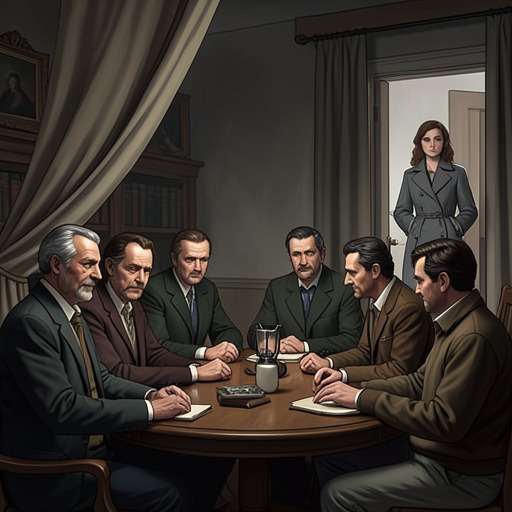
Phil explains that after the Princeton scavenger hunt and its consequences, he felt abandoned by his old friends. He says Farley and Steven were grateful that he had taken the blame, but that they could not change what had happened to him. In Phil’s telling, watching former roommates prosper while he felt left alone with the cost helped turn grievance into a plan to bring them down. Farley belongs to the circle Phil resents, although the evidence does not show Farley directing the broader campaign.
Wendy identifies an important asymmetry in the material made public. Farley and Steven have been publicly damaged, as has Dan, but Phil’s embezzlement is absent from the online attacks. Phil had told the Fathers Club that he was laid off; he spoke about being fired for stealing two million dollars only after Wendy’s friend informed her. Wendy also notes that Phil presented himself to the men at Princeton as someone who had been expelled. His concealment of his own history makes his stated distinction between exposing others and setting them up harder to accept at face value. Farley’s name, by contrast, is already attached to a scandal that Phil says reflected genuine conduct.
When Wendy challenges him, Phil affirms that Farley had engaged in the conduct and maintains that he exposed rather than framed his former roommate. That claim complicates, rather than erases, Farley’s role in the revenge plot: Phil’s campaign can exploit damaging truths while still selecting, timing, and amplifying them to punish particular people. Farley is not shown planning the campaign, and the evidence does not assign him responsibility for Phil’s methods. His importance lies in being one of the targets through whom Wendy recognizes the pattern.
Aftermath and Narrative Role
Five days after the events that bring the campaign into view, Farley issues a statement condemning those who rushed to judgment. He does not reenter the congressional race. The statement therefore marks a response to public judgment, not a restoration of his political prospects. Although his scandal had received limited press attention at first, its place in Wendy’s investigation gives it renewed significance as part of a chain of reputational attacks.
Farley’s story also sharpens Wendy’s understanding of the consequences of exposure. As allegations circulate against her, she fears that even a public admission that the claims are lies would not remove their lasting stain. She then recognizes that the same persistence may apply to the men she exposed on television. Farley’s forced exit from the race makes that reflection concrete: scandal can remain consequential beyond the question of whether its underlying conduct was real, especially when public attention turns a person into the scandal itself.
The novel uses Farley less as an independently developed viewpoint character than as a crucial connection in Wendy’s investigation. His candidacy, the scandal that ends it, his Princeton class year, and his shared room with Phil each supply a different piece of the emerging pattern. The distinctions among exposure, fabrication, and revenge remain essential: Phil insists that Farley’s conduct was genuine, yet Wendy’s chronology shows how genuine or alleged wrongdoing can be incorporated into a punitive campaign. Farley’s political defeat gives that pattern a visible cost.