Phil Turnball
CaughtPhil Turnball first appears to Wendy Tynes as a possible witness to Dan Mercer’s murder and, later, as another Princeton alumnus caught in a wave of scandal. The apparent pattern is real, but its meaning is not what Wendy initially assumes: Phil has engineered the attacks on his former college associates, using a fabricated sting against Dan to settle an old grievance. His own reputation, meanwhile, has been damaged by a financial crime he actually committed. The distance between those two stories—one constructed to punish others, the other concealed behind claims of victimhood—defines his arc.
Identity and Background
After graduating from Princeton University, Phil went directly into Wall Street finance and built a life in Englewood. He became a financial adviser and money manager, work he described to his wife, Sherry, in terms of trust and responsibility: clients entrusted him with savings intended for family needs, education, and retirement. Sherry later told Wendy that Phil had loved his work and regarded that trust as an honor. The account establishes what he believed his professional identity to be, while the later disclosure of his fraud exposes the gap between that ideal and his conduct.
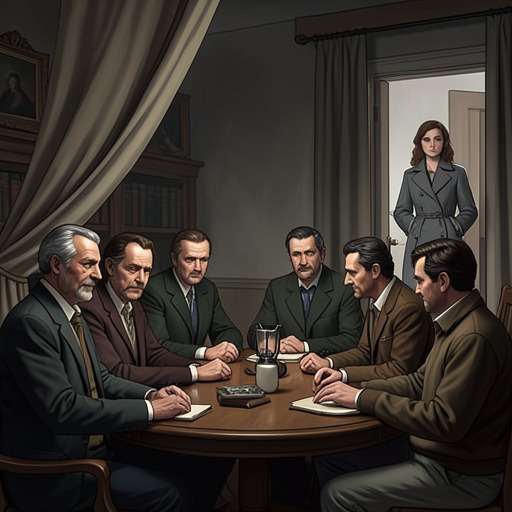
Phil belonged to the same Princeton freshman-year circle as Dan, Farley Parks, Kelvin Tilfer, and Steven Miciano. When Wendy asks about the group, he identifies five members, including himself and Dan. Years later, the shared history becomes central to a pattern she notices: Phil, Farley, and Dan all graduated in the same class, and all have become associated with damaging scandals. Wendy initially allows for coincidence; Phil’s participation makes that pattern evidence of a coordinated design.
From Witness to Suspect in Wendy’s Investigation
After Dan’s public exposure, Wendy had tried to contact Phil, but he declined to comment. Following Dan’s murder, she tries again, reasoning that Phil might now be willing to speak. When she tells him the news, he listens silently, visibly affected. He recalls meeting Dan during freshman orientation and remembers him as unusually relaxed among students eager to impress, funny, and committed to doing some good despite enjoying the same partying as his peers. Phil’s recollection gives their past a warmth that complicates the revenge plot revealed later: Dan was not merely a name on a target list but someone Phil once admired and imagined a future with.
Wendy’s research connects Phil to the other Princeton men. She discovers that the same graduating class links him with Dan and Farley, whose public scandals have circulated online. Phil’s own name, however, is missing from a list of students Wendy checks, a discrepancy that sharpens her attention to what has and has not been made public. The omissions matter: the attacks against the others are visible, while Phil’s most serious secret remains out of view.
His public difficulties do not begin with that secret. Wendy learns from Windsor Horne Lockwood III that Phil was fired from Barry Brothers Trust for embezzlement, initially described as involving two million dollars. Sherry speaks of the consequences at home: Phil resists the idea of moving to a smaller house because he takes it as a personal failure, and she plans to return to work despite his opposition. Wendy later finds Phil diminished and urgently asks her to stop pursuing the truth. He warns that continued pressure will make matters worse, presenting silence as protection for everyone. His request is also an attempt to keep control of the story.
The Princeton Incident and the Revenge Plan
Wendy eventually hears the account of the campus incident that underlies Phil’s grievance. During a Princeton scavenger hunt, the dean’s boxer shorts were a prize worth sixty points. Phil was caught in the dean’s front yard, and Christa Stockwell’s blood was on his shoes. Christa had been injured in the confusion; she recalled hearing other students nearby, while Phil maintained that he had been alone and his friends supported his version. She was in no condition to challenge that account at the time. The incident was treated as a prank, but its consequences for Christa were severe, and Phil came to believe that he alone had paid a price for what happened.
Wendy recognizes that Phil learned about viral marketing through the Fathers Club, where he had presented himself as laid off and, when she was headed to Princeton, as expelled. Those accounts helped him anticipate what Wendy might discover and get ahead of it. She also sees the asymmetry in the online record: damaging material circulates about Farley, Steven, and Dan, but nothing about Phil’s embezzlement. That absence is not proof that someone else has framed him; it is part of the cover he has built for himself.
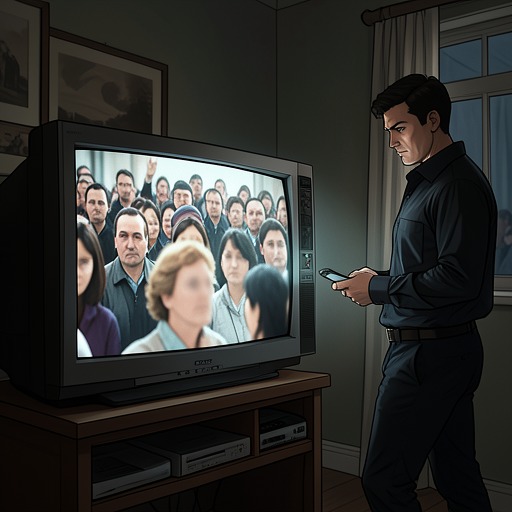
Phil admits that seeing Wendy’s television program gave him the idea to use its format against Dan. He wrote the anonymous message attributed to Ashlee, a thirteen-year-old in the SocialTeen chat room, then posed online as Dan. He planted photographs and a laptop in Dan’s home and arranged for a sex worker to pose as a troubled teenager named Chynna. When Wendy, believing she was communicating with Dan, directed him to a meeting, Phil separately arranged for Chynna to bring Dan to the same place and time. Dan arrived, and Wendy’s cameras recorded the encounter. Phil had not merely spread rumors: he manufactured the circumstances that made the broadcast accusation appear credible. He also acknowledges starting rumors about Wendy herself and says he regrets going too far.
Fraud, Confession, and Ending
Phil’s confession to Wendy does not erase the independent evidence of his financial crimes. Windsor Horne Lockwood III reviews Phil’s files and trading records and concludes that Phil was not set up. The amount stolen was closer to three million dollars than two million, and the fraud had been operating for at least five years. This finding reverses the sympathy Phil’s story of professional ruin might invite: his firing was not another attack by the Princeton group but the consequence of sustained deception.
After revealing the mechanics of the sting and apologizing to Wendy, Phil presents his disclosure as an effort to make amends. He asks her to tell Sherry he is sorry, then dies by suicide before Wendy can stop him. His final act ends the possibility of further questioning or repair. It leaves Sherry with the consequences of his choices and Wendy with the full knowledge of how Phil manipulated her reporting, Dan’s reputation, and the public record.
Narrative Role and Significance
Phil is a revealing counterpart to Dan: both are caught in a public scandal, but Phil’s apparent victimhood conceals his role as its architect. The book builds his disclosure through mismatches between appearance and record—his reverence for professional trust beside a long-running fraud, the missing online evidence of his crimes beside the relentless attacks on his peers, and his professed wish to help Wendy beside the damage he has done to her. His history with Christa gives the revenge campaign a grievance, not an excuse; the fabricated accusation against Dan turns that grievance into a deliberate injustice. Phil’s ending brings confession without restoration: he tells the truth, but too late to undo the harm or face its consequences through any process of accountability.