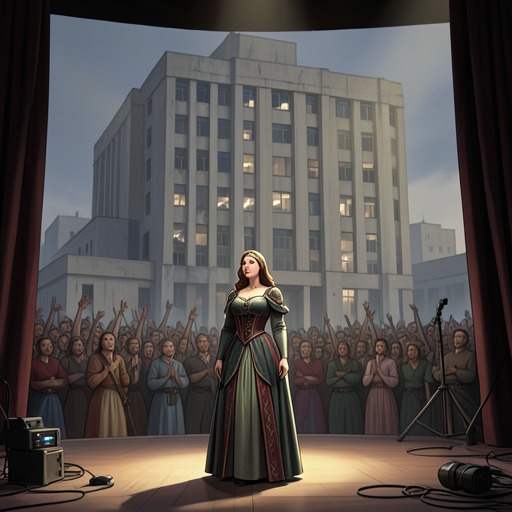
A Spectator Scratches Connie during Her Second Performance
ChowringheeConnie’s second performance at the Mumtaz turns a deliberately manufactured stage illusion into a real encounter with an audience member’s violence. When a man grabs her in the darkness, Shankar orders the lights on; after the first act, Connie is found backstage with a scratch on her arm, and Lambreta tends the wound. The episode exposes the danger concealed by the audience’s appetite for spectacle and the intimate care that persists behind the performance.
The act and its anticipated reveal
On the second night, Shankar introduces Connie with a practiced flourish, presenting her as a singular attraction at the Hotel Shahjahan and reminding the guests of the meal and drinks they have enjoyed. The language makes her the promised centrepiece of the evening, not simply another performer. The introduction is part of the act’s machinery: it raises expectations before the stage itself can fulfil or frustrate them.
As on the previous night, the lights go out. The audience produces the same expectant murmur, followed by a familiar anticlimax when Lambreta, not Connie, appears as the tiny performer in evening dress and a towering top hat. His transformation from a tired, irritable man who had resisted taking part into a confident stage persona is presented as a striking piece of performance. The repetition matters: the room seems to know the routine, and its response is as much part of the show as the performers’ entrance.
The interruption in the darkness
Connie makes a poor choice when she settles onto the lap of a man who knows the act. He calls out that he has her and urges the others not to turn on the lights. The darkness that had sustained the audience’s anticipation now gives an individual spectator the opportunity to seize control of the scene. The incident sharply changes the terms of the performance: Connie is no longer only the object of a staged reveal but a person struggling to get free.
Shankar has been warned by Satyasundar Bose to be ready for such contingencies. He signals immediately for the lights to come on, and every light in the Mumtaz blazes at once. Connie struggles off the man’s lap, gasping, but the people around her pay little attention to her effort to escape. The audience’s indifference makes the intervention both necessary and limited: the lights expose what happened, but they do not make the crowd respond to Connie’s distress.
The show resumes, the injury remains
Connie begins her performance. Its opening rhythms are described as awakening the beast within the spectators, whose ferocity is held beneath their suits and ties. Lambreta’s extravagant display of desire for Connie intensifies their interest; even the women in the audience express dismay while leaning on their male companions, and their indulgent smiles suggest that they are enjoying the spectacle. The narration stresses the contrast between the respectable appearance of the guests and the appetite stirred by the act. The man’s intrusion belongs to a setting where Connie’s body is already being made available for public consumption, though the scratch marks the point at which the audience’s gaze becomes physical harm.
At the end of the first act, Shankar signals for the electricians to extinguish the lights, this time to preserve Connie’s modesty. When the lights return, she is backstage, wrapped in a robe and panting. The difference between the lights going out during the act and their being switched off at its conclusion is significant: the same stage device that enabled the grab is now used to shield her as she leaves the audience’s view. The transition from public display to backstage vulnerability does not erase what has happened.
Lambreta’s care and the scene’s significance
Connie asks where Harry is, then explains that a drunken man scratched her arm badly enough to hurt. She asks for iodine, observing that he may never cut his nails. Lambreta appears with cotton and iodine, takes her hand, and cleans the wound. Her question about where Harry has gone gives way to the immediate fact of his return beside her: although he had disappeared in anger, he is the one who tends the injury.
Lambreta curses the men and wishes divine punishment upon them. Connie, now calmer and momentarily turning from her own pain, reminds him that he once asked her not to invoke God in curses because it was sinful. His reply rejects that restraint: he insists that God will not condemn her for retaliating against the men. The exchange gives the aftermath a tenderness and conflict absent from the public performance. Connie’s gentle rebuke recalls an earlier moral boundary between them; Lambreta’s anger shows how the assault has unsettled it.
The event therefore holds two performances in view: the carefully advertised illusion of Connie’s appearance and the show that the audience makes of her body once she is onstage. The man’s grab is not presented as harmless participation; it leaves a painful mark that requires treatment. Yet the room’s attention remains fixed on entertainment, while the necessary care takes place behind the scenes. By ending on Connie and Lambreta together, the episode shifts attention from the spectators’ appetite to the performers’ vulnerability and the private bond that answers it.