William Ghosh Rejects a Five-Year Wait to Marry Rosie
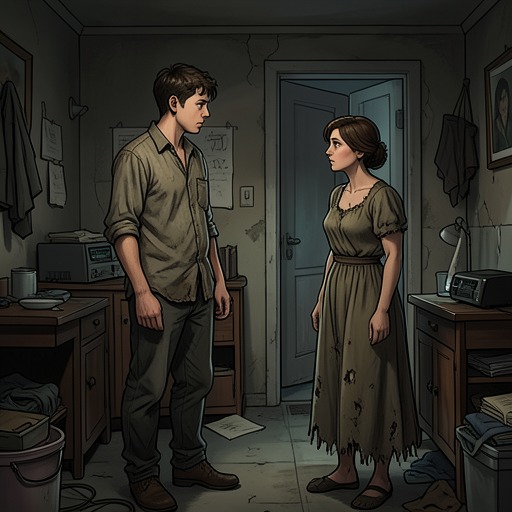
ChowringheeWilliam Ghosh’s refusal to wait five years before marrying Rosie is a small workplace conversation with large stakes: it brings his fear of lost time into collision with the family obligations and employment constraints shaping her choices. As William speaks while Shankar listens, the proposed marriage shifts from a private hope to a test of what each can afford to risk—and Shankar’s view of Rosie changes as he hears the circumstances behind her delay.
Identity and Background
William describes his life through the image of a ship that spent his adolescence and youth at sea before anchoring in middle age at the Hotel Shahjahan. The metaphor makes his present relationship feel like a late opportunity for stability: after the hotel gave him a livelihood, he had hoped it might also provide a wife. His question about how many years he has left is not answered with a specific prognosis; it expresses the urgency with which he measures the future.
That urgency becomes concrete when William says he is thirty-seven and would be forty-two after the proposed wait. Five years, to him, is not an abstract interval but a substantial portion of the time he believes remains for building a life with Rosie. He also describes himself as someone who has made bad bargains before and does not want to make another. His decision is therefore presented as a judgment shaped by age, regret, and the limits he perceives in his remaining time, rather than as a simple impatience with Rosie.
The Conditions Behind the Delay
Rosie’s timetable is tied to the state of her family. She has told William that her parents are ill and that her sister has yet to marry and establish herself; until those circumstances change, she cannot contemplate marriage or happiness. The delay is thus embedded in obligations extending beyond the couple. William sees the wait as a threat to their chance at a shared future, while Rosie’s stated reasons place that future alongside the needs of her family.
William has seen the home Rosie brought him to: a cramped dwelling of a room and a half, where three sick people lie on folding beds, coughing and spitting. He recalls it as a harsh place to live, and remembers that Rosie’s parents seemed frightened by his arrival. He interprets their fear as concern that their daughter might fall in love and marry, leaving the family without enough to live on. The scene gives material context to the delay: marriage is not only a decision between two people when a household depends on Rosie’s continued contribution.
Marriage, Work, and the Impasse
William says he has told Rosie she could continue working after they married. Her answer identifies a barrier his proposal cannot remove: Jimmy, she says, would not allow her to keep working if she married and would dismiss her. William’s willingness to accept a working wife therefore does not settle the practical question. Rosie’s employment depends on someone else’s decision, and marriage could cost her the income her family needs.
The exchange exposes the difference between William’s offer and Rosie’s predicament. He can imagine marriage and continued work as compatible because he is willing to permit both; Rosie points to the authority that can make that arrangement impossible. His proposal does not, on the evidence of the scene, resolve the consequences for her job or her family. The couple’s disagreement is consequently not reducible to whether they love one another: William says he is genuinely in love with Rosie, but that feeling does not remove the economic and employment pressures governing her choices.
Shankar’s Changed View
Shankar listens without interrupting as William continues to write in the register. The ordinary work setting gives the disclosure a restrained form: a personal crisis emerges amid a routine task, rather than in a staged declaration or a public confrontation. William’s account moves between the image of his own life at sea, his fear of losing years, and the poverty he witnessed in Rosie’s home.
The account also alters Shankar’s perception. He had previously regarded Rosie, the hotel typist, with hatred and contempt; hearing William’s story, he feels that she has become a member of his family. The shift does not erase the disagreement between William and Rosie, nor establish what becomes of their relationship. Instead, it marks the event’s decisive change in understanding: Rosie’s apparent postponement is seen against illness, cramped living conditions, family dependence, and the threat of losing her job. William’s refusal to wait remains a personal choice, but the scene makes clear that its consequences are bound to circumstances beyond his own timetable.