Karabi Guha's Nighttime Encounter with a VIP
ChowringheeKarabi Guha’s nighttime encounter with a VIP exposes the distance between the public performance of humanitarian virtue and the private burdens borne by hotel workers. At a lavish Sociedad Filantrópica banquet, Karabi is expected to prepare for an important guest whose stay is tied to a suite permanently rented by Agarwalla’s company; the guest’s brief visit ends before midnight, while Karabi returns looking profoundly tired.
The Banquet’s Public Face
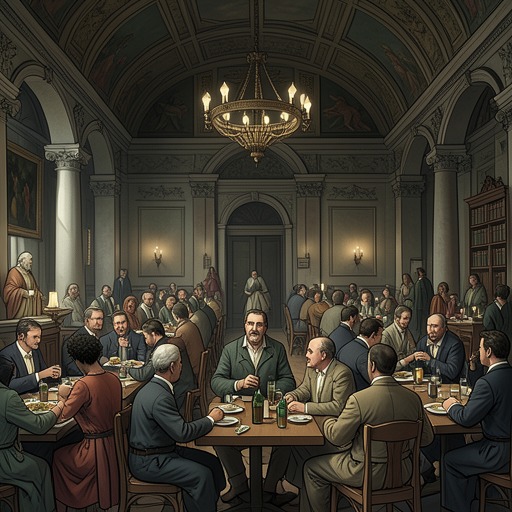
The Sociedad Filantrópica, an international organization that had recently opened a Calcutta branch, held the banquet at the Hotel Shahjahan. Agarwalla, Langford, and Khan Bahadur Huq welcomed the guests at the reception counter. Their contrasting clothes—Agarwalla in a bandhgala and churidar, Langford in Western formal wear, and Huq in Mughal dress—gave the gathering a visible display of different traditions united, ostensibly, by concern for humanity.
The narrator’s colleague Sata Bose punctures the ceremony’s claims to spontaneity. Calcutta’s philanthropic gatherings, he observes, repeatedly draw the same guests from shared invitation lists, while the speeches and summaries reported in the newspapers are prepared before the banquet takes place. The event thus has two versions: its polished public account and the less presentable realities concealed behind it.
The Suite and Karabi’s Assignment
Before the banquet, Sata Bose tells the narrator to keep an eye on Agarwalla. His company, Bose explains, rents suite number two permanently as a guesthouse, and Karabi is Agarwalla’s housekeeper, receiving a substantial payment in addition to her salary. This arrangement gives the suite a private role alongside the hotel’s public hospitality.
During the evening, Karabi says she has not been able to persuade the guest of honor to stay as planned. The suite has been reserved for him, she explains, but he had asked to see a photograph of her before deciding. He says that spending the night there would not look right, yet he would be willing to rest for a few hours in her room. Karabi laughs loudly, then hurries away to prepare for the “respectable” guest. Her quick departure leaves the narrator momentarily unable to take in the implications of what she has said.
Departure and Aftermath
As the banquet breaks up, Mrs. Pakrashi leaves with her husband, and Agarwalla departs with his English guest. The guest of honor stays behind, going to suite number two for what the narrator describes as a brief refuge from the demands of duty. He leaves before the date changes. Watching from the reception counter, the narrator cannot match the furtive figure passing him with the photographs he has seen in the newspapers. The departure unsettles his confidence in the public stories through which eminent people enter history.
Karabi returns after the guest has gone. The narrator remembers her looking away from the distinguished visitor as she passed him, then pausing at the counter with a weariness that seemed to him older than that night. He recognizes that the composed, graceful Karabi he had encountered previously is no longer visible in her exhausted manner. Their brief exchange is understated: she asks how much longer he must remain on duty, and, hearing that he has to stay up all night, calls him unfortunate before making her way to her room.
Narrative Significance
The episode turns on the contrast between what the banquet celebrates and what its service arrangements conceal. Guests set aside personal troubles for society, the nation, and the world, while Karabi is left to manage an intimate assignment attached to the permanent guesthouse suite. The newspapers’ advance-written account and the VIP’s hurried departure extend that contrast: public reputation is orderly, but the narrator witnesses an unsettled private reality from behind the reception counter.
Looking back, the narrator feels shame at his earlier sense that he was fortunate simply because he was a man rather than Karabi. His retrospective account does not claim to understand everything that passed between her and the guest; instead, it makes her tired expression and the imbalance between their situations the episode’s lasting evidence. The encounter marks a limit in the narrator’s youthful understanding and exposes the gendered vulnerability beneath the hotel’s polished hospitality.