Karabi's Suicide
ChowringheeKarabi Guha’s suicide turns a private expression of desperation into a death discovered publicly at the Hotel Shahjahan. The next morning, police break into suite number two and remove her body; Nityahari identifies sleeping pills as the means of her death. The aftermath reveals not only the hotel’s sudden commotion but also the personal attachment behind one employee’s grief: Nityahari had thought of Karabi as his daughter, and his recollection makes her death feel like the loss of someone the hotel had failed to protect.
Desperation Before the Death
The night before she dies, Karabi tells Shankar that she feels close to losing her sanity. She has called because, as she explains, she has no one at the hotel with whom she can speak. Her words establish a stark contrast between the hotel’s busy public life and her isolation within it: she is surrounded by a place full of people, yet cannot find a confidant there.
The preceding exchange gives that distress a specific context. Karabi rejects an immoral path into Anindo Pakrashi’s household, insisting that Anindo’s parents are also her parents and that such a course would be sinful and harmful to him. She becomes calmer after a few minutes, but the brief easing does not resolve the circumstances she has described. The narrative places her disclosure immediately before the discovery of her death, making the unspoken gap between momentary calm and the next morning’s catastrophe part of the event’s force.
Discovery in Suite Number Two
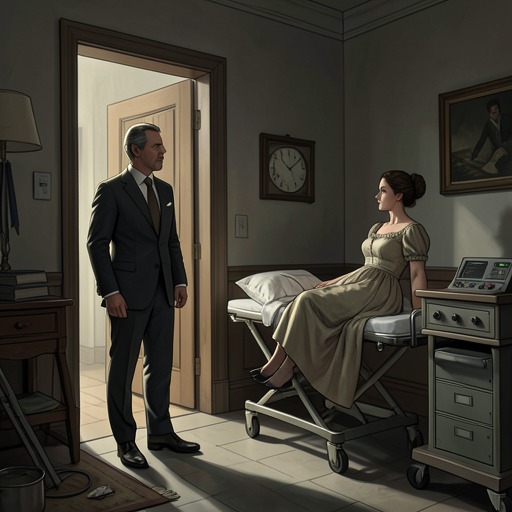
Shankar wakes later than usual the following day, by which time the hotel is in an uproar. Police have broken down the doors of suite number two and brought out Karabi’s lifeless body. The force used to enter the suite makes the death impossible to keep private: the room that had contained her isolation becomes the scene of a public emergency.
Nityahari says that Karabi took an entire bottle of sleeping pills. The narrative gives no further account of what happened inside the suite or of the precise interval between her phone call and her death. Instead, it moves from her distressed confidence to the police at the broken doors, leaving the manner of discovery and the few reported details to mark the abruptness of the loss.
Nityahari’s Grief and the Aftermath
When Karabi’s body is sent to the morgue, Shankar does not go to see it. On returning, he hears Nityahari’s grief expressed through practical details as well as sorrow: Nityahari has put the best bed linen in the police van. The gesture places care beside the impersonal machinery of removal, as if he can still tend to Karabi in the only way left to him.
Nityahari recalls that on the first day he saw her, he told the others she was not a girl suited to hotel life but his daughter. His memory recasts his earlier judgment as a claim of kinship and makes clear how personally he had understood his bond with her. His reproach that no one listened, followed by his anguished question about why she had come to the hotel, connects his sense of loss to a painful feeling that her presence there had ended in disaster. The episode closes not with an explanation of Karabi’s decision, but with the grief of someone who had recognized her as family and could not prevent her death.