Event 1
American Revolutionary War
The [American Revolutionary War](entity:event-recall-event-american-revolutionary-3e46dfdc76c5) is the decisive turning point in [Thomas Paine](entity:character-recall-character-thomas-paine-18d74ea99fd9)’s argument for [American independence](entity:state-recall-state-american-independence-41efa6cb128b): once hostilities replace debate and petition, the question is no longer how the colonies can repair their relationship with [Great Britain](entity:location-recall-location-great-britain-d637ec033675), but who has authority to govern them. Paine presents resistance as a response to failed peaceful remedies and violence against the colonies, and independence as both a practical necessity and a responsibility to establish a durable continental government.
## From debate to armed conflict
Volumes of argument had failed to settle the dispute, Paine writes, and arms had become its final recourse. He assigns responsibility for that change to the king’s choice of an appeal to force, which the continent has accepted. The outbreak of hostilities therefore marks a break in the political framework: proposals made before fighting began, whether they sought union through coercion or friendship, belong to a political moment that has passed.
The change also alters the standard by which the conflict should be judged. Paine asks readers to consider not only the abstract terms of reconciliation but the injuries and continuing disadvantages of dependence on Great Britain. He rejects the claim that past colonial prosperity proves future dependence necessary, and argues that the colonies’ commerce in necessities would continue to find markets without British rule. Britain’s defense of the continent, he concedes, also served its own interests in trade and dominion.
## The costs of dependence
For Paine, dependence carries consequences beyond the immediate fighting. It makes the colonies vulnerable to European wars in which they have no independent reason to participate, setting them against nations that might otherwise seek their friendship. Because [Europe](entity:location-recall-location-europe-90be8cc79c46) is their market, he argues, the colonies should avoid binding themselves to one European power; while subject to Great Britain, they risk being made an instrument of British policy. He imagines commerce and the colonies’ position as a free port securing peaceful relations more effectively than participation in imperial rivalries.
Distance makes the existing political arrangement unworkable as well as dangerous. Paine describes the burden of sending petitions thousands of miles and waiting months for answers and further explanations. A distant government ignorant of local circumstances, he argues, cannot administer the continent’s increasingly weighty and intricate affairs with adequate convenience. His comparison of a continent governed by an island makes the imbalance vivid: [England](entity:location-recall-location-england-b153c1f368ea) belongs to Europe, while [America](entity:location-recall-location-america-c751899c385c), in his formulation, belongs to itself.
## Resistance and the case against reconciliation
Paine distinguishes defense against force from taking up arms merely to reverse a financial law. The justification for resistance, as he frames it, lies in violence against persons, destruction of property by armed force, and invasion by fire and sword—not in the repeal of a pecuniary measure alone. Once defense became necessary, he argues, subjection to Britain should have ended; he treats the first musket fired against the colonies as the point from which American independence should be understood to date.
That claim follows Paine’s account of peaceful remedies. Repeated petitions, he says, were rejected and did not secure redress. The appeal to arms thus becomes not a first resort but the consequence of a failed attempt to obtain justice without force. He warns that renewed assurances of reconciliation cannot guarantee security: even if earlier laws were restored or promises made, another Parliament might reverse them, and no court between nations could reliably enforce the agreement.
Paine also rejects the idea that the conflict can be contained by removing a ministry or repealing particular acts. If the colonies have taken up arms and every man may have to serve as a soldier, he argues, the result must justify that expense. A limited settlement would leave the larger cause unresolved and pass the burden to posterity. The war therefore raises the issue of political sovereignty, not merely a list of grievances.
## The continental political problem
The war exposes a gap between resistance and a settled authority. Paine describes America as lacking law and a named constitution, held together by a concurrence of sentiment that could change and that opponents might try to dissolve. In this unsettled condition, he argues, property is insecure and political conduct lacks clear legal distinctions. He contrasts captured English soldiers, whom he treats as prisoners of war, with American inhabitants taken up in arms, whom he says should be treated under the laws of the state as traitors. His argument makes the creation of a recognized political order part of the revolutionary task, rather than an issue that can safely be postponed until after the fighting.
His proposed institutional direction includes annual assemblies with a president, whose domestic business would remain subject to a [Continental Congress](entity:organization-recall-organization-continental-cong-2deb87cf88c1). The proposal connects resistance to a larger question of authorization: how to give the continent a government that represents its colonies and can establish law. Paine warns that the continental union is too loosely held together and that delay could make both reconciliation and independence unattainable.
## Diplomacy, debt, and the possible outcome
[Independence](entity:concept-recall-concept-1da53212e109) matters in Paine’s account because political status determines what other nations can do. While America calls itself a British subject, he argues, foreign powers cannot mediate the conflict as they might between separate nations. [France](entity:location-recall-location-france-f5cafc8a8ad4) or [Spain](entity:location-recall-location-spain-336a02c89dc7), he reasons, would have little cause to assist if their help merely repaired the connection between Britain and America. A declaration and a memorial to foreign courts explaining the colonies’ failed peaceful efforts, their wish to live safely apart, and their readiness for peaceful trade could, in his view, do more than another petition to Britain. Independence would allow the continent to be heard abroad and to take its place among nations.
Paine also links the purpose of the war to its financial cost. He argues that expenditure and any debt incurred are justified if they secure a settled government and an independent constitution for posterity, but not if they purchase only the repeal of a few acts or the removal of a ministry. He calls national debt a bond when it bears no interest and contrasts Britain’s large debt and navy with America’s lack of both; the comparison serves his broader claim that the colonies can develop the means of defense once politically independent.
The pamphlet closes its account of the stakes with three possible routes to independence: a legal decision by the people in Congress, military power, or a mob. Paine presents action through Congress as the opportunity to build a constitution he considers exceptionally good, and warns that the alternatives could produce a less considered outcome. The war is thus both a struggle against existing authority and a narrowing window for deciding how new authority will be created. Delay, in his argument, risks leaving the achievement of independence—and the form it takes—to forces that a deliberate continental decision might have guided.
Event 2
1775年4月19日北美独立战争爆发
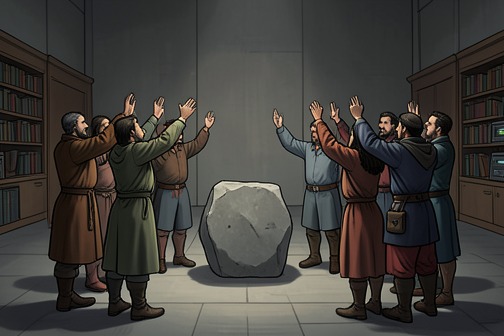
The outbreak of hostilities on [April 19, 1775](entity:time-recall-time-april-19-1775-a8a353a3cfde), marks the decisive turn in [Thomas Paine](entity:character-recall-character-thomas-paine-18d74ea99fd9)’s argument from reform within the British connection to [American independence](entity:state-recall-state-american-independence-41efa6cb128b). He presents it as the moment when prior plans for union became obsolete, peaceful appeals had failed, and armed resistance acquired a defensive justification; its political consequence, in his account, should be a clear transfer of allegiance and the deliberate creation of a continental government.
## From Reconciliation to Separation
Before hostilities began, Paine says, advocates on both sides still sought union with [Great Britain](entity:location-recall-location-great-britain-d637ec033675), differing over whether to secure it by force or friendship. The fighting changed the terms of the question: those earlier proposals became like last year’s almanacs, superseded by events. Paine recalls that he had been a strong supporter of reconciliation before the news of April 19 reached him; afterward, he rejected further dependence on Britain. The date thus functions in his reasoning as a political threshold, not simply a point in a chronology.
Paine argues that continued dependence would draw the colonies into European wars and estrange them from nations with which they otherwise had no quarrel. Britain’s conflicts would repeatedly damage American commerce, while the colonies’ status as British subjects prevented other powers from mediating the conflict or treating them as independent participants in diplomacy. In his view, a public declaration explaining the harms suffered, the failed peaceful efforts, and the desire for trade with other nations would do more for the continent than another petition to Britain. [Independence](entity:concept-recall-concept-1da53212e109) would make the colonies legible abroad as a political community able to seek mediation and commercial relations in its own name.
## The Grounds for Resistance
Paine distinguishes between taking up arms to secure repeal of a financial law and resisting violence against people, property, and the country. The former, he argues, would not justify the human cost; defense against armed force does. Once that form of defense became necessary, continued subjection to Britain should have ended. He therefore presents independence as arising from a chain of events the colonies did not initiate, rather than from caprice or ambition.
The outbreak also sharpens Paine’s criticism of petitioning. He says that repeated appeals had been rejected and had instead encouraged royal obstinacy. A distant government, separated from [America](entity:location-recall-location-america-c751899c385c) by three or four thousand miles and months of correspondence, could not adequately manage the colonies’ increasingly complex affairs. For Paine, the question was no longer whether the old relationship could be patched up, but whether it could provide either justice or lasting security. He warns that delay and timidity, rather than Britain or [Europe](entity:location-recall-location-europe-90be8cc79c46) alone, could defeat the American cause.
## The Political Condition After the Break
Paine describes the colonies’ situation as one of practical independence without settled political authority: legislation existed without law, common action without a firm plan, and a constitution without a name. Their unity depended on a concurrence of sentiment that could change, while opponents sought to weaken it. With no defined rules or established consequences for political acts, property was insecure and people could claim freedom to act as they pleased. He argues that the absence of a clear legal distinction also left the status of armed inhabitants unresolved, unlike that of captured English soldiers, whom he describes as prisoners.
This instability makes the date’s significance double-edged. Hostilities make a return to the former political condition untenable in Paine’s account, but they do not by themselves establish a secure replacement. He warns that a loosely joined continent could still fall into division, leaving neither reconciliation nor independence achievable. The conflict therefore creates an urgent obligation to convert shared resistance into an acknowledged political settlement.
## A Continental Government and the Meaning of the Event
Paine’s proposed response is institutional as well as declarative. He imagines annual assemblies with a president, more equal representation, and domestic affairs managed under the authority of a [Continental Congress](entity:organization-recall-organization-continental-cong-2deb87cf88c1). In an earlier account of representative government, he traces a progression from a whole community meeting beneath a tree to elected representatives as population and distance grow; frequent elections, he argues, help prevent representatives from forming interests separate from those of their electors. These designs give practical form to his claim that the break with Britain should lead to self-government, not merely a change in allegiance.
He identifies three possible routes to independence: a legal decision by the people in Congress, military power, or a mob. The first, he argues, offers the opportunity to form a just and durable constitution; the others risk leaving the outcome to force or disorder. The outbreak thus stands in his argument both as the point at which resistance became defensible and as the beginning of a responsibility to establish lawful authority. Its ultimate significance depends on whether the continent can turn a moment of shared opposition into a representative political order.
Event 3
邦克山战役
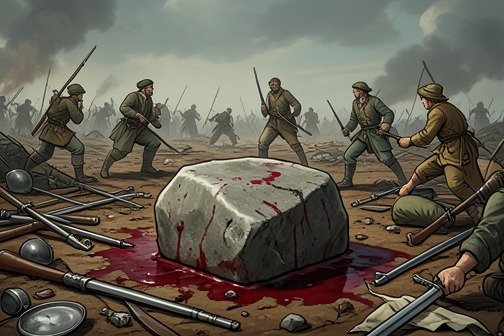
The Battle of Bunker Hill serves as a measure of the price of fighting for less than independence. [Thomas Paine](entity:character-recall-character-thomas-paine-18d74ea99fd9) invokes the battle not to recount its military course, but to argue that the blood and resources already expended make a narrow settlement with Britain an inadequate outcome. It becomes a point in a larger argument about when resistance is justified, what political status follows from it, and who must shape the new order.
## The battle as a measure of political cost
Paine asks whether it is worth taking up arms across the continent merely to remove a ministry or secure repeal of laws. A temporary halt in trade, he argues, might have been balanced by repeal; but if every man must become a soldier, the objective must be proportionate to the expense. He makes that calculation concrete by describing a Bunker Hill price paid for law as folly: the battle’s name turns the cost of bloodshed into a standard against which limited concessions appear insufficient.
The comparison does not treat the battle as a reason to pursue violence for its own sake. Paine distinguishes fighting over a pecuniary law from defending people and property against armed force. A tax measure alone, he says, cannot justify the loss of life; violence to persons, destruction of property, and invasion by fire and sword can conscientiously justify defensive arms. The battle thus sharpens a distinction between the original dispute over laws and the later stakes created by armed conflict.
## From resistance to separation
Paine places the battle within a political break that, in his account, became decisive when hostilities began on [April 19, 1775](entity:time-recall-time-april-19-1775-a8a353a3cfde). Before that date, both advocates of force and advocates of friendship still sought union with [Great Britain](entity:location-recall-location-great-britain-d637ec033675), differing over how it might be achieved. Once force had failed and friendship had withdrawn its influence, earlier proposals belonged to a superseded political moment. The battlefield’s cost gives urgency to his claim that the old objective can no longer justify continuing the struggle.
That conclusion is also a judgment on the failure of peaceful remedies. Paine says that repeated petitions were rejected and had only reinforced royal obstinacy. He argues that delay would leave the next generation to inherit a renewed conflict under the hollow language of parent and child. In this reasoning, the price already paid at Bunker Hill is not an isolated loss to be balanced by a modest concession; it is evidence that reconciliation has failed to provide a secure basis for peace.
Paine consequently treats the first armed resistance as the point at which subjection should have ended. In his formulation, independence ought to date from the first musket fired against the colonies and to have been declared then. He presents this as a line drawn by events rather than by ambition: the colonies did not author the chain of events that made armed defense necessary, but they bear responsibility for deciding what political order should follow.
## The political and legal stakes
The cost of battle also informs Paine’s concern about the colonies’ unsettled status. He describes a continent held together by common sentiment but lacking established law and a named constitution, leaving property insecure and political authority uncertain. Without clearly defined laws, he warns, inhabitants who take up arms and British soldiers captured in battle cannot be distinguished consistently: one group may be treated as prisoners, the other as traitors. The danger is not only continued fighting, but a conflict conducted without a settled account of political allegiance or legal responsibility.
For Paine, independence offers a way out of this contradiction. If the colonies continue to call themselves British subjects while resisting Britain, foreign powers see them as rebels, and potential mediators cannot readily intervene. A public declaration, paired with an account of the failed peaceful methods and an offer of trade, could instead allow other courts to treat the continent as a distinct political party. The battle’s consequences therefore reach beyond the battlefield: its costs make the question of recognized status urgent, while unresolved dependence blocks diplomacy.
The proposed constitutional future is part of the same argument about responsibility. Paine sketches annual assemblies, a president, more equal representation, and domestic business subject to a [Continental Congress](entity:organization-recall-organization-continental-cong-2deb87cf88c1). He proposes that each colony send at least thirty delegates, producing a Congress of at least 390, and that the presidency rotate among the thirteen colonies through selection by lot and congressional ballot. He also suggests requiring three-fifths of Congress for a majority. These proposals contrast a deliberate, representative route to independence with the risk that it might instead arrive through military power or a mob.
## Consequence and significance
Paine’s reference to Bunker Hill makes the battle an accounting point: the scale of sacrifice exposes the mismatch between continental war and a merely temporary or ministerial settlement. It lends force to his claim that independence is not simply a future preference but the political consequence that should follow from armed resistance and failed petitioning.
The event’s significance in Common Sense lies in this transformation of cost into obligation. Paine argues that if independence is achieved through the people’s representatives in Congress, the continent has the opportunity to form a just constitution; if decisive action is postponed, another force may determine the outcome. The battle is thus recalled as a warning against spending lives for a narrow remedy and as an argument for taking responsibility for the political order those sacrifices have made necessary.
Event 4
玫瑰战争
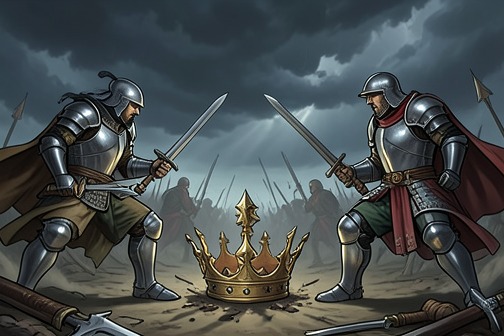
The Wars of the Roses is presented as a prolonged contest between the houses of York and Lancaster that undermines the claim that hereditary succession preserves peace. [Thomas Paine](entity:character-recall-character-thomas-paine-18d74ea99fd9) recounts its shifting fortunes and seventy-year span as evidence that a hereditary crown can turn disputes over personal and dynastic claims into sustained civil conflict.
## Background and Political Argument
Paine introduces the conflict while challenging the defense of hereditary succession as a safeguard against civil war. He cites [England](entity:location-recall-location-england-b153c1f368ea)’s record since the [Norman Conquest](entity:time-recall-time-0db71f78db52): thirty kings and two minors had reigned, yet the country had experienced eight civil wars and nineteen rebellions, including the [Glorious Revolution](entity:time-recall-time-e6178efc7671). In his account, succession did not avert disorder; it helped undermine the very peace it was supposed to provide.
The conflict between York and Lancaster supplies his most extended example. Rather than treating dynastic succession as a stable principle that settles who should rule, Paine emphasizes that rival hereditary claims made the crown a focus of repeated contest. The episode thus turns an abstract argument about political institutions into a historical test: a system that promises continuity had, in this case, accompanied decades of upheaval.
## Course and Reversals
Paine describes twelve pitched battles between Henry and Edward, in addition to skirmishes and sieges. Neither side’s position proved secure. Henry was twice Edward’s prisoner, while Edward also fell into Henry’s hands; political fortune could reverse even the apparent victor’s position.
The reversals extended from captivity to the throne and beyond. Henry was brought in triumph from prison to a palace, while Edward was forced to flee from his palace to a foreign land. The change did not last: Henry was later driven from the throne, and Edward recalled to succeed him. Paine adds that Parliament followed whichever side was strongest, presenting political alignment as responsive to shifting power rather than as a settled defense of legitimate succession.
## Duration and Resolution
The contest began during the reign of [Henry VI](entity:character-recall-character-1c04242727f3) and was not fully extinguished until the reign of [Henry VII](entity:character-recall-character-1ab93d0f1f45), when the two families were united. Paine gives its duration as sixty-seven years, from 1422 to 1489. Its eventual dynastic union ended the contest in the account, but only after succession had been associated with a long sequence of battles, reversals, and changes of rule.
The duration is central to Paine’s rebuttal: the war was not a brief interruption in an otherwise peaceful hereditary order. He uses its persistence to show how rival claims could keep conflict alive across reigns, making the promise of continuity ring hollow.
## Significance in the Argument
Paine’s account is selective and argumentative rather than a neutral chronicle. He foregrounds the number of battles, the capture and return of the rival rulers, Parliament’s changing allegiance, and the eventual union of the families because these details demonstrate the instability he attributes to hereditary monarchy. The sequence makes the succession question appear not as a settled answer to political rivalry but as a cause and framework for it.
The Wars of the Roses therefore anchors a wider warning: monarchy and hereditary succession, Paine argues, have brought countries into bloodshed rather than reliably protected them from it. The episode’s ending in dynastic union does not erase the conflict’s long course; in his reasoning, it confirms that peace came only after generations of instability had run their course.
Event 5
诺曼征服英格兰
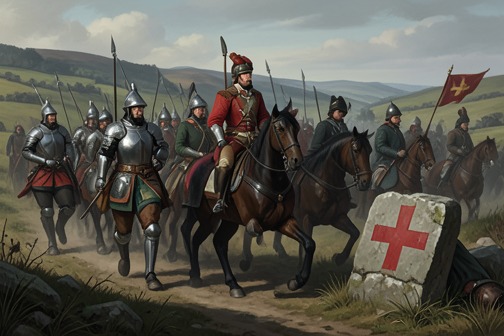
The [Norman Conquest of England](entity:event-recall-event-d04f11592377) serves in Common Sense as both an indictment of hereditary monarchy and a warning about the consequences of leaving political authority unsettled. Paine presents William the Conqueror’s seizure of the English throne as a conquest by force, not a legitimate foundation for hereditary right; he then makes that history a cautionary parallel for the American colonies, which, he argues, must form a government of their own before a new ruler can occupy the vacant seat of power.
## The conquest as an origin of monarchy
Paine rejects the notion that English monarchy has a dignified or providential beginning. He describes William as a Frenchman who landed with an armed force and established himself king against the consent of [England](entity:location-recall-location-england-b153c1f368ea)’s inhabitants. In Paine’s account, the conquest offers no divine sanction: its forceful origin is precisely what makes the claim of hereditary right untenable. He calls William a usurper and says the antiquity of English monarchy cannot withstand scrutiny.
That argument belongs to a wider challenge to hereditary succession. Paine asks how the first king could have acquired power—by lot, election, or usurpation—and argues that none of these possibilities gives the first ruler authority to bind all later generations to his family. The English conquest makes the usurpation case concrete: the claim to rule descends from a seizure of power, not from a right that the conquered population freely granted. For Paine, an institution’s age cannot make its origins honorable.
## A precedent of rule imposed by force
The conquest also figures as an example of what happens when a people does not first secure a lawful political settlement. Paine says William imposed law on England at the point of the sword. The image is not simply an indictment of the conqueror; it supports a practical warning to the colonies. Until government in [America](entity:location-recall-location-america-c751899c385c) is legally and authoritatively occupied, Paine argues, the colonists remain exposed to the possibility that a forceful adventurer will seize the opening and treat them as William treated England.
This possibility gives urgency to Paine’s proposal that the colonies form their own government deliberately. He warns that delay could allow a future claimant to exploit political instability and impose authority before the people can establish their own laws. England’s conquest thus becomes a historical precedent for a projected American danger: leaving government unconstituted may invite conquest, and conquest may replace self-government with laws imposed by force.
## From imperial dependence to independence
Paine places the English precedent within his broader argument against continued dependence on [Great Britain](entity:location-recall-location-great-britain-d637ec033675). The colonies, he says, cannot expect fair and effective government from a power thousands of miles away, unfamiliar with local conditions, and slow to answer petitions. In his view, the problem is not merely administrative inconvenience. So long as the colonies remain British subjects while resisting British rule, foreign governments will regard them as rebels, and other powers will have little reason to offer mediation or assistance.
A declaration of independence would change that political position. Paine argues that America could then address foreign courts as a separate nation, explain its unsuccessful attempts at peaceful redress, and offer trade on peaceful terms. This move from dependent subjects to an independent political community is the opposite of the relation he attributes to the conquest: instead of having law imposed by a distant power, the colonists should establish the authority under which they will live.
## Historical warning and political design
Paine’s use of the conquest is part of a larger historical case against monarchy. He contrasts the relative peace he associates with early societies without kings with the wars and rebellions that, he argues, have marked English royal history. He cites England’s repeated civil conflicts, including the long contest between the houses of York and Lancaster, to challenge the claim that hereditary succession reliably prevents political disorder. The conquest supplies the starkest origin story in that case: monarchy begins not in consent, but in the successful use of force.
Against that history, Paine sketches a government founded through deliberation rather than inherited authority. He proposes annual assemblies, a president chosen through a rotating process among the colonies, and a [Continental Congress](entity:organization-recall-organization-continental-cong-2deb87cf88c1) to which the assemblies would be accountable. These are offered as suggestions rather than a finished plan, but their governing principle is clear: political authority should be formed before officials are chosen to exercise it. In Paine’s argument, the conquest of England is not an event to admire or repeat; it is the cautionary example that makes timely, collective self-government urgent.
Event 6
基甸拒绝以色列人的王位邀请
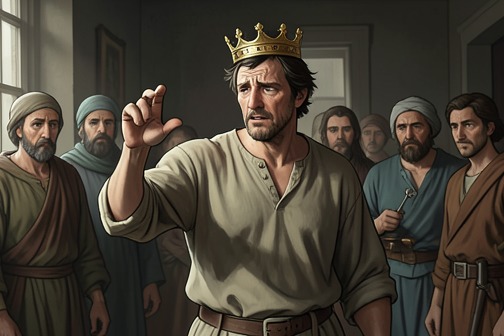
[Gideon](entity:character-recall-character-4100407f2189)’s refusal of the [Israelites](entity:character-recall-character-e97a62dae04b)’ offer of kingship is a biblical episode that [Thomas Paine](entity:character-recall-character-thomas-paine-18d74ea99fd9) makes central to his argument against monarchy: after victory over the Midianites, Gideon rejects rule for himself and his descendants, insisting that the Lord should rule. In Paine’s account, the episode establishes not merely a personal act of piety but a principle about political authority, one later contrasted with the Israelites’ renewed demand for a king and their recognition of that demand as an evil.
## The Offer and Refusal
The Israelites had been oppressed by the Midianites. Gideon led a small army against them, and victory followed through divine intervention. Elated by the success, the people credited Gideon’s generalship and proposed that he rule over them, extending the offer to his son and grandson. The proposal was therefore for hereditary kingship, not simply temporary leadership.
Gideon answered that neither he nor his son would rule over the people, because the Lord would rule over them. Paine emphasizes the force and directness of this reply: Gideon does not treat kingship as an honor that the people are entitled to bestow, but denies their right to grant it. He also does not soften his refusal with conventional expressions of gratitude; Paine reads it as a prophetic charge that the people are disloyal to their rightful Sovereign.
## Paine’s Scriptural Argument
Paine places Gideon’s words within a broader claim that monarchy cannot be justified by either natural equality or scripture. He presents the episode as an explicit rejection of human kingship, and argues that monarchical societies have glossed over scripture hostile to monarchy. For countries still forming their governments, he says, such passages deserve particular attention.
The episode also supplies Paine with an argument against hereditary succession. The people’s offer reaches from Gideon to his son and grandson, making dynastic rule visible in its proposed form. Paine contends that no person, being born among equals, can claim a perpetual right to privilege his family over all others; descendants may also be unworthy of honors their ancestor deserved. Gideon’s refusal thus serves, in Paine’s reading, as both a rejection of monarchy and a refusal to turn leadership into an inherited title.
## The Contrast with Israel’s Later Demand
Paine sets Gideon’s answer against a second episode, which he places about 130 years later. The Israelites then asked [Samuel](entity:character-recall-character-000fe565a9d3) for a king, citing the misconduct of his two sons in their secular responsibilities and insisting that they wanted to be like other nations. Paine treats that appeal to likeness—not a principled need for a new form of government—as a return to the customs of the heathens.
In the account Paine quotes, the demand displeases Samuel, and the Lord tells him that the people have rejected not Samuel but the Lord’s rule. Samuel warns them what kingship will entail: their sons will be taken for chariots, military service, and labor; their daughters for royal domestic work; and their fields, produce, servants, young men, and animals for the king and his officers. The warning makes the political cost of the choice concrete: rule by a king means extraction of the people’s labor and property.
The people nevertheless refuse Samuel’s counsel. They want a king to judge them, lead them, and fight their battles. Samuel calls for thunder and rain during the wheat harvest as a sign of their wrongdoing. The people are greatly afraid and ask Samuel to pray that they will not die, acknowledging that they have added the evil of asking for a king to their sins. Paine uses this later episode to sharpen the contrast: Gideon refuses the people’s offer, while the people eventually insist on the very institution his answer had rejected.
## Political Significance
For Paine, Gideon’s refusal is evidence within a present political controversy, not an isolated biblical anecdote. He uses it to challenge the assumption that kingship is sanctioned by scripture and to urge attention to biblical accounts when new governments are being formed. Its significance lies in the way the episode links political legitimacy to the refusal of hereditary privilege and to the claim that authority should not be transferred from divine rule to a human king.
Paine also invokes the episode while defending political action against the Quaker principle that setting up or putting down governments belongs exclusively to God. He argues that political changes come about through ordinary human means, and treats the appeal to divine sovereignty as no reason for people to abstain from political judgment. In this context, Gideon’s refusal reinforces Paine’s argument that rejecting kingship can be an act of fidelity to the principle that the Lord alone should rule.
Event 7
以色列人向撒母耳请求立王
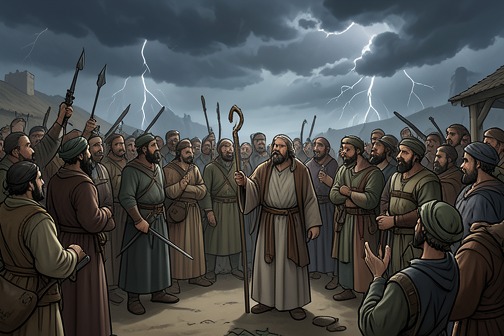
The [Israelites](entity:character-recall-character-e97a62dae04b)’ demand for a king is the pivotal scriptural episode through which [Thomas Paine](entity:character-recall-character-thomas-paine-18d74ea99fd9) argues that monarchy begins in a people’s rejection of divine rule and proceeds by imposing burdens on those who authorize it. Their request is not represented as a response to an unknown political principle: [Samuel](entity:character-recall-character-000fe565a9d3) warns them what kingship will entail, they insist on having a king nonetheless, and a storm makes their wrongdoing unmistakable. In Paine’s reading, the episode is both a religious indictment of monarchy and a concrete account of its human costs.
## Background and the demand
Paine places the request within a history in which the Israelites had gone roughly three thousand years, by the scriptural chronology he invokes, without a king. Their government had instead been administered by a judge and the elders of the tribes, except in extraordinary cases of divine intervention. The demand therefore marks a break with an established political and religious order, not simply the appointment of a new ruler.
The immediate occasion was the misconduct of Samuel’s two sons, who had been entrusted with secular responsibilities. The Israelites seized on that failure and approached Samuel abruptly and insistently, demanding a king to judge them like other nations. Paine emphasizes the stated motive: they wanted to resemble the surrounding nations, which he identifies with the heathen customs from which he believes they should have distinguished themselves. Their request is thus framed as an act of imitation, and as a preference for a familiar human institution over their distinctive claim to divine sovereignty.
Samuel was displeased and prayed to the Lord. The answer, as Paine recounts it, distinguished the people’s rejection of Samuel from their deeper rejection of God: in demanding a king, they were refusing the Lord’s reign over them. The request consequently carries a theological meaning beyond dissatisfaction with Samuel’s sons. It is treated as part of a recurring pattern of forsaking God and serving other gods.
## Samuel’s warning about kingship
The Lord instructs Samuel to grant the demand but first to warn the people of the general manner of earthly kings. Paine stresses that the warning is not confined to a particular ruler. It describes the customary operation of monarchy, and he argues that its features remain recognizable across the long distance separating the scriptural account from his own time.
The king will take the Israelites’ sons for his chariots and horsemen, and some will be made to run before the chariots. He will appoint military captains and set people to work his ground, reap his harvest, and make instruments of war and chariots. Paine connects the taking of men for royal use to the contemporary practice of impressment, making the ancient warning bear on present political conditions rather than leaving it in the past.
The warning extends to the king’s household and expenditure. Daughters will be taken as confectioners, cooks, and bakers; the king will take the people’s best fields and olive yards for his servants. A tenth of their seed and vineyards will go to his officers and servants. For Paine, these details expose the economic and domestic reach of royal power: the king’s luxury and patronage are sustained by appropriating the people’s work, property, and family members.
The taking does not stop there. The king will claim a tenth of male and female servants, the best young men, asses, and sheep, putting them to his own work, until the people become his servants. Paine reads the distribution of fields and produce to royal dependents as evidence of bribery, corruption, and favoritism. What is presented as a warning about kingship thus becomes a catalogue of extraction: military service, labor, household service, property, and livestock are all brought within the monarch’s reach.
Samuel also warns of the consequence the people will face after choosing: they will cry out because of their king, and the Lord will not hear them on that day. Paine treats this as an account of monarchy’s persistence. The people are forewarned, yet their insistence binds them to the institution and its costs. The warning makes their eventual distress not an unforeseen accident but the consequence attached to a choice they were told they were making.
## Refusal, storm, and acknowledgment
The Israelites refuse to obey Samuel’s warning. They repeat that they want a king to judge them, to go before them, and to fight their battles, and that they want to be like all the nations. Samuel reasons with them and sets their ingratitude before them, but they remain bent on their demand. Their stated hopes of judgment, leadership, and military protection stand against the warning that the king will make them his servants.
Samuel then calls on the Lord to send thunder and rain as a sign of the people’s wickedness. The timing matters in Paine’s account: the rain comes during wheat harvest, when it is a punishment. The storm is not merely an atmospheric event but an unmistakable public confirmation of Samuel’s rebuke. The people greatly fear the Lord and Samuel, admit that they have added this evil to their sins by asking for a king, and beg Samuel to pray that they will not die.
Paine presents the episode as direct and decisive testimony against monarchical government. The people’s fear and confession give the narrative its turn: they have insisted on royal rule despite the warning, but the storm forces them to acknowledge the religious meaning of their demand. Their admission does not erase the choice; it makes visible the gap between the security they expected from a king and the sin and danger Samuel had foretold.
## Paine’s political and religious use of the episode
Paine makes the Israelites’ demand part of a broader argument that government and society have different origins and purposes. Society arises from human needs and mutual assistance, while government is required because people fail to remain just toward one another. Government is therefore a necessary evil, justified by security; any form that does not best secure people with the least expense and greatest benefit fails its proper test. Against that standard, Samuel’s account supplies a vivid description of monarchy turning protection into appropriation.
The episode also supports Paine’s claim that monarchy has no sound religious warrant. He sets the Israelites’ demand beside the earlier history of a political order administered by judges and elders, and argues that scripture disapproves of kingship rather than sanctifying it. His reading of the Lord’s response makes the people’s request a rejection of divine authority; the catalogue of royal takings then shows what that rejection means in ordinary political life.
Paine closes the argument by insisting that the scriptural passages admit no equivocal construction: either, he says, they record a protest by the Almighty against monarchical government, or scripture is false. He further contends that the account of the Israelites’ confession helps explain why monarchy continues: people may see its abuses and acknowledge its sinful origin, yet still choose it. The episode therefore functions not as an isolated biblical recollection but as Paine’s warning to political communities considering what form of government to establish: a people cannot treat the demand for a king as a harmless change of office when the choice entails a transfer of authority, labor, and property.