Adyemi's rise in the secret meeting
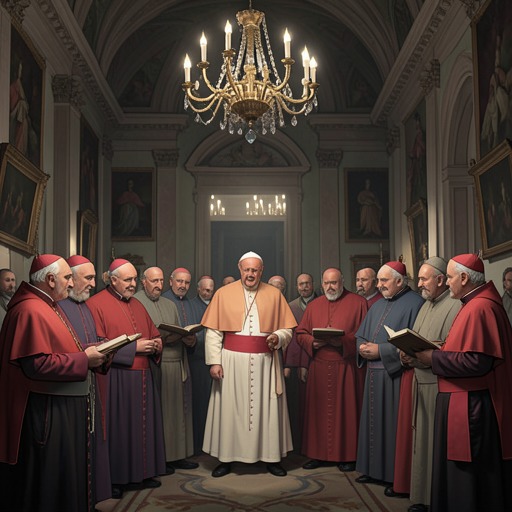
ConclaveJoshua Adeyemi’s rise in the conclave is the election’s most dramatic early surge: after an unsettled first ballot, he moves decisively into the lead and reaches fifty-seven votes in the third. For a moment, the tally seems to point toward the first black Pope and to make his election before the day’s end nearly certain. But the promise built into the numbers proves fragile. After the luncheon break, Adeyemi has lost thirty-two votes, and his candidacy collapses as other contenders regain support.
From a crowded field to a clear front-runner
The first ballot offered no settled direction. Thirty-four cardinals received at least one vote, an unusually broad distribution that included self-votes, votes for friends, and support for fellow countrymen. Joshua Adeyemi was among four men who emerged as plausible contenders, alongside Goffredo Tedesco, Aldo Bellini, and Joseph Tremblay. The totals were close enough that none could claim a decisive advantage, while Bellini’s showing fell short of what his campaign manager had expected.
The first count also established the scale of the task ahead: seventy-nine votes were needed for election, and no candidate came close. The rules required the electors to continue voting for a two-thirds majority, potentially through thirty ballots over twelve days, before a simple-majority procedure could be used. The deadlock was therefore not an abstract possibility. It shaped the candidates’ prospects and made every shift in support consequential.
The second ballot changed the balance. As the less viable candidates fell away, Adeyemi gained sixteen votes and reached thirty-five, taking first place. Tedesco rose to twenty-nine, while Bellini and Tremblay barely moved. Adeyemi’s gain was more than a numerical lead: it showed that support dispersed across the crowded first ballot could consolidate rapidly around a candidate. The changing totals suggested that the electors were beginning to coordinate, even as the result remained far short of the required majority.
The surge and its apparent meaning
In the third ballot, Adeyemi’s name recurred so often that Lomeli prayed for him as the votes were read. He finished with fifty-seven, against thirty-two for Tedesco and twelve for Tremblay; only six candidates received any support. Three more votes would have given Adeyemi an outright majority, and twenty-one more would have secured the two-thirds threshold. The narrowing field made the scale of his advance unmistakable.
The result also acquired a symbolic force beyond its arithmetic. Lomeli saw the possibility of the first black Pope in Adeyemi’s position, and read the ballot as a manifestation of divine will. He thought that even if Tedesco could gather enough votes to deny Adeyemi a two-thirds majority in the next round, resistance would soon crumble: few electors, he believed, would risk a Church schism by obstructing what seemed a striking providential outcome. His confidence joined spiritual interpretation to practical calculation, since electors might also hesitate to oppose a powerful incoming pope.
Adeyemi’s posture offered a counterpoint to the public momentum around him. As the figures were tallied, he sat with his head bowed and held his pectoral cross while praying. The scene does not establish what he expected or intended; its significance lies in the contrast between the immense political force gathering around his candidacy and the candidate’s visible attention to prayer. The novel lets the numbers make the claim of inevitability while leaving that inward response unspoken.
Momentum broken at the luncheon break
The pause for luncheon separates the apparent ascent from its reversal. When voting resumed, Adeyemi had lost thirty-two votes—more than half his third-ballot support. Tremblay gained eleven, Bellini eight, Lomeli six, Tedesco four, and Vincent Benítez three. The losses did not transfer to a single challenger; instead, support spread across the field, undoing the sense that the electors had already converged on Adeyemi.
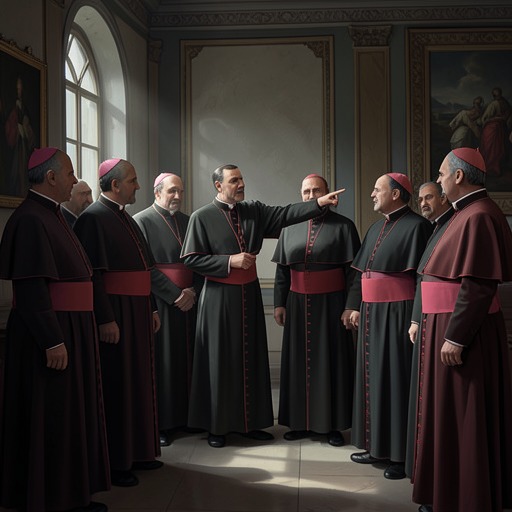
Lomeli understood the reversal as a consequence of news circulating during the break. A cardinal named Nakitanda had spread the word, and enough electors had either witnessed the scene in the dining hall or heard about it afterward to become seriously alarmed. The evidence gives this development a clear causal role in Adeyemi’s decline, but does not supply grounds here to elaborate the incident beyond its effects on the ballots. The break that interrupted the voting thus became the point at which information altered the election’s course.
The new distribution changed the atmosphere of the contest. The prospect of an African pontiff that had seemed so close was now, in Lomeli’s assessment, dead; Tedesco had returned to the lead and was only four votes short of the number needed to block anyone else from reaching two-thirds. Tremblay, meanwhile, might benefit if support from the developing world shifted toward him. Bellini remained trapped in a prolonged decline, while Lomeli’s own support could be read as a search for a steady hand. The election had not simply moved from one front-runner to another: the collapse reopened strategic choices and made coalition-building uncertain again.
From surge to bargaining position
The later negotiations show how far the election had moved beyond Adeyemi’s early ascent. In a subsequent ballot, Bellini had fifteen votes and Lomeli twelve, while Tremblay had forty. Bellini’s campaign manager argued that a combined Bellini-Lomeli bloc of twenty-seven, added to Tremblay’s forty, would give Tremblay sixty-seven votes and leave him twelve short of election. Bellini and Lomeli accepted that Tremblay had demonstrated broad appeal, despite their reservations about him, and treated him as the viable option against another candidate they considered disastrous.
This bargaining marks a contrast with the third ballot’s language of inevitability. Then, Adeyemi’s rising total had seemed to reveal the divine direction of the conclave; later, the practical question was how competing groups might assemble the votes needed to elect or block a candidate. The election’s spiritual interpretation did not erase its procedures or alliances. Rather, the same electors could read the ballot as discernment and negotiate over its consequences at once.
Adeyemi’s rise therefore matters not as a completed path to the papacy but as a concentrated demonstration of how momentum is made and lost. His movement from thirty-five to fifty-seven votes made his election appear imminent; the luncheon interruption and circulation of news then dispersed his support across rivals. The episode’s decisive turn exposes the limits of reading a single tally as destiny: within a conclave, numbers register not only preference but also information, coordination, fear of division, and the changing terms on which electors judge a plausible successor.