Second Vatican Council
ConclaveThe Second Vatican Council functions as a contested historical turning point in the novel: its reforms are associated with abandoned ceremonies and a more multinational Church, but also with disputes over language, authority, and whether Catholics in different regions still share a common identity. The cardinals do not inherit a settled verdict on the Council; they argue over its consequences as they struggle to choose a successor to the late Pope.
A break with older customs
The Council’s effects appear first in Lomeli’s recollection of the conclave’s former ceremonial grandeur. As a young seminarian, he had admired artists’ depictions of cardinals voting beneath canopied thrones; after an election, the cardinals would lower their canopies, leaving the chosen man distinguished from his former equals. The thrones were abandoned in 1965, after the Second Vatican Council, along with many other older traditions. The change marks a real institutional transformation, not merely a revision of decor: the College of Cardinals had become too large and multinational, in the view described by Lomeli, for such Renaissance ceremony.
Yet Lomeli’s response is ambivalent. He privately misses some of the old pageantry and thinks the late Pope’s repeated emphasis on simplicity and humility could itself become a kind of ostentation. In his view, pride can attach even to the performance of humility. The Council’s legacy is therefore presented neither as simple loss nor as unquestioned progress: the disappearance of old forms may signal necessary change, but the values invoked to justify change can also become self-conscious display.
Language and the argument over reform
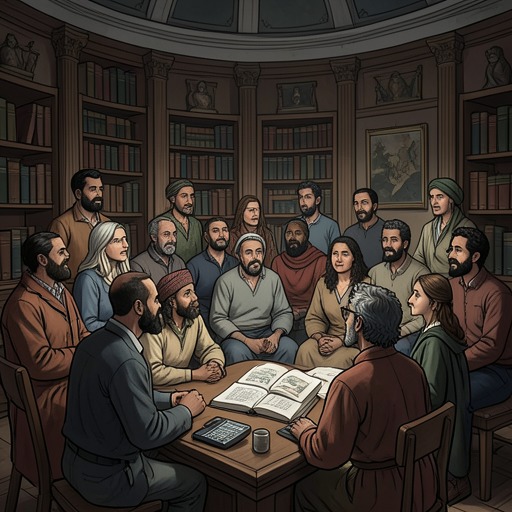
At dinner, Tedesco makes the Council’s liturgical legacy central to his case for a traditionalist pope. He argues that before Latin was abandoned, cardinals at a conclave could converse across national differences in a shared language. In his account, the liberals who sought to remove a “dead language” in 1962 in order to make communication easier achieved the opposite result: cardinals now sit in groups organized around their native languages. He points to Italians near the kitchens, Spanish-speakers elsewhere, and English-speakers nearer reception as a visible sign of division.
Tedesco extends that complaint beyond the practical business of a conclave. Language, he argues, shapes thought, philosophy, and culture; after six decades, being Catholic in Europe no longer means the same thing as being Catholic in Africa, Asia, or South America. He fears the universal Church has become little more than a confederation. The Council’s reforms thus become, in his rhetoric, an explanation for institutional fragmentation and a warning that the Church may lose its shared character.
Lomeli does not accept Tedesco’s reasoning, but he remains neutral rather than being drawn into a public argument. That reserve matters: the Council is not simply a historical topic but a live campaign issue, and every judgment about reform can be read as support for one candidate over another. Tedesco links the abandonment of Latin to the possible abandonment of Rome and insists that the next pope must be Italian. His warning that the Church may cease to exist “as we know her” turns nostalgia into a political claim about the future.
Competing visions of the Church
Bellini defines his position against Tedesco’s. Asked how supporters should describe him, he says that he stands for everything Tedesco opposes: respect for other faiths, tolerance of differing views within the Church, greater powers for bishops, and a larger role for women in the Curia. He rejects a return to Latin liturgy and to the older practice of priests celebrating Mass with their backs to the congregation, describing that past as repressive. His defense of the post-Council Church is a defense of changes in worship and of a more plural, less centralized institution.
That platform also has limits. When Bellini raises women’s role in the Curia, Sabbadin cautions that the issue could give Tedesco an opening to misrepresent Bellini as supporting female ordination. Bellini accepts that female ordination is closed for his lifetime, and perhaps for several lifetimes. The exchange shows reform as contested and bounded: even a candidate associated with liberal change distinguishes administrative participation from a question he considers unavailable for resolution in the foreseeable future.
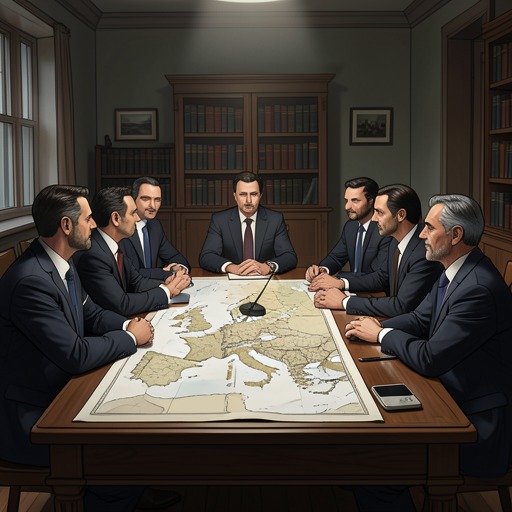
The disagreement is sharpened by the changing composition of the electorate. The age limit for voting cardinals, introduced by Pope Paul VI fifty years earlier, excludes those over eighty from the conclave. Lomeli observes resentment among older cardinals who have lost authority, while noting that turnover has increased the late Pope’s ability to shape the electorate. Alongside Tedesco’s concern about regional differences, these rules reveal a Church whose internal balance is being remade through both reform and succession.
Reform’s legacy in the conclave
The election makes the consequences of that transformation tangible. The candidates’ supporters gather across linguistic and ideological divisions, while Adeyemi’s appeal demonstrates how a candidate’s identity and the expectations attached to it can complicate political judgments. Lomeli considers whether Adeyemi might unite the Church, even as he recognizes that some liberals hesitate to criticize views they might otherwise condemn because Adeyemi is Black. The Council’s multinational Church is not free of inherited divisions; it gives those divisions a new setting and makes the question of unity more urgent.
Tedesco’s fear of fragmentation is answered not by a return to the older ceremonial order but by a political appeal for unity during crisis. Bellini, after receiving votes, urges his supporters to transfer their support to Lomeli rather than prolonging the election in pursuit of a later simple-majority threshold. He frames the decision as a refusal to let the cardinals’ ambitions and disagreements eclipse the danger facing the Church. The Council’s contested inheritance remains unresolved, but the conclave’s immediate choice turns on whether the institution can hold together without first settling every dispute about reform.
When Lomeli becomes Pope Innocent XIV, he greets the cardinal-electors standing before the altar rather than receiving their pledges from the papal throne. He embraces them individually, including Bellini, Tedesco, Adeyemi, and Tremblay, and promises support rather than recrimination. The gesture does not reverse the Council’s changes or erase the disagreements they have intensified. Instead, it presents unity as an act of reconciliation among men who have argued over the Church’s direction, and as a practical commitment to face what comes next together.