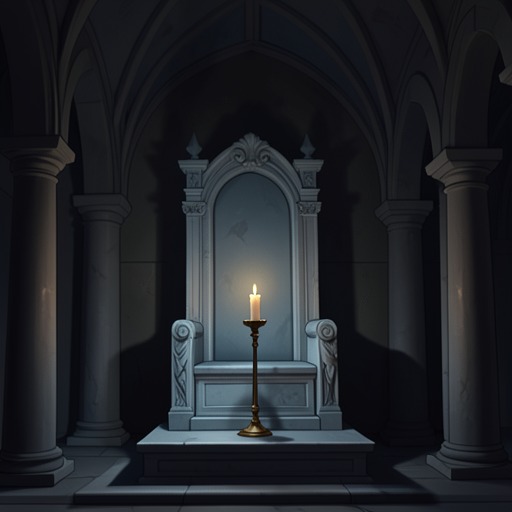
Opening of the conclave
ConclaveThe opening of the conclave is the formal passage from public mourning and preparation into a closed election. In the Pauline Chapel, Jacopo Baldassare Lomeli guides the cardinals through the prescribed rites and their promises; Archbishop Mandorff’s “Extra omnes” then sends everyone else out. At precisely 4.46 p.m., the doors close from within, leaving the electors alone under the rules that govern their deliberations.
Setting and Opening Rite
The Apostolic Constitution directs the cardinals to assemble first in the Pauline Chapel, next to the Sistine Chapel, at a suitable hour in the afternoon. The chapel is the Pope’s private place of worship, more intimate and dimmer than the Sistine Chapel. When Lomeli arrives, the cardinals are already seated and television lights are on. Monsignor Epifano places the dean’s scarlet silk stole around his neck, and the two proceed toward the altar between Michelangelo’s frescoes of Saint Peter and Saint Paul.
Epifano holds open the ritual book at the section titled “The Approach to the Conclave.” Lomeli makes the sign of the cross and begins the proceedings before the standing cardinals. He announces that, after the sacred acts completed that morning, they are entering the conclave to elect a new Pope. He calls on the Church, united with them in prayer, to seek the Holy Spirit’s help in choosing a worthy pastor. Yet the formal words do not bring him a sense of spiritual presence: for him, at this point, they are words without felt assurance.
Oaths and Secrecy
At the altar, Lomeli leads the cardinals in a prayer and administers their oath. Together they pledge to observe the Apostolic Constitution faithfully, and that whoever is elected will carry out the Petrine Primacy as pastor of the universal Church. They also swear to maintain secrecy about the election and everything that occurs at the place of election.
Lomeli then returns down the aisle to the Bible and makes the pledge in his own name, placing his palm on the open Gospel. The cardinals follow one by one. The oath is both a ritual declaration and a binding commitment: the election proceeds under rules the electors have sworn to uphold, and its events are not to be disclosed to the outside world. The full college takes more than half an hour to complete the ceremony.
As he watches the cardinals swear, Lomeli considers how hindsight can make a Pope’s election appear destined. The men before him could each, in principle, emerge in pontifical white; no candidate’s eventual elevation is assured by the ceremony itself. He recalls that the late Pope was not considered a likely choice before the previous election, yet won a two-thirds majority on the fourth ballot. The ritual therefore establishes a solemn order without resolving the uncertain contest to come.
“Extra omnes” and Closure
Once the oaths are complete, Mandorff, as Master of Papal Liturgical Celebrations, steps to the microphone beneath The Last Judgement and intones the official formula, “Extra omnes.” The television lights go out. Masters of ceremonies, priests, officials, choristers, security personnel, television crews, the photographer, a nun, and the commandant of the Swiss Guard leave the chapel.
Mandorff waits until the last of them has gone, then walks to the double doors. At 4.46 p.m. precisely, he closes them from the inside, ending the television transmission and the outside world’s view of the conclave. The closing is a concrete boundary as well as a ceremonial one: the public rite gives way to a confidential gathering whose decisions must now be made by the electors themselves.
The word “conclave” is explained through its Latin roots, con clavis, “with a key.” Since the thirteenth century, the Church has used enclosure to ensure that the cardinals reach a decision. They may leave the chapel for meals and sleep, but not be released until they have chosen a Pope. Once the doors are shut, the narrative marks the change plainly: the cardinal-electors are alone.
Procedure Under Pressure
The opening rites establish the authority and limits of the process that will soon be tested. Earlier, Lomeli had proposed amending the account of the late Pope’s final day to include attendance at vespers, while preparing a fuller schedule to hold in reserve. That episode shows his attention to procedure as a means of preventing discrepancies and rumor. The conclave’s opening likewise places action within written rules, public obligations, and controlled information.
The rules do not remove disagreement; they define how it can be addressed. Later, when Lomeli seeks permission to bring an urgent matter before the assembled electors, he invokes paragraphs five and six of the Apostolic Constitution, which allow certain problems to be discussed in special circumstances with majority approval. He then puts the question to a vote. This later recourse to procedure echoes the opening: authority in the conclave depends not only on office or persuasion, but on the electors’ recognition of the rules and their willingness to act through them.
That distinction becomes especially consequential when the late Pope’s appointment of Vincent Benítez in pectore is raised. Lomeli argues that the Apostolic Constitution allows a cardinal-elector arriving before a new Pope is elected to join the election at its current stage; on that basis, he maintains that Benítez is legally a cardinal. The closed gathering is therefore not simply a contest among known candidates. Its membership and decisions depend on how the governing law is interpreted and applied.
From Ceremony to Election
The first ballot follows the closure, and its result immediately unsettles expectations. Thirty-four cardinals receive at least one vote, a number later described as a record. Lomeli himself receives five. The leading candidates are Goffredo Tedesco with twenty-two votes, Joshua Adeyemi with nineteen, Aldo Bellini in third place, and Joseph Tremblay close behind him; thirty-eight votes go to others. No candidate is close to the seventy-nine needed for election.
The result also reveals the practical stakes of the two-thirds rule. The Apostolic Constitution requires continued balloting until a candidate reaches that threshold, potentially for as many as thirty ballots over twelve days; only after that period can a different system permit election by simple majority. The ceremony has sealed the electors inside, but it has not made agreement inevitable. Instead, the closed doors turn the uncertainty visible in the first ballot into an internal problem the cardinals must resolve together: how to choose a Pope without allowing the Church’s divisions to determine the outcome.