Pope's removal of Trambly
ConclaveThe late Pope’s reported dismissal of Cardinal Tremblay on the day he died becomes an unresolved fault line in the papal succession. Archbishop Woźniak says the Pope removed Tremblay from all his Church offices for gross misconduct; Tremblay calls the allegation nonsense and denies it. Because Woźniak learned the account from the dead Pope and Tremblay invokes a witness who cannot be consulted during the conclave, the report leaves Dean Lomeli with consequential information that he cannot readily verify.
The reported dismissal
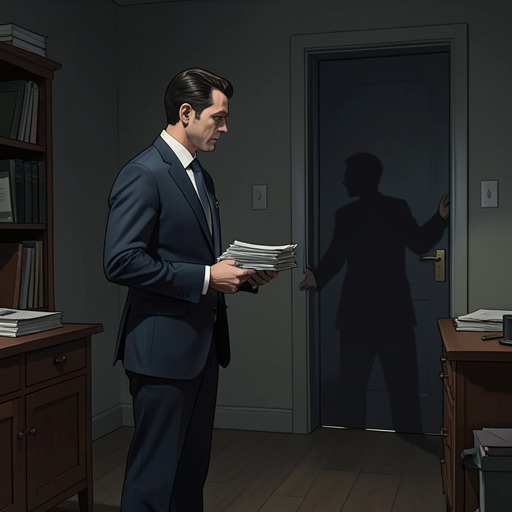
The disputed event concerns the late Pope’s final official appointment: a meeting with Cardinal Tremblay at four o’clock on the day of his death. Woźniak reminds Lomeli of the appointment and then tells him that, during it, the Pope dismissed Tremblay from all his offices in the Church. When Lomeli asks why, Woźniak identifies the reason as gross misconduct. The report is striking not merely because it concerns Tremblay’s position, but because it describes an exercise of papal authority that, if true, would alter the standing of a major figure at the very moment the Church is preparing to elect a successor.
Woźniak was not present at the meeting. He says the Pope told him about the dismissal afterward, when they had supper together. That distinction defines the limits of the information: Woźniak presents the account as something the Pope told him, not as something he personally witnessed. Lomeli presses him for facts and specifically asks whether he had been present. Woźniak answers plainly that he had not, leaving Lomeli to weigh a direct report from the Pope against the absence of an eyewitness account from the archbishop.
How the account came to Lomeli
Woźniak’s disclosure is inseparable from the confusion surrounding the Pope’s death. In the initial official timeline, the Pope had supper with Woźniak at 7:30 p.m., retired to his apartment at 8:30, and went to bed at 9:30. At 11:30, Woźniak checked on him and failed to observe vital functions; emergency treatment began at 11:34, and the Pope was pronounced dead at 12:12 a.m. That account places Woźniak with the Pope after the afternoon meeting and gives a concrete context for his claim that the Pope spoke to him later. It does not, however, independently establish what was said about Tremblay.
Woźniak also recounts what followed after the death. Under the procedure he cites, the Camerlengo was to be the first Curial official notified. The doctor summoned Tremblay, who arrived and took control of the situation. Woźniak says that about an hour later Tremblay drew him aside and asked whether the Pope had seemed preoccupied at supper. Woźniak admits that he did not disclose the dismissal then: he was frightened and believed he was not supposed to know of the matter. He says he described the Pope only as agitated. In retrospect, he regards that silence as the moment when he should have spoken, and later worries that Tremblay may have persuaded Monsignor Morales not to mention the meeting. That last point is Woźniak’s suspicion, not a confirmed account of Morales’s actions.
Denial and the problem of corroboration
When Lomeli raises the allegation with Tremblay, he says he has been told that the late Pope demanded Tremblay’s resignation from all his offices. Tremblay first dismisses it as nonsense and asks whether the report came from Woźniak. He then denies that there is any truth to the claim that he was dismissed at the meeting. His response directly contradicts Woźniak’s account, but the exchange does not resolve which man is telling the truth.
Tremblay points Lomeli toward Monsignor Morales, saying Morales was present at the meeting. Lomeli replies that he cannot ask him at that moment because the cardinals are sequestered. The proposed corroborating witness is therefore unavailable within the immediate circumstances of the election. Woźniak, meanwhile, has already questioned why Morales did not disclose the alleged dismissal on the night of the death, when he was with the others, or tell another secretary. The competing accounts thus turn on different forms of missing evidence: Woźniak did not witness the meeting, and Lomeli cannot question the witness Tremblay names.
Significance in the succession
The allegation acquires weight because Tremblay is not a marginal figure. He is Camerlengo and Prefect of the Congregation for the Evangelisation of Peoples, and he has a faction of supporters among the electors. At the opening of the succession, Lomeli understands that he must manage an election under unusually difficult circumstances. The claim that the Pope dismissed one of its leading candidates therefore arrives not as a private historical detail but as potentially decisive information about the standing of a contender and the conduct of the previous pontificate.
The episode also anticipates the larger struggle over the late Pope’s record. Later, while examining papers hidden in the Pope’s bed, Lomeli finds financial documents and a confidential report identifying serious discrepancies in the administration of Church property. Bellini recalls that the Pope demanded financial transparency and that the Curia resisted his scrutiny. These later discoveries do not verify Woźniak’s story about Tremblay’s dismissal, but they give the report a broader institutional setting: the late Pope had confronted powerful interests, and his final decisions remain contested after his death.
At the same time, the succession does not end in the simple confirmation of Woźniak’s allegation. When Benítez eventually asks the electors to transfer their support to Lomeli, he urges them to unite behind the dean; after the election, the new Pope receives Tremblay and the other former candidates warmly and promises his support, making clear that there will be no reprisals or dismissals. The reported order against Tremblay remains an unresolved claim, while the public gesture of the new pontificate turns away from punishment and toward unity. The tension between those two outcomes gives the episode its lasting significance: the electors must act amid disputed testimony, and the eventual response is reconciliation rather than a public judgment on what happened in the final meeting.