
Crime and Punishment
Overview
Fyodor Dostoevsky’s Crime and Punishment is a Russian novel first serialized in The Russian Messenger in 1866 and published as a separate book in 1867. A landmark of literary realism and psychological fiction, it turns a crime story into an examination of conscience, moral responsibility, and the ideas people use to excuse their actions. Its suspense comes not only from whether the crime will be discovered, but from watching the criminal’s attempts to live with what he has done.
Rodion Raskolnikov, an impoverished former student in St. Petersburg, becomes convinced that exceptional people may be entitled to cross ordinary moral boundaries in pursuit of a greater purpose. He regards an elderly pawnbroker as a harmful person and plans to kill her and take her money. The deed is also an experiment: he wants to discover whether he himself belongs to the kind of person who can act beyond conventional morality. During the murder, the pawnbroker’s kind and vulnerable sister, Lizaveta, unexpectedly enters, and Raskolnikov kills her too. Rather than confirming his imagined superiority, the crime leaves him feverish, isolated, suspicious, and tormented by guilt. His efforts to hide, rationalize, and understand his actions form the novel’s psychological center.
The consequences unfold through a network of relationships. The investigator Porfiry approaches the case through conversation and psychological insight, while Raskolnikov’s friend Razumikhin tries to support him. His mother and sister, Dunya, arrive amid their own hardships. Sonia, herself driven into poverty, offers compassion and spiritual companionship. Through her, confession becomes a step toward accepting responsibility rather than merely a way to escape detection. Raskolnikov is ultimately sent to Siberia, where the conclusion suggests the possibility of repentance and renewal without pretending that suffering or punishment can erase the crime.
Ideas and composition
The novel’s central conflict is between abstract theory and the value of actual human lives. Raskolnikov tries to treat murder as a rational calculation, but discovers that people cannot be reduced to convenient categories and that conscience resists his attempts at self-justification. Dostoevsky probes the difference between legal punishment and inward torment, and asks whether freedom can mean a right to use other people as instruments. Poverty, social isolation, pride, compassion, faith, and moral accountability all shape the story. The narrative stays close to Raskolnikov’s unstable consciousness, registering abrupt changes of mood, contradictory thoughts, and unreliable explanations. This intimacy makes his crisis comprehensible without making his violence acceptable.
Dostoevsky wrote the novel after returning to literary work following imprisonment and penal servitude in Siberia. His firsthand knowledge of confinement, punishment, and human suffering informs the book’s attention to the psychological meaning of crime and sentence. Its setting also reflects the heated intellectual debates of 1860s Russia, including arguments about utilitarian calculation, radical ideas, and the limits of individual morality. Rather than presenting a simple abstract rebuttal, the novel tests its protagonist’s theories against the consequences they produce in the lives of others.
Legacy
With its urgent plot, penetrating psychological portraiture, and clashes among sharply individual voices, Crime and Punishment helped establish new possibilities for the novel as a form capable of investigating consciousness and ethical conflict. It remains one of the best-known works of Russian literature and a central point of entry into Dostoevsky’s writing. Its influence extends across psychological fiction, crime narratives, and philosophical literature; it has been translated, debated, and adapted across generations. Readers continue to find in it questions about self-deception, power, poverty, responsibility, and repentance. Its enduring force lies in refusing easy answers and making ideas confront the human suffering they can cause.
About the Author
Life and education
Fyodor Mikhailovich Dostoevsky was born in Moscow on November 11, 1821, in the Russian Empire. The second of seven children, he grew up in a modest physician’s family. His father worked as a doctor, and Dostoevsky’s early exposure to stories and literature accompanied a close awareness of poverty and the lives of people at society’s margins. His mother died in 1837. That year he left home to study at the military engineering school in St. Petersburg. After completing his education, he worked in engineering-related service before turning increasingly to literature. He suffered from epilepsy, which began in childhood and recurred throughout his life.
Dostoevsky entered literary life in the 1840s. His first novel, Poor Folk, appeared in 1846 and drew attention for its portrayal of the feelings and circumstances of poor people. The Double, also published in 1846, explored divided identity and conflict within the self. He became associated with a circle of people who discussed literature and social ideas. In 1849 he was arrested for his involvement with the Petrashevsky Circle and sentenced to death. The sentence was commuted shortly before its execution, and he was sent to Siberia for four years of penal servitude. A period of military service followed. Imprisonment and exile profoundly affected his outlook and gave lasting force to his treatments of punishment, suffering, faith, and responsibility. In 1859 he was permitted to return to the European part of Russia and resumed literary work.
Major works
Dostoevsky’s post-exile writing repeatedly examined poverty, belief, free will, guilt, and divided consciousness. The House of the Dead, published in 1861–62, transformed his knowledge of penal life into fiction. Notes from Underground (1864) gave voice to a solitary, self-contradictory narrator and challenged the idea that human conduct could be explained entirely through rational self-interest. Crime and Punishment followed in 1866, alongside The Gambler. He went on to publish The Idiot (1869), Demons (1872), and The Brothers Karamazov (1880). Across these works, he explored belief and doubt, moral choice, family conflict, and the consequences of ideas in action. His broader output also included shorter fiction, essays, and journalism.
Dostoevsky married twice; his second wife was Anna Snitkina. His adult life included illness, financial pressure, bereavement, exile, and an exceptionally demanding writing career. He died in St. Petersburg on February 9, 1881, aged fifty-nine.
Reputation
Dostoevsky is widely regarded as one of the major Russian writers of the nineteenth century and one of literature’s most penetrating explorers of psychological and moral conflict. He gave complex inner lives to characters living at the margins of society, using dialogue, interior reflection, and dramatic confrontation to test their beliefs against experience. Poor Folk, Crime and Punishment, The Idiot, and The Brothers Karamazov remain widely read and studied. His explorations of guilt, freedom, faith, and human contradiction have continued to shape literature and philosophical discussion. Writers and thinkers including Kafka, Camus, and Sartre are often discussed in connection with his legacy. His reputation rests not only on the questions his fiction raises, but on his ability to make abstract questions immediate through particular people, relationships, and experiences of suffering.
StoryFlow
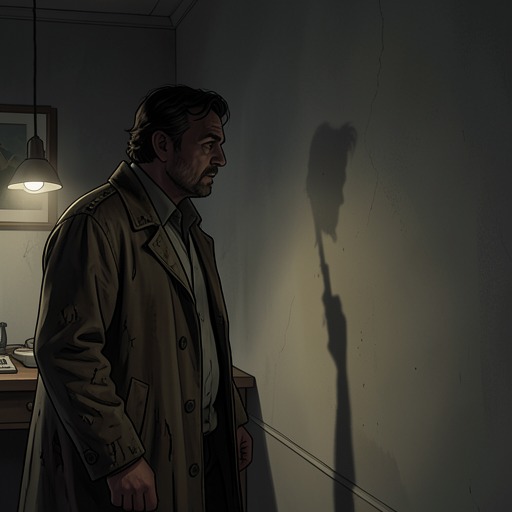
The Crime Taking Shape
Raskolnikov’s imagined experiment develops from an evasive fantasy into a murder plan and then an irreversible act.
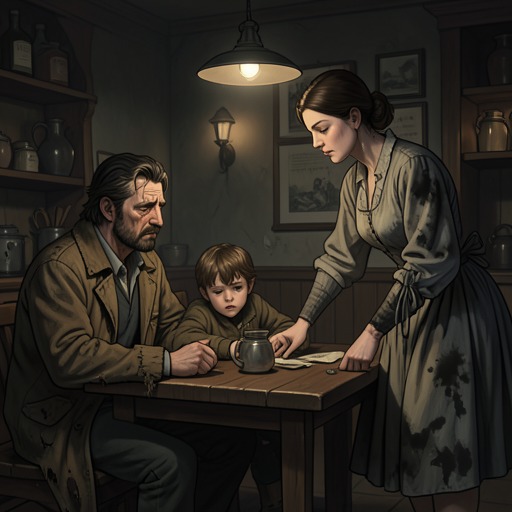
The Marmeladov Household
The Marmeladov family’s poverty, fragile hopes, and repeated crises reveal how each member bears the burden of destitution differently.
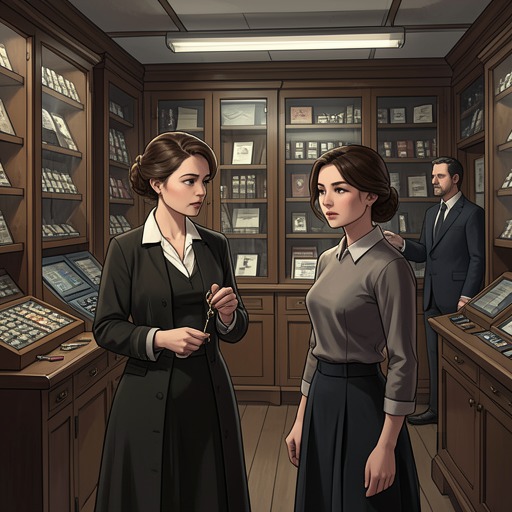
The Two Women in the Pawnshop
The unequal bond between Alyona Ivanovna and Lizaveta Ivanovna leads from domestic subjection to a lethal collision with Raskolnikov’s plan.
