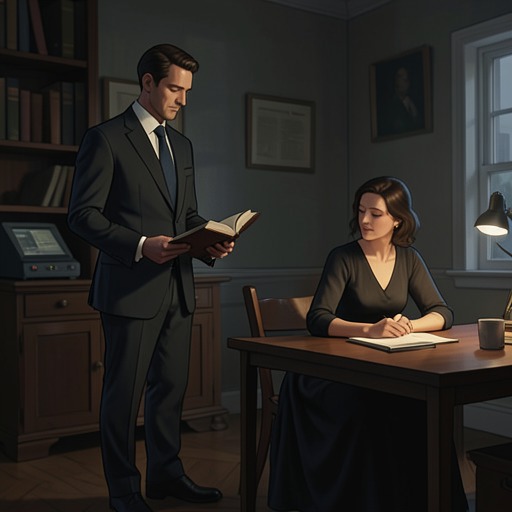
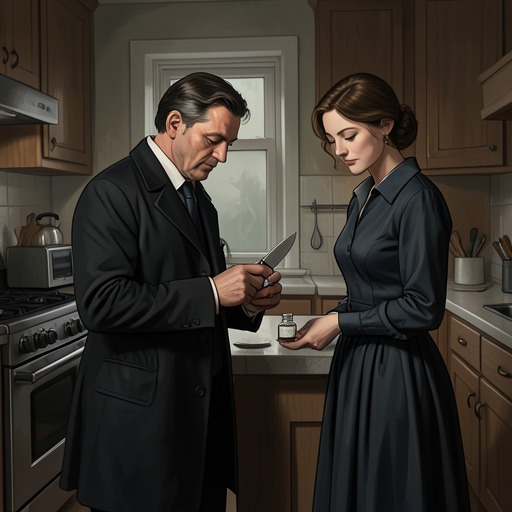
Hastings almost poisoned Alton
CurtainHastings’s near-attempt to poison Allerton is a turning point in Hercule Poirot’s account of Stephen Norton’s influence: Norton converts Hastings’s love for Judith and his sense of responsibility into a conviction that murder is necessary, while Poirot quietly intervenes before Hastings can act. The incident exposes both the danger of Norton’s psychological method and Hastings’s vulnerability to appearances, and helps persuade Poirot that he must take action before Norton can manipulate someone else.
Causes and Manipulation
Norton builds his approach around Hastings’s dislike and suspicion of Allerton. The account Hastings has heard about Allerton is true in its basic facts, and Norton presents him as a man who mistreats women. That story appeals to Hastings’s conventional ideas of responsibility and right conduct, making Allerton seem not merely objectionable but someone who ought to be stopped.
Norton intensifies this influence by involving Boyd Carrington, who urges Hastings to speak to Judith. Judith responds that she will live as she chooses; Hastings takes her answer as confirmation of his worst fears. Norton thereby turns a conversation about Judith’s independence into further apparent evidence against Allerton, without Hastings examining whether the assumptions behind his alarm are sound.
The manipulation works because several parts of Hastings’s character converge. He loves his daughter and feels an old-fashioned responsibility for her; he is troubled by his own helplessness and by the absence of his wife’s judgment; and he believes that, through his friendship with Poirot, he has learned how to handle criminal situations. Poirot also identifies Hastings’s vanity and a father’s jealousy of the man who may take his daughter away. Norton plays upon these qualities together, until Hastings believes that action depends upon him.
The Misread Encounter
The summerhouse episode gives Hastings what seems to be decisive confirmation. He sees Allerton and a woman kiss, but does not actually see or hear the woman well enough to identify her. Norton pushes him back around the corner, then allows him to overhear Allerton speaking a sentence that reinforces Hastings’s interpretation. He draws Hastings away before he can discover that the woman is Nurse Craven, not Judith.
Hastings accepts the scene as proof that he has witnessed Judith with Allerton. He continues to believe this even the next morning and is pleased because he thinks Judith has changed her mind. The mistaken identification is not simply a failure to see: it is the conclusion Norton has prepared Hastings to reach, aided by Hastings’s readiness to accept what appears to confirm his fears.
The details Hastings overlooks point elsewhere. Judith had not been expected to go to London that day, while Nurse Craven had been prevented from going out and was angry about it. Allerton’s involvement with Nurse Craven had gone further than his flirtation with Judith. In the retelling, these overlooked circumstances reveal how Norton stages the encounter so that a partial view and a carefully overheard remark can carry more weight for Hastings than the facts he has not checked.
Poirot’s Intervention
After Hastings enters Allerton’s room one evening, Poirot becomes alert to his state of mind. Although Poirot is pretending to be helpless, he can walk with a limp. He slips out while Curtiss is at supper and looks through the bathroom keyhole; because the door has a bolt on the inside rather than a key, he can see Hastings handling sleeping tablets and understands his intention.
Poirot acts before Hastings can carry out the plan. He returns to his room and prepares a countermeasure. When Curtiss brings Hastings to him, Hastings says he has a headache and wants to leave. Poirot makes a show of urging remedies and persuades him to drink a cup of chocolate. Hastings gulps it down to get away, unaware that Poirot has put sleeping tablets into it.
The intervention leaves Hastings asleep until morning. He wakes as his sane self and is horrified by what he nearly did. Poirot considers the danger passed: once Hastings has returned to his senses, he does not believe he will make the same attempt again. The near-attempt is thus stopped not by a confrontation or confession in the moment, but by Poirot’s close observation and an intervention Hastings does not understand until later.
Consequences and Significance
For Poirot, the episode changes the stakes. He knows Hastings is not a murderer, but recognizes that he might have been hanged for a killing committed by another man who, in the eyes of the law, would be guiltless. The contrast between Hastings’s actual intent and Allerton’s legal position makes the scheme especially dangerous: Norton can make an innocent person appear to have chosen a crime while keeping the true instigator beyond its immediate consequences.
The episode also supplies Poirot with a personal reason to act. Hastings’s trust has made him useful to Poirot at Styles, but that same trust has left him vulnerable to Norton’s influence. Poirot’s account makes clear that Hastings believed what he was told, including Poirot’s own false appearance of physical incapacity. Having seen how Norton can exploit a good and conscientious man, Poirot fears that the next target could be Judith, someone dear to both Hastings and himself. The near-poisoning therefore marks the point at which Poirot’s understanding of Norton’s method becomes an urgent decision to prevent further harm.