Attempted murder of Mrs Luttrell
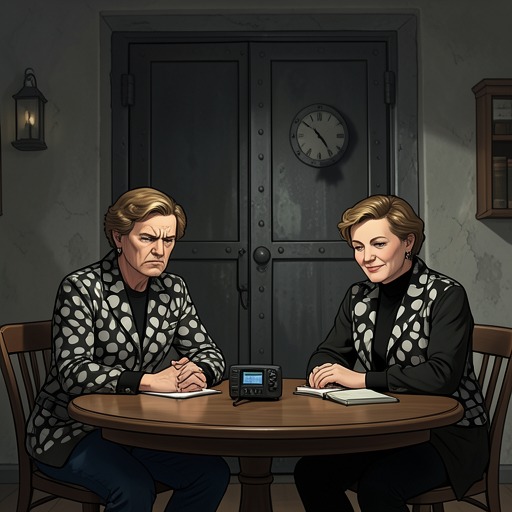
CurtainThe attempted murder of Mrs Luttrell is the failed shooting that exposes Stephen Norton’s method of turning another person’s vulnerabilities into a near-fatal act. In Hercule Poirot’s reconstruction, Norton prepared the conditions rather than pulling the trigger: he intensified Colonel Luttrell’s humiliation and resentment, then arranged for familiar talk of accidents and a rifle to converge when Mrs Luttrell appeared. The Colonel fired, but Poirot believes he wanted to miss; the episode ended without her death, and the spell of anger broke.
Background and Preparation
Norton’s influence on Colonel Luttrell began before the shooting itself. After the first evening of bridge, Norton made remarks loudly enough for the Colonel to hear. Poirot later identifies this as deliberate: Norton meant the remarks to reach him and repeatedly used opportunities to underline the Colonel’s embarrassment. The episode was not a sudden outburst without context; the repeated public humiliations helped lay its emotional foundations.
Poirot describes those foundations as a growing sense of burden, shame at the figure the Colonel cut before other men, and resentment against his wife. Norton’s design depended on bringing those pressures together in a moment when the Colonel felt exposed as a host and believed the others saw him as unable to resist bullying. The gradual accumulation matters: the later crisis was prepared through social pressure, not through an openly stated plan to kill.
The Staged Social Encounter
The immediate sequence began when Norton said he was thirsty. Colonel Luttrell responded as the naturally generous host and went to fetch drinks. The group was sitting outside the window; Mrs Luttrell then arrived, and a domestic scene between the couple became audible to those present. The Colonel came back outside. The setting placed his private conflict before an audience, sharpening the shame Norton had already helped cultivate.
Norton then spoke in a way Poirot describes as tactless and intrusive, making the situation worse rather than smoothing it over. He talked about bridge, bringing earlier humiliations back into the exchange, and spoke aimlessly of shooting accidents. His words served as prompts: Poirot argues that the decisive suggestion was not supposed to come directly from Norton, but from another person who would appear to introduce it naturally.
That person was Sir William Boyd Carrington. He told a story about an Irish batman who had shot his brother. Poirot says Norton had previously told him the story, knowing that he would repeat it as his own when suitably prompted. In the same conversation, the rook rifle and the idea of accidents entered the Colonel’s awareness. The story’s apparent casualness concealed its function in Norton’s arrangement.
The Shooting and Its Outcome
For Poirot, the attempted shooting was the culmination of several pressures and cues: the Colonel’s sense of having failed as a host, his shame before the other men, his resentment, talk of the rifle, and the account of a man who shot his brother. Mrs Luttrell’s appearance brought those elements together at the moment of greatest emotional strain. Poirot’s reconstruction presents the Colonel as imagining an accidental shot and wanting to prove that he would not simply submit to the humiliation he felt.
The Colonel did fire, but Mrs Luttrell was not killed. Poirot explicitly distinguishes the act from its outcome: in his view, the Colonel instinctively missed because he wanted to miss. This is an interpretation of the Colonel’s intention, not a claim that Norton’s attempt succeeded. Once the shot had been fired, the hostile impulse passed, and the Colonel again recognized Mrs Luttrell as his wife, whom he loved despite their difficulties.
Meaning in Norton’s Pattern
Poirot calls the episode one of Norton’s crimes that did not quite come off. Its importance lies in the distance between Norton’s design and the Colonel’s final action: Norton could shape the occasion and intensify existing grievances, but he did not control the Colonel’s will completely. The failure to kill Mrs Luttrell marks a limit to Norton’s influence, even as the shooting demonstrates how deliberately he could use conversation, embarrassment, and social staging to push another person toward violence.
The account is delivered retrospectively by Poirot to Arthur Hastings as part of his explanation of Norton’s wider conduct. Its step-by-step reconstruction recasts apparently ordinary details—the offer of drinks, bridge talk, a shooting anecdote, and the presence of a rifle—as elements in a planned sequence. The decisive contrast is between the public performance of casual conversation and its concealed purpose: Norton arranged the cues, but the Colonel’s missed shot and the return of his affection prevented the episode from becoming a murder.