Styles Court
CurtainStyles Court binds Arthur Hastings’s first meeting with Hercule Poirot to their later return, making the house more than a setting: it is the recurring scene of mystery and a test of Hastings’s idealized memories. Once the Cavendishes’ country home, it has become a guest house, and the old estate’s familiar outline conceals both physical decline and a history Hastings comes to see more clearly.
The House and Its First Significance
In 1916, Hastings travelled to stay with his old friend John Cavendish at Styles, expecting only a renewal of familiar acquaintances. The house belonged to John’s recently remarried mother. Hastings did not foresee that the visit would draw him into the investigation of a mysterious murder, or that he would meet the man whose influence would shape his life. At Styles he encountered Poirot again, the Belgian refugee he had first met in Belgium.
Years later, that first stay had become the defining memory attached to the house. Hastings recalls arriving as a young, wounded man who thought that the best of life was over; in retrospect, he recognizes that his life was only beginning. The return to Styles therefore carries the weight of both a personal beginning and a partnership formed amid a murder investigation.
From Family Home to Guest House
By the time Hastings returns, the Cavendishes have left Styles. John is dead, while his wife Mary lives in Devonshire; Lawrence Cavendish has settled in South Africa with his wife and children. The house itself has changed function: it is now a guest house, run by Colonel Luttrell and his wife. Poirot, staying there, sends for Hastings and arranges a room for him, explaining that the place where he first made his home in England has drawn him back to relive the past.
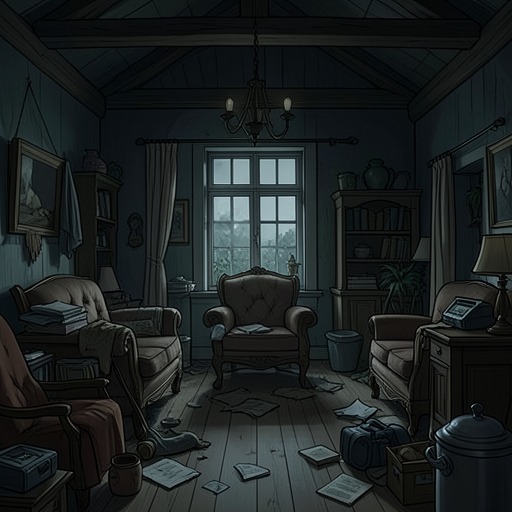
The journey stages change in contrasting registers. Styles St Mary’s station seems untouched by time, still perched among fields, but the village has altered substantially: petrol stations, a cinema, two additional inns, and rows of council houses mark the intervening years. At the estate gate, the park seems much as Hastings remembers it, yet the drive is neglected and overgrown with weeds that encroach on the gravel. The house remains externally unaltered, but badly needs paint. Its unchanged outline thus offers no guarantee that the world within it has been preserved.
Poirot’s Return and the New Investigation
Poirot’s address, Styles Court, Styles, Essex, astonishes Hastings because it joins the present to the place of their first meeting. Poirot has returned partly through nostalgia, but the reunion is not merely an exercise in recollection. When Hastings asks why he has come, Poirot finally tells him that he is there to hunt down a murderer. He further states that the suspected murderer is in the house. The old estate, now a commercial guest house, has become the setting for another criminal inquiry.
This return also establishes a deliberate recurrence. Hastings initially thinks the apparent crimes in the household may simply be what they seem, and his confidence in Poirot’s judgment is set against that common-sense interpretation. Poirot believes a murder has been arranged; for the second time, Styles is to house a crime. The prospect turns the building’s past into more than a backdrop: its earlier association with murder sharpens the danger of the present investigation.
Memory, Unhappiness, and the House’s Meaning
At first, Hastings’s return invites nostalgia for the people and life he associates with 1916. But reflection unsettles that sentiment. He remembers that the earlier household was not happy: John and Mary were dissatisfied with their constrained life, Lawrence was sunk in melancholy, Cynthia’s brightness was diminished by her dependent position, and Inglethorp had married a wealthy woman for her money. Looking back, Hastings recognizes that he had regretted the past as an imagined ideal, not as it really was.
The present house offers no happier contrast. Hastings concludes that nobody there is happy now either, and calls Styles an unlucky house. That judgment gives the estate its strongest narrative significance: the apparent continuity of its grounds and exterior masks a repeated pattern of private misery and violence. The return does not restore Hastings to a lost, happier world; it corrects his memory and brings him back to the site of a new danger.