1951 through her early teens
Daisy’s Lonely Childhood
Born in 1951 to painter Frank Jones and model Jeanne LeFevre, [Daisy Jones](entity:character-recall-character-daisy-jones-d72919816e99) grew up amid wealth and beauty in the [Hollywood Hills](entity:location-recall-location-fe3ff2010623). Her parents paid little attention to her as a person, though they often presented her to artist friends as a subject to paint or photograph.
Daisy was outgoing and eager for connection, but home offered little affection or recognition. That loneliness became an early force in her search for belonging and in the self-possession she would later claim as an artist.
Around 1965
Daisy Finds the Strip
At about fourteen, Daisy began walking from home to the [Sunset Strip](entity:location-recall-location-3e144c3bb0a6), drawn to its clubs and the people gathering outside them. She learned that a bandanna, a cigarette, and the right attitude could help her pass for older, and a roadie eventually invited her inside the [Whisky a Go Go](entity:location-recall-location-whisky-a-go-go-ad0a39d423dc).
The night made her feel, for the first time, that she existed and belonged somewhere. Her parents apparently did not notice her absence, leaving the Strip to become both her refuge and a dangerous substitute for adult care.
In her early teens
Daisy’s First Sexual Encounter
On the Strip, Daisy learned that older men in the music scene were interested in her. She lost her virginity to an older drummer who invited her upstairs to do drugs and persuaded her that she was special, though she was frightened and did not know what she was doing.
He dismissed her afterward and never spoke to her again. Daisy later understood that she had been trying to secure attention by pleasing men, an early lesson in the difference between being desired and being cared for.
Around 1966
The Sunset Strip Riot
Daisy and [Simone Jackson](entity:character-recall-character-simone-jackson-46ed3a0b3fe2) joined protesters challenging the curfew and police presence during the [Sunset Strip Riot](entity:event-recall-event-c499f1f512e8). Afterward, they continued partying with actors and other people from the scene, and Daisy passed out on a stranger’s patio.
[Simone](entity:character-recall-character-simone-6ecb6383ecc8) was only about nineteen, yet she worried that nobody else was looking out for the fifteen-year-old Daisy. Speed and diet pills had already become routine around them, and Daisy’s apparent freedom came with serious risks.
Around 1968
Simone Takes Daisy In
When [Simone](entity:character-recall-character-simone-6ecb6383ecc8)’s producer bought her a [Laurel Canyon](entity:location-recall-location-e019a3307a6f) home, Daisy moved in with her. They shared a bed for months, and Simone saw how little Daisy slept and how often she filled the night with reading.
Simone made school a condition of Daisy staying there. Daisy eventually graduated from high school, with Simone cheering from the audience, even though her diploma soon became little more than a bookmark in a novel.
Around 1969
Daisy Returns Home
When [Simone](entity:character-recall-character-simone-6ecb6383ecc8)’s record deal collapsed and she lost the house, Daisy had to move back in with her parents. Her mother barely acknowledged her return, and Daisy saw again how little room there was for her in that household.
The experience forced Daisy to wonder whether she had a purpose beyond drifting through other people’s lives. Simone, meanwhile, had already noticed Daisy’s remarkable natural singing voice and urged her to use it.
Around 1969
Daisy Writes Her First Songs
Daisy began noticing how men took her ideas and presented them as their own. After a writer-director used her phrase “Up and Down” in a film, she decided she would no longer be content to inspire other people’s work.
She started writing her own material and insisted that she was not a muse but the person creating the art. The choice marked a turning point in how she understood her talent and her right to control it.
1960s
The Dunne Brothers Begin
In [Pittsburgh](entity:location-recall-location-83b39eb9c840), brothers [Billy Dunne and Graham Dunne](entity:relation-recall-relation-billy-dunne-and-grah-42b24ecf051a) taught themselves guitar using their father’s old Silvertone and, later, a Strat their mother bought them. Billy became absorbed in lyrics and songwriting, while [Graham](entity:character-recall-character-graham-252954e7574d) leaned toward guitar playing and melody.
They dreamed of becoming as large as the Beatles and the Rolling Stones, and began writing songs together. Their partnership became the foundation of the band and a lifelong relationship in which Billy’s authority and talent often overshadowed Graham.
1967
The Six Takes Shape
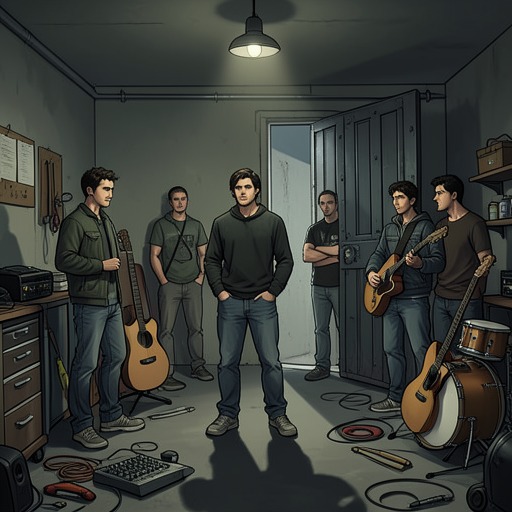
The Dunne Brothers recruited drummer [Warren Rhodes](entity:character-recall-character-warren-rhodes-c7c00f68a230), bassist [Pete Loving](entity:character-recall-character-pete-loving-9fba23fe4e7e), and rhythm guitarist [Chuck Williams](entity:character-recall-character-chuck-williams-16c3e1317970). With a full band, Billy could step forward as lead singer, while the members practiced relentlessly and played parties and bars around [Pittsburgh](entity:location-recall-location-83b39eb9c840).
Billy defended [Graham](entity:character-recall-character-graham-252954e7574d) when other members suggested replacing him, revealing how fiercely he regarded the band as a shared project with his brother. The group’s sound and Billy’s stage presence began to develop through constant performance.
Around 1969
Billy Meets Camila
After a wedding performance, Billy noticed [Camila](entity:character-recall-character-camila-c7ad3fbf5f41) Martinez working as a cocktail waitress and asked for her number, promising to write a song about her. Camila was attracted to his confidence and presence, though she was not convinced he was a “nice” boy.
As she began attending rehearsals and shows, Billy found in her a steadiness that helped the world make sense. Camila offered thoughtful notes on his songs, and their attachment soon became central to Billy’s life and music.
December 1, 1969
Chuck Is Drafted
The draft lottery assigned [Chuck Williams](entity:character-recall-character-chuck-williams-16c3e1317970) number two, and he was called to serve in Vietnam. The band tried to imagine ways he might avoid going, but Chuck insisted he would not be a coward and left after a final show with the others.
The Dunne Brothers recruited [Eddie Loving](entity:character-recall-character-eddie-loving-eabf8672dc17) to fill in on rhythm guitar. A few months later, they learned that Chuck had died in Cambodia, leaving Billy to reckon with the unfairness of surviving and the example of an absent father he was determined not to imitate.
Around 1970
Karen Joins the Band
After opening for [The Winters](entity:organization-recall-organization-the-winters-29d8d870d41d), the Dunne Brothers became impressed with keyboardist [Karen Karen](entity:character-recall-character-karen-karen-c72363f87740). She left her old band, where the men had repeatedly treated her as a romantic prospect rather than a musician, and joined the Dunne Brothers as their keyboard player.
The group needed a new name for its six members. [Eddie](entity:character-recall-character-eddie-2cb6e2d36340) suggested “The Six,” a name that stuck, and the band began to move beyond its original identity as the Dunne Brothers. [Karen](entity:character-recall-character-karen-5edf61fe2c90)’s musicianship also broadened the group’s sound.
Around 1969
Billy’s Father Reappears
At a wedding where the band was playing, Billy and [Graham](entity:character-recall-character-graham-252954e7574d) spotted their father, William Dunne Sr., dancing with a much younger woman. He had left the family years earlier and did not recognize his sons onstage.
Billy took the encounter as proof of how completely a father could fail to love or even notice his children. He carried the experience forward as a warning about the kind of husband and father he feared becoming.
Around 1971
The Six Meets Rod
While The Six played in [New York City](entity:location-recall-location-7a11f2949ca3), manager [Rod Reyes](entity:character-recall-character-rod-reyes-d97c81e7177c) saw Billy’s command of the crowd and recognized his potential as a rock star. [Rod](entity:character-recall-character-rod-3654bebab782) began guiding the band, urging [Graham](entity:character-recall-character-graham-252954e7574d) to simplify his solos and Billy to write from what he knew, especially his relationship with [Camila](entity:character-recall-character-camila-c7ad3fbf5f41).
His practical advice helped the band build a broader following. Billy wrote “[Señora](entity:expression-recall-expression-se-ora-5577cb54222e)” for Camila, and the group’s growing run of shows made it possible to imagine a future beyond local clubs.
Around 1972
The Band Goes West
As [Rod](entity:character-recall-character-rod-3654bebab782) arranged more work for The Six, he proposed moving the band from the East Coast to [Los Angeles](entity:location-recall-location-los-angeles-11eff639bdf5). Billy asked [Camila](entity:character-recall-character-camila-c7ad3fbf5f41) to come along, but she refused to follow him without a clearer commitment that he would return.
Camila ended their relationship, and Billy left with the band anyway. On the journey west, he tried to drown the hurt in alcohol, drugs, and casual sex, while Camila regretted the breakup but believed he had chosen his dream.
Around 1972
The Six Signs with Runner
In [Los Angeles](entity:location-recall-location-los-angeles-11eff639bdf5), The Six played clubs including the Whisky and the [Troubadour](entity:location-recall-location-troubadour-d17d9dfe183b). Billy’s songs about [Camila](entity:character-recall-character-camila-c7ad3fbf5f41) impressed producer [Teddy Price](entity:character-recall-character-teddy-price-0c0f6c5c4539), who signed the band to [Runner Records](entity:organization-recall-organization-runner-records-7b0e4c230841) and agreed to produce its debut album.
Billy celebrated the contract by calling Camila from a pay phone and asking whether she would marry him. She first made him confirm that he really had a record deal, then said yes, and the couple began rebuilding their relationship.
Summer 1972
Daisy’s Ash Grove Debut
Daisy attended a Mi Vida show at the [Ash Grove](entity:location-recall-location-ash-grove-3128637e2f50) with [Simone](entity:character-recall-character-simone-6ecb6383ecc8) and her boyfriend, Jim Blades. After repeated encouragement, she went onstage to sing “Son of a Preacher Man,” beginning timidly before finding her power and bringing the house down.
The response made it clear that Daisy could command attention as a performer. Jim encouraged her to use her voice to draw people toward her songwriting, though his emphasis on her appearance angered her.
Around 1972
Daisy Rejects the Puppet Role
As Daisy began singing her own songs around [Los Angeles](entity:location-recall-location-los-angeles-11eff639bdf5), managers and producers pressed her to record demos. She chose [Hank Allen](entity:character-recall-character-hank-allen-80cff42b56d5), the person she found least smarmy, as her manager and moved into a cottage at the [Chateau Marmont](entity:location-recall-location-chateau-marmont-f794fa339d8f).
At [Larrabee Sound](entity:location-recall-location-larrabee-sound-d1cae3d9a578), Daisy walked out rather than sing a Jackson Browne cover in the sweetened style Hank requested. The incident crystallized her refusal to be shaped into a marketable singer who performed other people’s words.
Around 1973
Daisy’s First Contract
[Runner Records](entity:organization-recall-organization-runner-records-7b0e4c230841) signed Daisy, but the label rejected the songs she brought from her songbook and wanted her to record established catalog material instead. Daisy felt the executives had not listened to her work and angrily tore up the contract in [Rich Palentino](entity:character-recall-character-rich-palentino-a6e97b6ea569)’s office.
Rich explained that ripping the papers did not undo the agreement. Daisy returned to her destructive routine, while [Teddy Price](entity:character-recall-character-teddy-price-0c0f6c5c4539) later offered a path forward: fulfill the contract first, then work toward an album built from her own songs.
1974 to early 1975
Daisy Records First
Daisy eventually accepted Teddy’s plan and recorded ten ballads chosen by Runner, while preserving some of her own rougher style. The album was not what she had imagined, but she recognized it as work she could stand behind and named it First because she intended to make more records.
Released at the beginning of [1975](entity:time-recall-time-1975-ab614a891488), First brought Daisy wider recognition through radio, television, and magazine appearances. The music was conventional, but listeners could hear the edge beneath the polish and sense that her more distinctive work was still ahead.
Around 1973
The Debut Album Sessions
The Six settled into a house in [Topanga Canyon](entity:location-recall-location-topanga-canyon-818d562c3a83) and began recording their debut album at [Sound City Studios](entity:location-recall-location-sound-city-studios-2b1fa39373da) with Teddy producing. Billy took an unusually controlling role, writing much of the band’s material and specifying how other members should play it.
The sessions gave the band a potent blues-rock sound, and their communal life in the house felt like the fulfillment of a dream. Teddy urged Billy to trust the emotional force of the music rather than polishing away its roughness.
Around 1973
Camila Returns to Billy
After The Six arrived in [Los Angeles](entity:location-recall-location-los-angeles-11eff639bdf5), Billy asked [Camila](entity:character-recall-character-camila-c7ad3fbf5f41) to join him. She accepted, and the band’s [Topanga Canyon](entity:location-recall-location-topanga-canyon-818d562c3a83) house became a home for their renewed relationship as Billy and Teddy completed the debut album.
Camila shaped the household through her confidence and practical care without becoming a passive caretaker for the musicians. Billy treasured their mornings together, especially quiet breakfasts that balanced the late-night demands of recording.
Around 1973
The Debut Finds Its Sound
During the debut sessions, Teddy encouraged Billy to retain the band’s raw, distinctive feeling. Songs emerged from the group’s life on the road and in the studio, including “Just One More,” which began as a joke about a batch of cannabis-laced cookies.
Billy and Teddy spent additional months refining the mixes, while the rest of the band waited to hear the finished record. [Rich Palentino](entity:character-recall-character-rich-palentino-a6e97b6ea569) approved the album, which critics regarded as an assured, catchy entrance for a band with an emerging star at its center.
Before the first major tour
Camila’s Pregnancy
The night before The Six left on its first major tour, [Camila](entity:character-recall-character-camila-c7ad3fbf5f41) told Billy she was seven weeks pregnant. Billy tried to be happy but felt overwhelmed by the prospect of becoming a father, haunted by the example of his own absent and alcoholic father.
He insisted that they marry immediately, believing a formal family structure might make him feel ready. The band assembled a late-night wedding on the [Topanga Canyon](entity:location-recall-location-topanga-canyon-818d562c3a83) porch, with improvised decorations and exhausted friends as witnesses.
Late 1973
Billy’s First Tour Collapse
Billy left for the tour the morning after the wedding, frightened by the thoughts he could not share with [Camila](entity:character-recall-character-camila-c7ad3fbf5f41). After a poor first show in [Santa Rosa](entity:location-recall-location-411938e5bb80), he drank heavily, used cocaine and Quaaludes, and blacked out with a groupie.
The first betrayal showed Billy how easily he could cross boundaries he had thought inviolable. Rather than confessing, he called Camila to hear her voice and promised himself he would never repeat it.
During the first tour in 1973
Camila Catches Billy
[Camila](entity:character-recall-character-camila-c7ad3fbf5f41) surprised the band on tour and found Billy receiving oral sex from a groupie on the bus. Her shock gave way to anger, and she made Billy shower before she would speak to him.
After asking what he was trying to do, Camila left him a letter setting a deadline: by the baby’s due date, he had to become a good man. Billy instead told himself he could continue using and cheating until the deadline, revealing how thoroughly he was deceiving himself.
Late 1973
Billy Turns to Heroin
As the tour was extended, Billy’s drinking and drug use intensified. In Dallas, while opening for Rick Yates, he tried snorting heroin, rationalizing that experimenting with it might somehow make it easier to get clean.
[Graham](entity:character-recall-character-graham-252954e7574d) watched his brother deteriorate and feared where the drug use would lead. When Billy began forgetting lyrics onstage, the people around him understood that the deadline [Camila](entity:character-recall-character-camila-c7ad3fbf5f41) had set would not be enough to stop him.
November 28, 1973
Julia Is Born
Teddy found Billy backstage in [Hartford](entity:location-recall-location-518a407b53ec) and took him home after [Camila](entity:character-recall-character-camila-c7ad3fbf5f41) went into labor. Billy reached the hospital but could not bring himself to enter and meet his newborn daughter, ashamed that she might see him as a drunken, strung-out father.
Camila told Teddy to make Billy choose between becoming a father immediately and going to rehab. Billy chose rehab, admitting that he had run from the chance to meet his child. His first daughter was named Julia.
Winter 1974
Billy Enters Rehab
Billy entered a rehabilitation center and remained there after the band canceled its remaining dates. A therapist asked him to imagine what he would need to do to become a man his daughter could be proud of, giving him a purpose beyond shame and avoidance.
After sixty days, [Graham](entity:character-recall-character-graham-252954e7574d) brought [Camila](entity:character-recall-character-camila-c7ad3fbf5f41) and baby Julia to meet him. Billy fell to his knees in gratitude and promised to devote himself to his wife and daughter, beginning the daily work of recovery rather than treating sobriety as a temporary fix.
1974
Daisy Returns to Recording
Daisy had stopped attending her sessions and was in breach of her [Runner Records](entity:organization-recall-organization-runner-records-7b0e4c230841) agreement. Teddy confronted her, arguing that her songs were promising but unfinished and that refusing every imperfect opportunity would leave her with nothing to release.
Daisy eventually examined her songbook and recognized the work she still needed to do. She began writing more deliberately and accepted that the album could be hers even if it was not made entirely on her preferred terms.
1975
The Six Prepares SevenEightNine
After Billy returned from rehab, The Six recorded its second album, SevenEightNine. Its songs focused on [Camila](entity:character-recall-character-camila-c7ad3fbf5f41) and family, making the record sincere but, in [Eddie](entity:character-recall-character-eddie-2cb6e2d36340)’s view, softer than the band’s earlier work.
When Runner worried the album lacked a number-one single, Teddy proposed making “[Honeycomb](entity:expression-recall-expression-honeycomb-3dc99f0d3d48)” a duet. Billy resisted bringing in another singer, but eventually agreed to consider a woman from the label for the track.
During the SevenEightNine sessions
Daisy Records Honeycomb
Teddy chose Daisy to sing opposite Billy on “[Honeycomb](entity:expression-recall-expression-honeycomb-3dc99f0d3d48).” She arrived prepared to contribute, and changed the refrain from a confident promise into questions about whether the promised future would ever arrive.
Billy objected that her doubts distorted a song about a happy ending, but the altered lyrics exposed uncertainty already present in his marriage and sobriety. Teddy built the track around their contrasting voices, creating the hit that first revealed the pair’s unusual musical chemistry.
June 1, 1976
Honeycomb Breaks Through
Released on SevenEightNine, “[Honeycomb](entity:expression-recall-expression-honeycomb-3dc99f0d3d48)” began climbing the charts, and The Six started playing an informal run of shows at the Whisky. Billy initially performed the song without Daisy, leaving a noticeable absence where her voice belonged.
The success of the record brought the band to the edge of a much larger audience. Daisy was increasingly frustrated that the group performed their shared hit without her, though Billy had not invited her to join the shows.
Around 1976
Daisy Joins Them Onstage
Daisy encountered The Six at the Whisky and Billy, unable to ignore her presence in the crowd, invited her to sing “[Honeycomb](entity:expression-recall-expression-honeycomb-3dc99f0d3d48).” They had not rehearsed together, but their voices locked into an effortless harmony that thrilled the audience.
Daisy kept the questioning version of the refrain, despite knowing Billy disliked it. The performance made their connection impossible to dismiss and convinced Daisy that they had something special, even as Billy remained guarded and irritated by her independence.
1976
The Numbers Tour Begins
Runner made Daisy the opening act for The Six’s national Numbers Tour after the Whisky performance helped ticket sales rise. Billy had objected, but accepted the decision when Teddy showed him the commercial momentum.
[Camila](entity:character-recall-character-camila-c7ad3fbf5f41) and their infant daughter traveled with Billy at the beginning of the tour, while Daisy arrived with her own band and a growing appetite for the response of large crowds. The tour placed Daisy and Billy in close professional proximity while keeping their separate lives sharply visible.
At the start of the Numbers Tour
Daisy Finds Her Audience
At the first show in [Nashville](entity:location-recall-location-8754c4db82d5), Daisy went onstage nervous and heavily stimulated, then discovered that many people in the crowd were there to see her. Their response gave her a new desire to experience that connection again and again.
Billy later brought her out for “[Honeycomb](entity:expression-recall-expression-honeycomb-3dc99f0d3d48),” and the crowd’s reaction made the band feel like genuine stars. [Camila](entity:character-recall-character-camila-c7ad3fbf5f41) met Daisy backstage and treated her warmly, a gesture that contrasted with Billy’s instinctive resistance to her.
During the European leg of the Numbers Tour
Daisy Fires Hank
Daisy realized Hank controlled too much of her career, finances, and personal life, while also using their relationship to keep her dependent. After an argument in her [Glasgow](entity:location-recall-location-a7ae7624794d) hotel room, he cornered her and punched the wall before leaving.
Billy noticed Hank turning back toward Daisy’s room and silently warned him away. He then checked on Daisy without the cold distance he usually maintained, giving her a brief glimpse of his compassion. Daisy fired Hank, and [Rod](entity:character-recall-character-rod-3654bebab782) became her manager.
During the Numbers Tour
Glasgow and When You Fly Low
After Hank took Daisy’s backing musicians with him, Daisy faced a [Glasgow](entity:location-recall-location-a7ae7624794d) show without her band. She and [Eddie](entity:character-recall-character-eddie-2cb6e2d36340) tried stripped-down numbers, then Daisy abandoned the arrangement and sang “[When You Fly Low](entity:expression-recall-expression-when-you-fly-low-69b2e109f682)” a cappella, with Eddie tapping a rhythm behind her.
The audience responded to the song’s directness, and Daisy felt the rare connection of strangers truly hearing her words. Billy watched from backstage, newly impressed by the seriousness of her songwriting, then joined her for “[Honeycomb](entity:expression-recall-expression-honeycomb-3dc99f0d3d48)” before bringing The Six back onstage.
After the Glasgow show
Eddie Smashes His Guitar
Billy took [Eddie](entity:character-recall-character-eddie-2cb6e2d36340)’s guitar during the improvised [Glasgow](entity:location-recall-location-a7ae7624794d) performance and played “[Honeycomb](entity:expression-recall-expression-honeycomb-3dc99f0d3d48)” with Daisy, leaving Eddie feeling displaced in front of the audience. Billy defended the choice as the best way to give the crowd a strong show, especially with a [Rolling Stone](entity:organization-recall-organization-rolling-stone-162a4cc7f0ed) journalist watching.
After the set, Eddie snapped at Billy for treating him like a subordinate. He smashed his 1968 Les Paul, an act that made the band’s simmering resentment of Billy’s control impossible to overlook.
After the Numbers Tour in 1976
Daisy Joins The Six
[Jonah Berg](entity:character-recall-character-jonah-berg-473c18f75726)’s [Rolling Stone](entity:organization-recall-organization-rolling-stone-162a4cc7f0ed) article argued that The Six should officially include Daisy, describing her as essential to the band’s sound. Billy was furious at the public suggestion, but the tour’s success and Teddy’s support eventually led him to agree to ask her.
Daisy accepted the invitation, then made clear at the band’s first meeting that she wanted an equal role in writing and deciding the album’s direction. The group adopted “[Daisy Jones](entity:character-recall-character-daisy-jones-d72919816e99) & The Six” as its billing, and Daisy’s arrival opened a struggle over power that had long been hidden beneath Billy’s leadership.
Before recording Aurora in 1977
The Band Demands a Say
At a group meeting, Daisy insisted on meaningful participation in the album, while [Pete](entity:character-recall-character-pete-20a13c365688) claimed control over his bass lines, [Karen](entity:character-recall-character-karen-5edf61fe2c90) asked for more prominent keyboard parts, and [Eddie](entity:character-recall-character-eddie-2cb6e2d36340) demanded to write his own riffs. Billy agreed in principle, though he remained uneasy about surrendering control.
The band settled into a tense compromise: Daisy would share the billing, and the group would work toward a more collaborative record. The change brought long-suppressed grievances into the open and left the members unsure whether they had become a democracy or merely an autocracy with new language.
August 1977
Billy and Daisy Clash
At the start of the [Aurora](entity:expression-recall-expression-aurora-85ff3555a09b) sessions, Daisy brought a notebook full of song ideas, while Billy revealed that he had already written much of the album. He wanted his songs to form its backbone; Daisy refused to make a record dominated by songs about [Camila](entity:character-recall-character-camila-c7ad3fbf5f41).
Their argument turned personal as Billy accused Daisy of writing only about drugs and Daisy called his material repetitive and dull. Daisy nearly left, but returned and insisted they discard their prepared material and begin again together, preserving “Aurora” as the exception.
August 1977
A Songwriting Partnership Begins
On the drive to lunch, Daisy told Billy that “[Tiny Love](entity:expression-recall-expression-tiny-love-ba3a48ce46a3)” had been built from a chorus she wrote for Wyatt Stone, though he had taken credit for it. Billy listened and understood why Daisy demanded authority over her own work.
Over lunch, the two agreed to answer one another honestly, discussing Billy’s fears about fatherhood and Daisy’s drug use. They returned to Teddy’s pool house and began shaping a song from the idea that some people chase nightmares as others chase dreams, discovering that their conflict could become productive collaboration.
During the early Aurora sessions
The Band Rebuilds Aurora
While Billy and Daisy wrote together, the other members developed a new arrangement for “[Aurora](entity:expression-recall-expression-aurora-85ff3555a09b).” [Karen](entity:character-recall-character-karen-5edf61fe2c90) brought lush sustained keys, [Pete](entity:character-recall-character-pete-20a13c365688) adapted his bass line, and [Eddie](entity:character-recall-character-eddie-2cb6e2d36340) pushed for a more propulsive rhythm and stronger drums.
Billy initially heard the arrangement as wrong and wanted to reshape it immediately. Teddy persuaded him to let the musicians finish, and Billy returned willing to trust them. The resulting track marked a real change: the band’s contributions altered the song rather than merely executing his instructions.
During the Aurora sessions
Midnights Is Rewritten
Daisy found Billy’s “[Midnights](entity:expression-recall-expression-midnights-ee7b4e614507)” in her notebook and reworked its straightforward happy memories into a song about what addiction obscures and what remains clear. She also reshaped it into a duet, making the song more layered and open to interpretation.
Billy was excited by the revision, but he again tried to dictate [Eddie](entity:character-recall-character-eddie-2cb6e2d36340)’s guitar part, reigniting the conflict between them. Daisy’s suggestions strengthened the song, while Billy’s response showed that the band’s new collaborative rules remained fragile.
During the Aurora sessions
Daisy Misses a Session
Daisy held a crowded pool party at her [Chateau Marmont](entity:location-recall-location-chateau-marmont-f794fa339d8f) cottage and lost track of time amid drugs, alcohol, and the arrival of Mick Riva. [Simone](entity:character-recall-character-simone-6ecb6383ecc8) tried to get her to stop, but Daisy became absorbed in showing off a beautiful caftan and entered the lit pool wearing it.
When [Rod](entity:character-recall-character-rod-3654bebab782) and Billy finally found her, Daisy was soaked, intoxicated, and bleeding from cuts on her feet. Billy left the scene shaken by how much he envied her apparent freedom, an encounter that forced him to confront how sobriety could feel like deprivation as well as safety.
The day after the pool-party relapse
Impossible Woman Breakthrough
Billy arrived at the studio with “[Impossible Woman](entity:expression-recall-expression-impossible-woman-216e3cbc6c1a),” a song about a woman who seemed unreachable and about the things sobriety placed beyond his grasp. Daisy’s first attempts did not satisfy her, and she left the session feeling unable to find the right voice for it.
Billy visited her later and explained that the song needed to sound raw rather than pretty. With encouragement and a little brandy, Daisy abandoned her usual control, cracked her voice, and delivered the take that became a defining performance. She discovered that she had more depth and range than she had believed.
During the Aurora sessions
Julia Befriends Daisy
[Camila](entity:character-recall-character-camila-c7ad3fbf5f41) brought Julia and the twins to the studio, where Daisy helped Julia choose a cookie and talked with her about pineapples. The small, affectionate encounter made Daisy imagine the future she believed she could never have as a mother.
She wrote “[A Hope Like You](entity:expression-recall-expression-a-hope-like-you-665cea6c8e23),” a song about yearning for a family while feeling unworthy of one. Billy recognized that it needed to be spare, with Daisy singing over [Karen](entity:character-recall-character-karen-5edf61fe2c90)’s piano, and the song became one of the album’s most intimate moments.
Late 1977
The Aurora Songs Take Shape
Billy and Daisy wrote a rapid series of songs that explored temptation, desire, addiction, denial, and the cost of trying to stay on a better path. Their collaboration produced “[Turn It Off](entity:expression-recall-expression-turn-it-off-593336446789),” “[Young Stars](entity:expression-recall-expression-young-stars-fde21050e4c0),” “[Please](entity:expression-recall-expression-please-32704c204094),” and “[This Could Get Ugly](entity:expression-recall-expression-this-could-get-ugl-fae64d882bbd),” among other material.
Daisy increasingly recognized that their lyrics carried feelings neither songwriter was willing to state plainly. Billy praised her work, especially “This Could Get Ugly,” which he admitted reached a truth he could not have written himself. Their creative intimacy grew, even as the personal meaning of the songs became harder to deny.
During the Aurora sessions
Graham’s Song Is Rejected
[Graham](entity:character-recall-character-graham-252954e7574d) brought Billy “[The Canyon](entity:expression-recall-expression-the-canyon-069917ef84a5),” a love song he had written about being content in a shabby home as long as he had [Karen](entity:character-recall-character-karen-5edf61fe2c90). Billy dismissed it as too simple for the album and failed to ask who had inspired it.
Graham felt betrayed after years of supporting his brother. He later sold the song to the Stun Boys, whose recording became a hit, while the rejection deepened his sense that Billy’s authority left little room for anyone else’s work.
During the Aurora sessions
Daisy and Billy Nearly Kiss
While working on “For You,” Billy told Daisy that he liked a lot about her. Daisy leaned in to kiss him, believing that the connection between them finally made the feeling unmistakable, but Billy pulled away and said he could not.
Billy went home to [Camila](entity:character-recall-character-camila-c7ad3fbf5f41); Daisy drove to the beach and wrote “[Regret Me](entity:expression-recall-expression-regret-me-42d14a541478)” in a rush. The near-kiss sharpened the emotional tension between them and turned Daisy’s hurt into a song that would challenge Billy’s control of the album.
Late in the Aurora sessions
Daisy Wins the Regret Me Vote
Daisy brought Billy a new song written over his blues shuffle and argued that it answered the album’s need for a harder, less romantic break. Billy refused to record it, but Daisy gathered the band and performed it alone, with furious force.
[Karen](entity:character-recall-character-karen-5edf61fe2c90), [Eddie](entity:character-recall-character-eddie-2cb6e2d36340), [Pete](entity:character-recall-character-pete-20a13c365688), and Warren supported the song, and [Graham](entity:character-recall-character-graham-252954e7574d) eventually joined them. Outnumbered, Billy walked away; the band recorded “[Regret Me](entity:expression-recall-expression-regret-me-42d14a541478)” without him. The vote made Daisy’s authority tangible and exposed just how far the group’s power had shifted.
Late 1977
Aurora’s Cover Is Shot
Photographer Freddie Mendoza staged an early-morning shoot in the [Santa Monica Mountains](entity:location-recall-location-santa-monica-mountai-07e4508c8b38). Daisy and Billy stood at opposite ends of the group, but Mendoza captured them looking toward each other, as well as a striking image of their torsos and the charged space between them.
The final cover foregrounded Daisy’s self-possessed sexuality and a vial in her pocket, while the back image caught her and Billy locking eyes. The photograph became iconic, even as its focus on the pair made other members feel like supporting figures in their own band.
Early 1978
Billy and Teddy Remake the Mix
After the band completed its initial tracks, Billy and Teddy returned to the studio and substantially reworked the album. They changed guitar parts, altered arrangements, and removed or subdued contributions from other members, including [Karen](entity:character-recall-character-karen-5edf61fe2c90)’s keys and [Eddie](entity:character-recall-character-eddie-2cb6e2d36340)’s playing.
The finished record sounded more nuanced and powerful, but the way the changes were made left the band feeling excluded. Billy accepted Teddy’s judgment, believing Teddy had saved earlier work he himself had resisted, while other members saw another return to Billy’s unilateral control.
Late 1977
Daisy Meets Niccolo
Seeking distance from the pressures of recording, Daisy traveled alone to [Phuket](entity:location-recall-location-phuket-d4c674f068fc), where she met [Niccolo Argento](entity:character-recall-character-niccolo-argento-da184817cc55), an Italian prince who seemed to understand her immediately. They stayed up together, used drugs, and spoke as if they had found a rare, complete acceptance in one another.
Daisy told him about her loneliness, her work, and her feelings for Billy. Niccolo validated her impulses and made her feel understood, but his attention soon began to pull her further from the band and the life she had been building.
Late 1977
Daisy Marries Niccolo
Daisy and Niccolo left [Thailand](entity:location-recall-location-thailand-d96871742cc1) for [Italy](entity:location-recall-location-italy-85c2492cd54b) without waiting for [Simone](entity:character-recall-character-simone-6ecb6383ecc8), who had flown there to meet Daisy. In [Florence](entity:location-recall-location-florence-29107dc52cb3), Niccolo proposed, and they traveled to [Rome](entity:location-recall-location-rome-3ec0a741c1f4) to marry in a ceremony arranged through his family.
Simone eventually found Daisy in Rome, intoxicated and living amid the trappings of her new marriage. Daisy liked the idea of belonging to a royal family, but Simone could see that Niccolo encouraged her worst instincts and was not offering the stability Daisy needed.
January 1978
Daisy Returns to the Band
[Simone](entity:character-recall-character-simone-6ecb6383ecc8) persuaded Daisy to return to [Los Angeles](entity:location-recall-location-los-angeles-11eff639bdf5) for rehearsals and the album campaign. Niccolo tried to stop her, insisting the band did not matter, but Simone arrived and forced Daisy to choose between staying and leaving for the airport.
Daisy came back married, thinner, and with cropped hair and a diamond ring. Her return restored the group’s missing voice, but Niccolo’s jealousy and drug use would soon become a source of instability.
Spring 1978
Jonah Interviews Daisy and Billy
During rehearsals, Daisy and Billy avoided speaking directly, even as they performed together. [Jonah Berg](entity:character-recall-character-jonah-berg-473c18f75726) arrived expecting to document a close creative partnership, but saw the distance between them and asked Daisy what was happening.
Daisy described Billy’s past addiction and his absence at Julia’s birth, sharing information he had told her in confidence. When Jonah later asked Billy about it, Billy asked him not to print the story and offered a more sensational account: that he could not stand Daisy.
Spring 1978
The Feuding Cover Story
Jonah shaped the interview into a story about the rivalry between Daisy and Billy, presenting their hostility as the band’s central drama. Billy called Daisy selfish and said her talent was wasted on her, while Daisy resented his public attack and her own disclosure of his family history.
The cover turned the conflict into a selling point and drove public interest in the band. Rather than mend the relationship, the article made reconciliation harder and helped transform the upcoming album into a cultural event.
June 13, 1978
Aurora Is Released
[Aurora](entity:expression-recall-expression-aurora-85ff3555a09b) arrived with “[Turn It Off](entity:expression-recall-expression-turn-it-off-593336446789)” already breaking through and a [Rolling Stone](entity:organization-recall-organization-rolling-stone-162a4cc7f0ed) cover amplifying anticipation. The album’s mix of arena-ready rhythm, intimate vocals, and volatile lyrics exceeded expectations and quickly became a juggernaut.
Listeners heard songs that could soundtrack a party, a heartbreak, or a night on the road. Billy and Daisy’s voices made the record feel personal even at stadium scale, while the album’s success confirmed that their creative partnership was central to the band’s appeal.
Summer 1978
The Aurora Tour Opens
With “[Turn It Off](entity:expression-recall-expression-turn-it-off-593336446789)” at the top of the charts, [Daisy Jones](entity:character-recall-character-daisy-jones-d72919816e99) & The Six launched a stadium tour on two separate buses: Billy’s group traveled apart from Daisy, Niccolo, and the others. The split reflected both the band’s logistics and the hostility between its two lead singers.
The concerts drew enormous crowds, and fans studied every glance between Billy and Daisy for signs that their apparent hatred concealed something else. The songs’ emotional ambiguity and the performers’ onstage chemistry made speculation part of the spectacle.
Summer and fall 1978
Daisy’s Marriage Deteriorates
On tour, Niccolo’s possessiveness and drug use intensified. Daisy noticed that he had little money of his own and kept pushing drugs on her, while their nights grew increasingly reckless and her physical condition deteriorated.
A hotel fire caused by Niccolo falling asleep with a cigarette and a later episode on a rooftop made Daisy recognize the danger of their life together. She had not yet left him, but for the first time she understood that she was falling and might not be safe with him.
Fall 1978
Pete Plans to Leave
During the tour, [Pete](entity:character-recall-character-pete-20a13c365688) told [Eddie](entity:character-recall-character-eddie-2cb6e2d36340) that he intended to marry [Jenny Manes](entity:character-recall-character-jenny-manes-ac0fa3c841cb) and leave the band when the tour ended. He insisted that the decision was for his own life, not simply for Jenny, and that he had never wanted to remain in a soft-rock band forever.
Eddie was stunned, but Pete had long treated the band’s fame as temporary rather than as the purpose of his life. His plan became another sign that the group’s apparent success was concealing a growing desire to escape it.
Around the end of 1978
Daisy Leaves Niccolo
After a violent fight in [Italy](entity:location-recall-location-italy-85c2492cd54b), Daisy woke up soaked in the base of a shower while Niccolo said he had feared she overdosed. He had not called for help, despite believing she might die, and the realization convinced Daisy that he might let her die rather than save her.
She waited until he fell asleep, left with both plane tickets, and sent word from the airport that Lola La Cava wanted a divorce. Back on tour, Daisy became more present and reliable, though she still used drugs and alcohol.
Early 1979
The Band Wins a Grammy
[Daisy Jones](entity:character-recall-character-daisy-jones-d72919816e99) & The Six won the Grammy for Record of the Year for “[Turn It Off](entity:expression-recall-expression-turn-it-off-593336446789).” Daisy accepted the award and thanked the people who understood and sang the song, dedicating it to anyone hung up on someone or something.
Daisy was still drinking, but she was more herself than during the worst of her marriage. The win marked the band’s commercial height and showed Daisy beginning to understand that the drugs intensifying her feelings were also making her life untenable.
Spring 1979
Daisy Sees Billy Clearly
On an overnight flight to [New York](entity:location-recall-location-new-york-f84f7f10ee10) for Saturday Night Live, Daisy and Billy shared a brief, warm exchange after years of tension. Their friendliness returned just enough to expose how much they still mattered to each other.
The ease did not resolve Daisy’s feelings or Billy’s marriage. Instead, it made the distance between the desire she felt and the life Billy had chosen harder for her to ignore.
Spring 1979
The SNL Performances
[Daisy Jones](entity:character-recall-character-daisy-jones-d72919816e99) & The Six performed “[Turn It Off](entity:expression-recall-expression-turn-it-off-593336446789)” on Saturday Night Live with the confidence of a band at its peak. Billy and Daisy moved together at the microphone, making the song’s struggle against desire feel directed at each other.
For the second number, Billy and Daisy performed “[A Hope Like You](entity:expression-recall-expression-a-hope-like-you-665cea6c8e23)” alone. Daisy realized that she loved Billy, while he later acknowledged being deeply drawn to her but said that [Camila](entity:character-recall-character-camila-c7ad3fbf5f41) and his family remained the people he would choose.
After the SNL performance in spring 1979
Daisy Asks for Help
After leaving the after-party, Daisy went to Billy’s hotel room and told him she wanted to get clean. Billy offered to arrange rehab, but Daisy asked him to sit with her and help her understand what she was choosing.
They spoke through the night about addiction and the pressure of making another album after [Aurora](entity:expression-recall-expression-aurora-85ff3555a09b). Billy threw the alcohol in his minibar out the window, while Daisy continued to wrestle with whether she truly intended to quit for good.
Spring 1979
Teddy Price Dies
As Billy and Daisy were discussing rehab, Billy received a call that Teddy had suffered a heart attack and died. The loss devastated Billy, who had relied on Teddy as a mentor and father figure, and Daisy abandoned her intention to seek sobriety.
Billy felt unable to face the loss without returning to alcohol or drugs. The two artists had been on the edge of a major change, but Teddy’s death left them without the producer and stabilizing presence who had helped them make [Aurora](entity:expression-recall-expression-aurora-85ff3555a09b).
After Teddy’s funeral
Billy Returns to the Road
After Teddy’s death, Billy struggled to function, obsessively cleaning a toilet while [Camila](entity:character-recall-character-camila-c7ad3fbf5f41) watched him withdraw from life. Camila urged him to return to the tour rather than remain trapped at home with his grief.
Billy agreed, though the loss made recovery feel precarious. At the first stop, he saw Daisy looking severely strung out and felt that he had failed her after she had asked him to help her get clean.
Spring 1979
Karen Faces Pregnancy
[Karen](entity:character-recall-character-karen-5edf61fe2c90) discovered she was pregnant with [Graham](entity:character-recall-character-graham-252954e7574d)’s child and immediately knew she did not want to become a mother. She told [Camila](entity:character-recall-character-camila-c7ad3fbf5f41) and later told Graham, who hoped she would change her mind and suggested that the band could replace her if needed.
Karen refused to give up her career for a child she did not want. Graham saw the pregnancy as their baby and felt grief at her decision, while Karen understood that the physical responsibility and sacrifice would fall chiefly on her.
During the final tour in 1979
Karen Chooses an Abortion
Outside [Chicago](entity:location-recall-location-chicago-eb77a855d5aa), [Camila](entity:character-recall-character-camila-c7ad3fbf5f41) accompanied [Karen](entity:character-recall-character-karen-5edf61fe2c90) to a clinic. Karen admitted that she had been pretending to feel uncertain so other people would feel better, then affirmed that she knew she was not making a mistake.
Camila stayed beside her through the procedure, affirming Karen’s right to want a different life. [Graham](entity:character-recall-character-graham-252954e7574d) did not know what had happened until Karen told him afterward, and his grief and her conviction left their relationship badly fractured.
On the bus toward Chicago in July 1979
Pete Confirms His Departure
As the tour headed toward [Chicago](entity:location-recall-location-chicago-eb77a855d5aa), [Eddie](entity:character-recall-character-eddie-2cb6e2d36340) told Warren that [Pete](entity:character-recall-character-pete-20a13c365688) was planning to leave the band. [Graham](entity:character-recall-character-graham-252954e7574d) overheard and urged Billy to intervene, but Eddie resented the idea that the band’s leader should be consulted before Pete’s own brother.
Billy approached Eddie, insisting that he deserved to know what was happening in his band. Eddie answered that the band belonged to everyone, sharpening a conflict rooted in years of being treated as secondary.
July 12, 1979
The Final Chicago Concert
At [Chicago Stadium](entity:location-recall-location-chicago-stadium-ab5a7b4e3da7), the band played through mounting personal tension. [Camila](entity:character-recall-character-camila-c7ad3fbf5f41) watched from the side of the stage with Julia, and Billy took comfort from seeing his family there even as Daisy struggled with the sight of him looking at them.
When the crowd called for “[Honeycomb](entity:expression-recall-expression-honeycomb-3dc99f0d3d48),” Billy unexpectedly agreed to perform it with Daisy. For three minutes, Daisy sang to the man she loved and then, seeing Camila, changed the refrain back to Billy’s original words, affirming the future he had promised his wife.
After the Chicago concert on July 12, 1979
Karen and Graham Break Apart
After the show, [Graham](entity:character-recall-character-graham-252954e7574d) confronted [Karen](entity:character-recall-character-karen-5edf61fe2c90) over the abortion and accused her of never loving him as he loved her. Karen answered that he expected her to become someone she was not, and both recognized the truth in what the other said.
They comforted each other but understood that their relationship could not continue. Graham went to bed knowing he could no longer remain in the band with Karen, while she recognized that living and working together had become impossible.
Late on July 12, 1979
Billy Reaches for Tequila
After the show, Billy was overwhelmed by Daisy, [Graham](entity:character-recall-character-graham-252954e7574d)’s distress, Teddy’s absence, and the pressure of his own recovery. He walked toward the hotel bar and ordered a tequila, circling the first drink he had seriously considered in years.
A stranger at the bar asked Billy about his family. Looking at his daughters’ pictures, Billy found enough strength to put the glass down and walk away, though the effort left him shaken and crying when he returned to his room.
Early July 13, 1979
Camila Speaks with Daisy
Intoxicated and unable to open her hotel room, Daisy sat in the hallway until [Camila](entity:character-recall-character-camila-c7ad3fbf5f41) came out with Julia and helped her inside. Camila told Daisy plainly that Billy loved her but would not leave his family, and that she would not give up on their marriage.
Camila also urged Daisy to leave the band, get clean, and build a life away from Billy. She spoke from concern rather than rivalry, telling Daisy that she was talented and worth saving. Daisy understood that staying would hurt all of them and recognized that Camila had offered her a way out.
July 13, 1979
Daisy Leaves the Band
Daisy left [Chicago](entity:location-recall-location-chicago-eb77a855d5aa) on the next flight, leaving a note that she was quitting the band and would not return. She later explained that [Camila](entity:character-recall-character-camila-c7ad3fbf5f41)’s request helped her recognize the choice she needed to make for herself.
Her departure removed one of the group’s central creative forces at the moment when the other relationships inside the band were also breaking apart. Daisy went directly to [Simone](entity:character-recall-character-simone-6ecb6383ecc8) and asked for help entering rehab.
July 13, 1979
The Band Breaks Up
Billy announced that he was stopping the tour, and [Rod](entity:character-recall-character-rod-3654bebab782) could not continue without him or Daisy. [Pete](entity:character-recall-character-pete-20a13c365688) was leaving, [Eddie](entity:character-recall-character-eddie-2cb6e2d36340) refused to keep working under Billy’s control, and [Graham](entity:character-recall-character-graham-252954e7574d) and [Karen](entity:character-recall-character-karen-5edf61fe2c90) could no longer remain together in the band.
Billy declared The Six finished, and nobody tried to change his mind. The group’s abrupt end followed years of unequal power, private grief, addiction, and unresolved love, turning its final [Chicago](entity:location-recall-location-chicago-eb77a855d5aa) concert into the last time the members performed together.
July 17, 1979
Daisy Begins Sobriety
[Simone](entity:character-recall-character-simone-6ecb6383ecc8) helped Daisy enter rehab after the breakup. Daisy later dated her sobriety from [July 17, 1979](entity:time-recall-time-july-17-1979-e5b202932da3), the point from which she rebuilt her life and eventually left the music business.
The decision enabled Daisy to write books, travel, adopt sons, and establish the Wild Flower Initiative. It was not a single cure for the pain that had driven her addiction, but the beginning of a life in which she could face that pain without drugs.
After July 1979
The Band Members Move On
After the breakup, the members built lives beyond the group. [Pete](entity:character-recall-character-pete-20a13c365688) married Jenny and settled in Arizona, Warren married [Lisa Crowne](entity:character-recall-character-lisa-crowne-f9c208a7541e), [Eddie](entity:character-recall-character-eddie-2cb6e2d36340) became a record producer, and [Rod](entity:character-recall-character-rod-3654bebab782) eventually made a quieter life in real estate.
[Graham](entity:character-recall-character-graham-252954e7574d) and [Karen](entity:character-recall-character-karen-5edf61fe2c90)’s relationship remained a lasting source of regret, while Billy left performing and wrote songs for other artists. The band’s members carried different memories of its success, but they shared the knowledge that they had survived a volatile period together.
After 1981
Billy Chooses a Quiet Life
Billy signed a publishing deal and spent the following decades writing songs for pop singers rather than returning to the road. He believed leaving the band was necessary to remain sober and meet the standard [Camila](entity:character-recall-character-camila-c7ad3fbf5f41) had set for the father and husband he wanted to be.
Billy and Camila raised their three daughters, and later built a home in [North Carolina](entity:location-recall-location-north-carolina-02c7fd11f230) near the water Camila had always wanted. Billy remained grateful for the family he had chosen over the fame and temptations of rock stardom.
December 1, 2012
Camila’s Illness and Death
[Camila](entity:character-recall-character-camila-c7ad3fbf5f41) lived with lupus, and her illness eventually led to heart failure. She died on [December 1, 2012](entity:time-recall-time-december-1-2012-1eecfdaafb94), surrounded by her family, with Billy at her side.
Her death left Billy lonely and grieving, but her influence remained central to the choices he had made. Daisy later told Camila’s daughter Julia that Camila had saved her by insisting that she leave the band and take care of herself.
November 5, 2012
Camila’s Final Request
Before her death, [Camila](entity:character-recall-character-camila-c7ad3fbf5f41) emailed her daughters asking them to give Billy time after she was gone, then tell him to call Daisy. She said that, at the very least, Daisy and Billy owed her a song.
The message closed the story by reopening the possibility of a connection between the two musicians, now separated from the band and the conflicts that had shaped their lives. It also revealed Camila’s generous understanding of what their music had meant, even when it hurt her.