Rong Youying’s Death in Childbirth and the Birth of Shatou
DecodedRong Youying’s death in childbirth and the survival of her son form a family tragedy retold as a saga. After a labor that continued for two days and two nights, Rong Youying died from complications during the final attempt to give birth; an emergency Caesarean section saved the baby. The story makes the child’s enormous head, and the cost of his arrival, inseparable from the name by which people first knew him: “Killer Head.”
A story carried across generations
By the time the account is told, everyone who witnessed Rong Youying’s ordeal has died. What remains is a story passed from one generation to the next, its details refined through repetition until the narrator compares it to an episode in a saga. That framing matters: the birth is not presented only as a private family loss, but as an inherited account whose telling preserves both the suffering and the shock of the outcome.
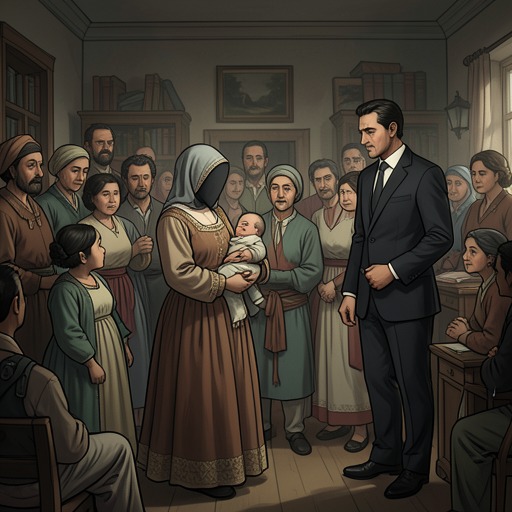
The narrative gives the labor an unusually long measure: two days and two nights. At first, members of the Rong family and the paternal Lin clan wait outside the delivery room. As the hours pass, the crowd thins; eventually only a couple of female servants remain. The dispersal records the strain of waiting as well as the prolonged uncertainty. The family has gathered for a birth, but the expected welcome of a new child increasingly sits beside the possibility of losing his mother.
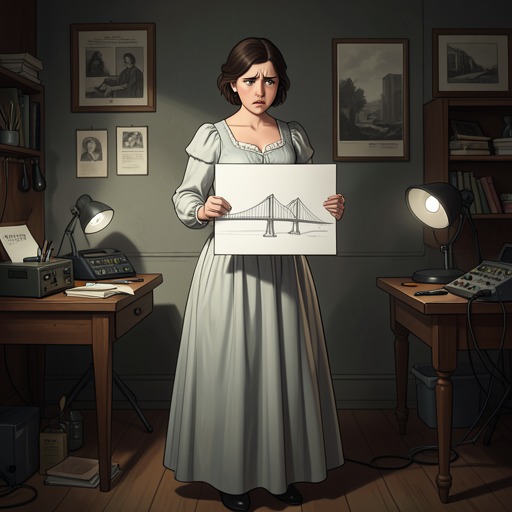
The story also places the scene against the scale of Rong Youying’s earlier achievement. The book recalls a woman associated with sending a couple of tons of metal into the sky, then sets that extraordinary capacity beside her inability to survive childbirth. The contrast does not explain her death; it sharpens the narrative’s sense of how little talent or accomplishment can protect a person from an event governed by the body and by chance.
Decisions under uncertainty
The doctor tells the family that there is an eighty-to-ninety-per-cent chance the baby will not be born. Old Mr Lillie, who arrives last in the corridor and is also the last to leave, predicts that the child will either be a genius or a devil. His pronouncement gives the waiting scene a foreboding edge, but it does not resolve the immediate question of how to proceed.
When the doctor asks whether to save the adult or the baby if the birth cannot be completed, Old Mr Lillie answers without hesitation that the adult should be saved. That decision establishes the family’s stated priority before the ending overturns it. At dawn, after another night of struggle, Rong Youying has exhausted her strength. The doctor prepares one final attempt and makes clear that, if it fails, the baby will have to be abandoned to save her. Instead, Rong Youying suffers fatal complications during the attempt, and an emergency Caesarean section saves the child. The difference between the expressed wish and what happens is stark: the adult was the life Old Mr Lillie chose to protect, but it is the baby who survives.
Birth, loss, and a name
The child’s survival does not soften the account of what his birth cost. The narrative stresses that Rong Youying died as a result of the labor, and that she was nearly forty and bearing her first child. Only after the baby is born does the family see how exceptionally large his head is. The size becomes a physical marker around which the story’s explanation gathers: the difficult birth, his mother’s death, and the child himself are bound together in the family’s memory.
The Lin family tries out a range of names for the boy, including nicknames, style names, and formal names. None takes hold. His huge head and the circumstances of his birth instead secure the nickname “Killer Head.” The naming is presented as something the family cannot simply choose or undo: the story has already made the child’s arrival legible to others through the loss that accompanied it. The name carries that history forward, converting a private and painful event into a label that will follow him.
The event’s place in the narrative
The birth joins a life beginning to a death that cannot be repaired. The family’s prediction of extraordinary or demonic potential gives the child a charged introduction, but the account does not establish either outcome as a consequence of the birth. Instead, its force comes from the collision between expectation and result: Old Mr Lillie names the alternatives, the doctor voices the odds, and the family’s hope for a new arrival ends in the mother’s death and the child’s survival.
The passage’s repeated emphasis on retelling and naming shapes how the loss endures. The witnesses are gone, yet the account remains, becoming more formally memorable as it passes between generations. “Killer Head” likewise preserves the event in compressed form, joining an unusually large head to the mother’s death. The birth thus serves not merely as background to the boy’s life, but as the origin of the family story through which that life is first understood.