1873
Rong Zilai Goes Abroad
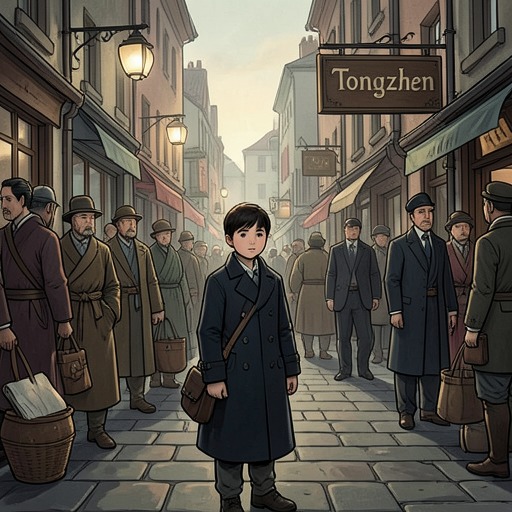
[Rong Zilai](entity:character-recall-character-rong-zilai-c471c2670833), the youngest member of a wealthy salt-merchants’ family, left [Tongzhen](entity:location-recall-location-tongzhen-05204c6620de) to study overseas. His family’s aim was practical: they hoped he might learn the arts of dream interpretation and divination well enough to ease [Grandmother Rong](entity:character-recall-character-grandmother-rong-2d1de5b6c6ab)’s distressing nightmares.
By the time he arrived, news had outrun him. Grandmother Rong had died after dreaming that a storm sank his ship, making the expedition’s original purpose impossible.
1873, after Grandmother Rong’s death
A Scholar’s New Life
Although [Rong Zilai](entity:character-recall-character-rong-zilai-c471c2670833) first intended to return home, the classes and unfamiliar knowledge he encountered abroad changed his mind. He stayed for seven years, studying mathematics and geometry and taking in a life far removed from the Rong family’s salt business.
When he returned in 1880, he had adopted the name John Lillie and acquired habits that made him an outsider at home. An accident at sea had left him unable to bear the smell of salt, so he used [Grandmother Rong](entity:character-recall-character-grandmother-rong-2d1de5b6c6ab)’s bequest to establish a school rather than join the family trade.
After Rong Zilai’s return
A School Opens to Girls
[Rong Zilai](entity:character-recall-character-rong-zilai-c471c2670833) used the silver promised to him by [Grandmother Rong](entity:character-recall-character-grandmother-rong-2d1de5b6c6ab) to open Lillie’s Academy of Mathematics in [C City](entity:location-recall-location-c-city-ac2dca5910ec). Against fierce opposition, he admitted girls, many of them members of the Rong family’s principal branch.
Curiosity and outrage drew visitors to the school, but the controversy only made it more famous. The academy became the predecessor of [N University](entity:location-recall-location-n-university-d8007218cf90) and marked the Rong family’s first decisive break from its merchant identity.
Early twentieth century
Rong Youying’s Mathematical Gifts
[Rong Youying](entity:character-recall-character-rong-youying-eada53d41061), a niece of [Rong Zilai](entity:character-recall-character-rong-zilai-c471c2670833), showed extraordinary ability at calculation from childhood. At twelve, she defeated an expert abacist in a public contest, and people began calling her Abacus or Abacus Head.
Her gifts seemed to gather generations of the Rong family’s commercial arithmetic into one mind. The family’s academy gained a second source of renown through her startling combination of speed, memory, and mathematical intuition.
Rong Youying’s university years
The Cambridge Bridge Design
At [Cambridge University](entity:location-recall-location-4d241e1e9112), [Rong Youying](entity:character-recall-character-rong-youying-eada53d41061) picked up languages with astonishing speed while continuing her mathematical work. She eventually learned seven languages well enough to read and write them, adding Italian after meeting an Italian student.
She also designed a model of [Newton’s Mathematical Bridge](entity:object-recall-object-newton-s-mathematical-ecb6b1e00a8b) using only 388 nails, beating the best previous design. [Sir Joseph Larmor](entity:character-recall-character-sir-joseph-larmor-e550b731c6b6) awarded her a Cambridge doctoral certificate for the achievement, turning her into an international sensation.
Two years after Rong Youying joined the Wright brothers
The Wrights’ First Flight
After meeting the Wright brothers at Cambridge, [Rong Youying](entity:character-recall-character-rong-youying-eada53d41061) travelled with them to the [United States](entity:location-recall-location-5d55e9152db1) and contributed to the design of their airplane. Their machine made its first successful flight in [North Carolina](entity:location-recall-location-7dab908d4fe3).
Her name appeared on the [Wrights’ Flyer](entity:object-recall-object-wrights-flyer-a7db7ccb2393) as its wing designer. The achievement carried the reputation of Lillie’s Academy of Mathematics far beyond [China](entity:location-recall-location-china-4ba4b9655a5d), while her later return to teach at [N University](entity:location-recall-location-n-university-d8007218cf90) brought her international career back to its beginnings.
After the Xinhai Revolution
Rong Youying Returns to China
As [China](entity:location-recall-location-china-4ba4b9655a5d)’s political future grew uncertain, [Rong Youying](entity:character-recall-character-rong-youying-eada53d41061) broke off her engagement and returned to [N University](entity:location-recall-location-n-university-d8007218cf90) to lead its mathematics department. [Sir Joseph Larmor](entity:character-recall-character-sir-joseph-larmor-e550b731c6b6) later visited and presented the university with a model of her bridge design.
The model became a celebrated emblem of the institution, but it did not survive. Japanese bombing destroyed N University in 1943, by which time Rong Youying had been dead for nearly three decades.
During the Northern Expedition
The Rong Family Supports the Northern Expedition
Moved by students collecting money for the cause, [Rong Zilai](entity:character-recall-character-rong-zilai-c471c2670833) sold docks and shops inherited by the family and used the proceeds to buy ammunition for the Northern Expedition. The family received a plaque praising its support.
The gift helped establish the Rongs’ reputation as patriots, but it further weakened their wealth. When the government later offered to replace the plaque with a new version, Rong Zilai refused, insisting that the original remain in place.
The decades before the 1940s
The Rong Family’s Decline
The state salt monopoly deprived the Rong family of its principal income, while many younger relatives chose education and public service over the old business. The family’s properties dwindled, and the once-bustling [Rong Family Mansion](entity:location-recall-location-09ede2fbb1c7) became quiet and overgrown.
[Rong Zilai](entity:character-recall-character-rong-zilai-c471c2670833) also gave away or spent much of the remaining family fortune in support of political causes. By the time Jinzhen’s story began, the mansion’s isolation and poverty had become part of the circumstances that shaped his childhood.
Around 1914
Rong Youying Dies in Childbirth
[Rong Youying](entity:character-recall-character-rong-youying-eada53d41061) endured a prolonged and dangerous labour while doctors struggled to deliver her child. [Rong Zilai](entity:character-recall-character-rong-zilai-c471c2670833) insisted that the doctors save the mother if they had to choose, but an emergency Caesarean section saved the baby only after Rong Youying’s body failed.
Her son was born with an enormous head and was nicknamed [Killer](entity:character-recall-character-killer-8b27a1b7fbe9) Head, soon shortened to Killer. The birth of a brilliant woman’s child at the cost of her life became a family tragedy that echoed through the next generation.
The Killer’s youth
The Killer’s Violent Life
The [Killer](entity:character-recall-character-killer-8b27a1b7fbe9) grew into a talented but violent young man whose gambling, crimes, and exploitation of women steadily consumed the Lin family’s wealth. He was involved in multiple murders and died at twenty-two, stabbed by a woman he had wronged.
His death did not end the consequences of his life. A pregnant woman arrived at the Lin family home claiming to carry his child, and her rejection sent her looking for help among his remaining relatives.
After the Killer’s death
A Pregnant Stranger Seeks Shelter
The mysterious woman who claimed to be carrying the [Killer](entity:character-recall-character-killer-8b27a1b7fbe9)’s child was thrown out by the Lin family. A bystander, moved by her plight, directed her to [N University](entity:location-recall-location-n-university-d8007218cf90), where [Rong Zilai](entity:character-recall-character-rong-zilai-c471c2670833)’s reputation for helping people in distress offered a last chance of refuge.
[Rong Xiaolai](entity:character-recall-character-rong-xiaolai-d2552b99464c) brought her to [Tongzhen](entity:location-recall-location-tongzhen-05204c6620de), but he knew that the family would be reluctant to accept the child of the Killer. The woman’s arrival forced him to invent a story that might persuade Mrs Rong to shelter her.
During the woman’s pregnancy
A Story of Conception Before Buddha
[Rong Xiaolai](entity:character-recall-character-rong-xiaolai-d2552b99464c) told the devout Mrs Rong that the unmarried woman had become pregnant after praying at [Putuo Mountain](entity:location-recall-location-5b779d34c38f). He presented her as a Buddhist devotee rather than as the [Killer](entity:character-recall-character-killer-8b27a1b7fbe9)’s lover, giving Mrs Rong a reason to protect her without openly confronting the family scandal.
Mrs Rong wrestled with the story overnight. When Rong Xiaolai appeared ready to throw the woman out, she relented and allowed her to stay, a decision that would determine whether the unborn child survived.
About 1932, twenty-three years before 1956
Jinzhen Is Born
The woman gave birth after a bloody and agonizing labour, then died of a haemorrhage. When the baby was cleaned, his resemblance to the [Killer](entity:character-recall-character-killer-8b27a1b7fbe9)—including his huge head—made the truth of his parentage unmistakable.
Mrs Rong’s memory of the child’s grandmother, [Rong Youying](entity:character-recall-character-rong-youying-eada53d41061), helped spare him from abandonment. Even so, the family treated him as an unwanted outsider, calling him the Grim Reaper before settling on the less ominous nickname Duckling.
Jinzhen’s early childhood
Mr Auslander Takes Duckling In
[Mr Auslander](entity:character-recall-character-mr-auslander-a8fc538d0884), the foreign dream interpreter who had lived with the Rong family for decades, was asked to choose a name for the baby. Thinking of the child’s hardship and uncertain future, he called him Duckling.
The old servant couple struggled to care for the boy, while most of the family kept their distance. Mr Auslander alone treated him as a person, visiting him with toys and talking beside his crate in the [Pear Garden](entity:location-recall-location-cafcf6fd634e).
When Jinzhen was about three
Duckling Calls Him Daddy
Duckling learned to stand and walk early but spoke very little. One day he called [Mr Auslander](entity:character-recall-character-mr-auslander-a8fc538d0884) “Daddy,” his first clear attempt to address anyone, and the old man recognized how completely the child had taken him for a father.
Mr Auslander brought Duckling into the [Pear Garden](entity:location-recall-location-cafcf6fd634e) to live with him. Their bond gave the boy the affection and sense of safety he had never received from the wider family.
June 1944
Mr Auslander’s Final Letter
As illness robbed [Mr Auslander](entity:character-recall-character-mr-auslander-a8fc538d0884) of speech, he wrote to [Young Lillie](entity:character-recall-character-young-lillie-b8d102f9b133) asking him to become Duckling’s guardian. He described the child’s unusual intelligence and urged Young Lillie to take him away, give him an education, and, above all, give him a proper name.
The letter was both a plea and a last testament. Mr Auslander delayed posting it so he could remain with Duckling longer, but he knew that the boy would soon be left alone in a household that scarcely acknowledged him.
During the Japanese occupation
Young Lillie Rejects the Puppet Government
The [Nanjing puppet government](entity:organization-recall-organization-dddf12d5f735) offered [Young Lillie](entity:character-recall-character-young-lillie-b8d102f9b133) the chancellorship of [N University](entity:location-recall-location-n-university-d8007218cf90), hoping to win the support of the famous academic. He publicly tore up the appointment and declared that the Rongs would rather die than betray their country.
His refusal made him popular with patriots but cost him any official position under the regime. When [Mr Auslander](entity:character-recall-character-mr-auslander-a8fc538d0884)’s letter arrived, Young Lillie was already considering retreating to [Tongzhen](entity:location-recall-location-tongzhen-05204c6620de), and the appeal to protect Duckling hastened his decision.
Summer 1944
Young Lillie Finds Duckling
[Young Lillie](entity:character-recall-character-young-lillie-b8d102f9b133) returned to [Tongzhen](entity:location-recall-location-tongzhen-05204c6620de) and found Duckling living alone in the [Pear Garden](entity:location-recall-location-cafcf6fd634e) after [Mr Auslander](entity:character-recall-character-mr-auslander-a8fc538d0884) had died. The boy was reading an English volume of the Encyclopaedia Britannica and spoke both Chinese and English, though his speech was halting and his manner guarded.
Duckling knew Young Lillie’s family history in extraordinary detail, but refused to interpret the old man’s dream. Their first encounter made clear both his intelligence and the emotional distance created by years of neglect.
Young Lillie’s first visit to Duckling
The Jade Guanyin Bequest
Duckling gave [Young Lillie](entity:character-recall-character-young-lillie-b8d102f9b133) a jade Guanyin statuette that [Mr Auslander](entity:character-recall-character-mr-auslander-a8fc538d0884) had left for him. Young Lillie recognized it as valuable and urged the boy to keep it, but Duckling refused repeatedly.
He then explained that the paper wrapped around the statuette was covered with calculations. He had used the pages to work out how many days Mr Auslander had lived, revealing that his attachment to his adoptive father had become an exacting act of remembrance.
Shortly before Mr Auslander’s death
Calculating Mr Auslander's Life
Following [Mr Auslander](entity:character-recall-character-mr-auslander-a8fc538d0884)'s increasingly precise burial instructions, Jinzhen calculated the number of days in the old man’s life using only addition. He arrived at 32,232 days, but did not know whether the answer was correct because he had not been taught formal mathematics.
After the funeral, he devised a dot notation for multiplication and independently worked out the multiplication table. [Young Lillie](entity:character-recall-character-young-lillie-b8d102f9b133) saw in the boy’s improvised method the signs of a mind capable of inventing mathematical tools rather than merely learning them.
After Mr Auslander's death
Young Lillie Takes Jinzhen Away
[Young Lillie](entity:character-recall-character-young-lillie-b8d102f9b133) decided that Jinzhen’s intelligence and vulnerability made it imperative to remove him from the decaying family mansion. He arranged new clothes and prepared to take the boy with him to [C City](entity:location-recall-location-c-city-ac2dca5910ec), despite the household’s astonishment.
Jinzhen left carrying [Mr Auslander](entity:character-recall-character-mr-auslander-a8fc538d0884)’s old suitcase. The departure ended his childhood in [Tongzhen](entity:location-recall-location-tongzhen-05204c6620de) and began his life under Young Lillie’s protection.
On the journey to C City
Jinzhen Receives a New Name
[Young Lillie](entity:character-recall-character-young-lillie-b8d102f9b133) offered the boy the names Jinzhen and [Tongzhen](entity:location-recall-location-tongzhen-05204c6620de), then changed the character in Jinzhen’s name to one meaning “pearl.” Duckling accepted each suggestion without much interest, but the exchange gave him the first name chosen for a future beyond his childhood nickname.
The change reflected Young Lillie’s hopes for the boy as well as local superstition about balancing masculine and feminine qualities. From this point forward, the child would be known as Jinzhen.
After arriving in C City
Jinzhen Enters School
[Young Lillie](entity:character-recall-character-young-lillie-b8d102f9b133) took Jinzhen to [Cheng](entity:character-recall-character-cheng-aca14822a7e4), a one-armed headmaster who had once been his own pupil. He arranged for Jinzhen to live in a small shed at the school and become a student there.
The change of name and setting gave the boy his first regular connection to other children. It also began the gradual transition from isolation in the [Pear Garden](entity:location-recall-location-cafcf6fd634e) to a life shaped by education and the Rong household.
After the death of Rong Yinyi’s younger sister
Jinzhen Joins the Rong Household
[Young Lillie](entity:character-recall-character-young-lillie-b8d102f9b133)’s wife learned that Jinzhen had been hidden at the school and heard the account of the child’s losses. Still grieving her own daughter, she insisted that the boy be brought home, believing that he needed a family.
[Rong Yinyi](entity:character-recall-character-rong-yinyi-666ff564d203) initially disliked her new younger brother’s silence, poor hygiene, and unsettling habits. [Mrs Lillie](entity:character-recall-character-mrs-lillie-e8439cb31253)’s patient care helped Jinzhen adjust, and he gradually became part of the family despite the awkwardness of their different generations.
Jinzhen’s first year with the Rongs
Jinzhen Miscalculates the Days
At supper, Jinzhen heard an explanation of leap years and realized that his calculation of [Mr Auslander](entity:character-recall-character-mr-auslander-a8fc538d0884)'s lifespan had omitted them. Overwhelmed by the possibility that he had made a mistake, he began to cry and could not be comforted.
[Young Lillie](entity:character-recall-character-young-lillie-b8d102f9b133) calmed him by explaining the idea of acceptable error and showing that the omitted leap days did not invalidate the method. Jinzhen returned to the problem and went further, reasoning about calendar inaccuracies and independently deriving a formula for the sequence of corrections.
During his school years
Jinzhen’s Mathematical Talent Emerges
Jinzhen’s classmates called him Big-head and then Idiot-savvy, mocking his unusual habits even as his grades surpassed the rest of the class. He counted ants, memorized books, and wrote assignments in both Chinese and English.
[Young Lillie](entity:character-recall-character-young-lillie-b8d102f9b133) resisted allowing him to leap straight into university, believing that he needed time with children his own age. Jinzhen eventually skipped grades after his questions overwhelmed his teachers, then entered [N University](entity:location-recall-location-n-university-d8007218cf90) with exceptional examination results.
Around 1948
Jinzhen Enters the Mathematics Department
On Jinzhen’s first day at [N University](entity:location-recall-location-n-university-d8007218cf90), [Young Lillie](entity:character-recall-character-young-lillie-b8d102f9b133) gave him a diary and warned that the institution was worthwhile only if he intended to become a mathematician. Jinzhen had already demonstrated unusual gifts, but his guardian hoped to keep him grounded in ordinary study and social life.
The mathematics department’s professor [Jan Liseiwicz](entity:character-recall-character-jan-liseiwicz-dbd535a5cfff) quickly noticed the quiet student. What Young Lillie had regarded as a rare promise was about to be tested by a teacher who demanded independent thought rather than obedience.
Before his arrival at N University
Liseiwicz’s Extraordinary Career
[Jan Liseiwicz](entity:character-recall-character-jan-liseiwicz-dbd535a5cfff) had been recognized as a prodigy in [Poland](entity:location-recall-location-8e143713a3f3) and won admission to [Cambridge University](entity:location-recall-location-4d241e1e9112) after challenging its celebrated mathematician Michael Steinroder to chess. He later received the Fields Medal and built a leading mathematical research institute in [Austria](entity:location-recall-location-89f4a73979b6).
After arriving in [China](entity:location-recall-location-china-4ba4b9655a5d), he married and became a respected teacher, but his original mathematical research stalled. He eventually revived his interest in artificial intelligence, a field whose future importance he believed few people yet understood.
Jinzhen’s first weeks at university
Liseiwicz Sets His Class Challenge
[Jan Liseiwicz](entity:character-recall-character-jan-liseiwicz-dbd535a5cfff) began his courses by setting difficult equations and refusing to let students take notes. His teaching rules forced them to think creatively; solving one of his problems could free a student from attending class, while a chain of solutions could lead directly to graduation.
Jinzhen solved the first challenge so quickly that [Liseiwicz](entity:character-recall-character-liseiwicz-25b078c50278) devoted a class to explaining his work. He then solved a second problem, convincing the professor that he was not merely gifted but capable of reaching answers by original routes.
Soon after the first two problems
Jinzhen Wins Liseiwicz’s Respect
After Jinzhen solved another of his problems, [Jan Liseiwicz](entity:character-recall-character-jan-liseiwicz-dbd535a5cfff) studied the proof and invited him to discuss his background. Jinzhen avoided questions about his family and insisted that his work was his own.
[Liseiwicz](entity:character-recall-character-liseiwicz-25b078c50278) recognized the originality of the boy’s reasoning and praised him to [Young Lillie](entity:character-recall-character-young-lillie-b8d102f9b133). The professor wanted Jinzhen to move directly to advanced research, while Young Lillie argued that the boy still needed a broader education and stronger foundations.
Jinzhen’s first year at N University
Liseiwicz Lends Jinzhen Books
Although [Jan Liseiwicz](entity:character-recall-character-jan-liseiwicz-dbd535a5cfff) guarded his mathematics books jealously, he allowed Jinzhen to borrow them. The exception fueled gossip that the professor was exploiting the student, especially as Jinzhen spent afternoons at [Liseiwicz](entity:character-recall-character-liseiwicz-25b078c50278)’s home.
[Rong Yinyi](entity:character-recall-character-rong-yinyi-666ff564d203) investigated and found the pair playing chess rather than collaborating on research. Their growing friendship was real, but the rumours foreshadowed how difficult it would be for outsiders to understand what passed between the two men.
After the Second World War
The Two Create Mathematical Chess
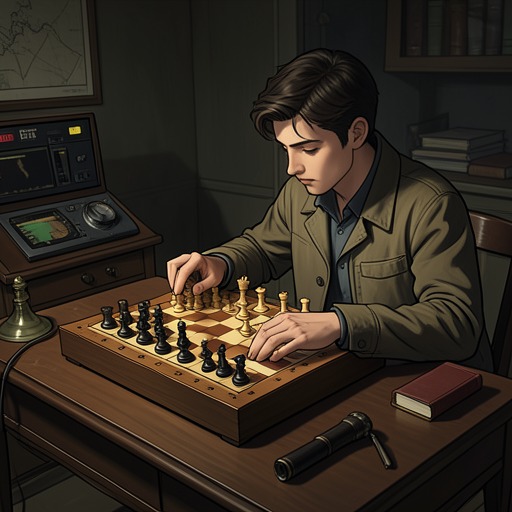
Jinzhen and [Jan Liseiwicz](entity:character-recall-character-jan-liseiwicz-dbd535a5cfff) began inventing a complicated board game that they called mathematical chess. Its pieces moved through opposing encampments under different rules, forcing each player to contend with both an opponent and the consequences of the opponent’s arrangements.
The game gave Jinzhen a way to challenge [Liseiwicz](entity:character-recall-character-liseiwicz-25b078c50278) without relying on the older man’s vast experience in standard chess. It later became known as [Liseiwicz chess](entity:concept-recall-concept-liseiwicz-chess-2a2f6f8a7f86), and the naming convention obscured Jinzhen’s contribution to its creation.
Late 1940s
Liseiwicz Returns to Research
[Jan Liseiwicz](entity:character-recall-character-jan-liseiwicz-dbd535a5cfff) travelled to [Europe](entity:location-recall-location-ed02f8422cdd) and returned with a large collection of books and a renewed ambition to study artificial intelligence. He believed that machines might eventually reproduce aspects of human thought and help free people from dangerous or degrading work.
His enthusiasm for the field, and his decision to lend books only to Jinzhen, deepened suspicion that he was using the young man’s talent. [Liseiwicz](entity:character-recall-character-liseiwicz-25b078c50278) told others that he had abandoned the research, leaving the truth of his intentions unclear.
Around 1949
Jinzhen Takes the Putnam Test
[Jan Liseiwicz](entity:character-recall-character-jan-liseiwicz-dbd535a5cfff) brought back the Putnam Mathematical Competition paper and tested Jinzhen under its strict time limit. Jinzhen solved six questions in forty-five minutes, including a logic problem answered in the final moments.
His score would have placed him among the competition’s leading students and attracted offers from elite American universities. [Liseiwicz](entity:character-recall-character-liseiwicz-25b078c50278) concluded that Jinzhen should study abroad, but [Young Lillie](entity:character-recall-character-young-lillie-b8d102f9b133) explained that the family could no longer afford even his passage.
A few months after the Putnam test
Stanford Offers Jinzhen a Scholarship
[Jan Liseiwicz](entity:character-recall-character-jan-liseiwicz-dbd535a5cfff) persuaded Stanford’s mathematics department to offer Jinzhen a funded place and secured money for his travel. The offer demonstrated how seriously he regarded the young man’s abilities and how far he was willing to go to support him.
Before Jinzhen could leave, he developed renal failure. The illness consumed the travel money, threatened his life, and ended the immediate prospect of studying in the [United States](entity:location-recall-location-5d55e9152db1).
Around 1950
Jinzhen Battles Renal Failure
Jinzhen spent nearly two years in hospital with severe oedema and renal failure. Doctors initially expected him to die, and his family watched his body swell while his weight fell.
The treatment exhausted the funds intended for his studies abroad. His recovery depended heavily on [Mrs Lillie](entity:character-recall-character-mrs-lillie-e8439cb31253)’s meticulous care, including a strict diet and painstakingly measured salt, and he eventually returned to the classroom.
During Jinzhen’s hospitalization
Liseiwicz Entrusts Jinzhen’s Future
Before leaving [China](entity:location-recall-location-china-4ba4b9655a5d), [Jan Liseiwicz](entity:character-recall-character-jan-liseiwicz-dbd535a5cfff) wrote to [Young Lillie](entity:character-recall-character-young-lillie-b8d102f9b133) about the importance of artificial intelligence and argued that Jinzhen should pursue the field if he recovered. He believed the young man was uniquely suited to study human intelligence and urged that he be given space to work.
The letter placed a future decision in Young Lillie’s hands. [Liseiwicz](entity:character-recall-character-liseiwicz-25b078c50278) feared that the demands of secret or practical work could destroy Jinzhen’s independence and creative freedom.
Around 1950
Liseiwicz Leaves for X Country
[Jan Liseiwicz](entity:character-recall-character-jan-liseiwicz-dbd535a5cfff)’s Chinese father-in-law was arrested and sentenced to death for his conduct under the puppet government. [Liseiwicz](entity:character-recall-character-liseiwicz-25b078c50278) sought help from colleagues, but they could do little; he eventually secured the man’s release through a negotiated exchange involving two Chinese scientists held abroad.
After the reprieve, Liseiwicz and his family left [China](entity:location-recall-location-china-4ba4b9655a5d) for [X Country](entity:location-recall-location-x-country-7b12283a100a). His departure ended Jinzhen’s direct mentorship, though letters and the mathematical work they had shared continued to shape the young man’s path.
Spring 1951
Jinzhen Stays in China
After recovering enough to resume his studies, Jinzhen was offered the chance to continue researching artificial intelligence abroad. [Young Lillie](entity:character-recall-character-young-lillie-b8d102f9b133) asked him to reply to [Jan Liseiwicz](entity:character-recall-character-jan-liseiwicz-dbd535a5cfff), explaining that the [Korean War](entity:event-recall-event-edfba50ab7e2) and the surrounding political conditions made departure impossible.
Jinzhen sent a letter accepting that he would stay at [N University](entity:location-recall-location-n-university-d8007218cf90). The choice closed off one possible life and redirected his extraordinary abilities toward research in [China](entity:location-recall-location-china-4ba4b9655a5d).
After his recovery
Jinzhen Returns to Study
Jinzhen returned to his original university cohort rather than restarting as a freshman. During his convalescence, he read widely beyond mathematics, ranging across literature, philosophy, economics, military subjects, and art.
His intellectual world broadened, but he also began cutting classes while continuing to earn the highest grades. The reading helped prepare him to approach mathematical problems from unfamiliar directions rather than simply repeat established solutions.
Around 1952
Jinzhen Chooses a Controversial Thesis
For his thesis, Jinzhen chose to examine Georg Weinacht’s theory about the binary nature of certain constants, a politically sensitive subject because Weinacht was known for anti-communist views. Other professors worried that the topic could cause trouble.
[Young Lillie](entity:character-recall-character-young-lillie-b8d102f9b133) supported the project and supervised it himself. The thesis, titled [《The Constant π as a Definable yet Irrational Number》](entity:object-recall-object-the-constant-as-a-defi-aeef640086b7), developed a bold mathematical argument connecting the nature of intelligence to the limits of artificial replication.
After Jinzhen’s thesis was published
A Computer Research Unit Begins
[Young Lillie](entity:character-recall-character-young-lillie-b8d102f9b133) travelled to [Beijing](entity:location-recall-location-33e16fa9a866) and secured approval and funding to establish a computer research unit at [N University](entity:location-recall-location-n-university-d8007218cf90). Despite his long-standing refusal to favor relatives, he recruited Jinzhen as its first and essential researcher.
The decision reflected Young Lillie’s renewed belief that Jinzhen could make a real contribution to science. Their work placed the university at the forefront of research into artificial intelligence in [China](entity:location-recall-location-china-4ba4b9655a5d), though the project faced severe technical and political obstacles.
Early 1950s
Jinzhen’s Research Gains Attention
Jinzhen and [Young Lillie](entity:character-recall-character-young-lillie-b8d102f9b133) published research that drew international attention to their work on artificial intelligence. Their papers suggested that human intelligence might include elements that could never be fully reproduced mechanically.
Public claims that [China](entity:location-recall-location-china-4ba4b9655a5d) would soon build an advanced computer exaggerated the actual results. The researchers had encountered substantial difficulties, and Young Lillie feared that Jinzhen would waste his future on a project with no clear path to success.
Summer 1956
Jinzhen Is Recruited into Unit 701
[Zheng the Gimp](entity:character-recall-character-zheng-the-gimp-2c7cae9bf59b) came to [N University](entity:location-recall-location-n-university-d8007218cf90) searching for one person with exceptional mathematical ability and an independent mind. After interviewing students, he visited [Young Lillie](entity:character-recall-character-young-lillie-b8d102f9b133), who recommended Jinzhen despite having already told Zheng not to take him.
Zheng persuaded Young Lillie to change his mind in a private conversation. Jinzhen was told that he had no right to refuse the assignment, and the family learned only that he had been chosen for important national-security work.
11 June 1956
A Farewell Before Dawn
Jinzhen’s family spent the night packing for his departure. [Mrs Lillie](entity:character-recall-character-mrs-lillie-e8439cb31253) prepared buckwheat noodles with symbolic ingredients and gave him a jade pendant for luck, while [Young Lillie](entity:character-recall-character-young-lillie-b8d102f9b133) replaced it with his own Waterman pen, urging Jinzhen to make his own fortune by recording his ideas.
Jinzhen sat unable to leave until Mrs Lillie touched his shoulders. Then he knelt, called her his mother, and promised that distance would not change their bond. He asked permission to use the name [Rong Jinzhen](entity:character-recall-character-rong-jinzhen-2a04a3453e46), and the jeep carried him away toward a life the family could not know.
Summer 1956
Training at the Southern Complex
Zheng drove Jinzhen far from [C City](entity:location-recall-location-c-city-ac2dca5910ec) to a concealed training base, where he received political instruction and professional preparation. The journey was deliberately obscured, and Jinzhen was reminded that everything he saw or heard was classified.
After three months, he was taken through an underground passage into the Northern Complex. Only then did he reach the principal installation of [Unit 701](entity:organization-recall-organization-unit-701-363fb69ebdb9), still unaware that his assignment was cryptography.
Late 1956
Jinzhen Begins Cryptographic Work
Jinzhen’s first days at [Unit 701](entity:organization-recall-organization-unit-701-363fb69ebdb9) were marked by books, silence, and apparent indifference to his assigned work. He spent spare hours reading and walking rather than visibly laboring over ciphers, giving colleagues the impression that he lacked either interest or ability.
He also began playing chess with a former cryptographer whose work on [PURPLE](entity:concept-recall-concept-purple-1a0f1016f9fa) had left him mentally ill. Jinzhen treated the man without hostility, and their games became a refuge from the demands and scrutiny of the unit.
1957
Liseiwicz Warns Jinzhen
From [X Country](entity:location-recall-location-x-country-7b12283a100a), [Jan Liseiwicz](entity:character-recall-character-jan-liseiwicz-dbd535a5cfff) sent letters urging Jinzhen to abandon cryptography and return to artificial-intelligence research. He argued that the profession was destructive and that Jinzhen’s sensitive, stubborn nature made him especially vulnerable to its pressures.
The letters were intercepted by [Unit 701](entity:organization-recall-organization-unit-701-363fb69ebdb9) and withheld from Jinzhen. Officials forged replies in his name to draw information from [Liseiwicz](entity:character-recall-character-liseiwicz-25b078c50278) about [PURPLE](entity:concept-recall-concept-purple-1a0f1016f9fa), turning the affection between former teacher and student into an intelligence operation without Jinzhen’s knowledge.
Winter 1957
Jinzhen Deciphers PURPLE
After a year at [Unit 701](entity:organization-recall-organization-unit-701-363fb69ebdb9), Jinzhen deciphered [PURPLE](entity:concept-recall-concept-purple-1a0f1016f9fa), a cipher that had defeated the organization’s specialists and driven a previous cryptographer into mental illness. He reached the solution through a method no one else anticipated, with the novel, dreams, and chess games all later proposed as possible sources of inspiration.
His success transformed his standing overnight. Colleagues who had dismissed him now recognized him as an exceptional cryptanalyst, and the achievement established the reputation that would determine the rest of his career.
After the PURPLE decryption
Liseiwicz’s True Role Emerges
[Unit 701](entity:organization-recall-organization-unit-701-363fb69ebdb9) eventually learned that [Jan Liseiwicz](entity:character-recall-character-jan-liseiwicz-dbd535a5cfff) was connected to the development of [PURPLE](entity:concept-recall-concept-purple-1a0f1016f9fa) and suspected that his correspondence had helped [X Country](entity:location-recall-location-x-country-7b12283a100a) identify Jinzhen as its breaker. The unit came to regard [Liseiwicz](entity:character-recall-character-liseiwicz-25b078c50278)’s letters as a deliberate effort to misdirect the work.
Later revelations complicated that account: Liseiwicz had created PURPLE and had been involved in the development of [BLACK](entity:concept-recall-concept-black-85c9c7d48326). His personal affection for Jinzhen, his intelligence work, and his scientific ambitions were intertwined in ways neither side fully understood.
1966, during the Cultural Revolution
Jinzhen Rescues Aunt Rong
When [Rong Yinyi](entity:character-recall-character-rong-yinyi-666ff564d203) was publicly denounced and dragged into a struggle session, Jinzhen arrived with guards and declared that she was the sister of a national hero. His escort’s credentials and a gunshot halted the crowd long enough for the authorities to recognize the intervention.
Jinzhen’s appearance after a decade away astonished his family. He was thin, wore thick glasses, and could stay only briefly, but he secured official protection for the Rongs and allowed his brother to return to [N University](entity:location-recall-location-n-university-d8007218cf90) and later seek permission to study abroad.
Before 1 August 1966
The Party Arranges Jinzhen’s Marriage
Because Jinzhen showed no initiative toward marriage, [Unit 701](entity:organization-recall-organization-unit-701-363fb69ebdb9) arranged for female security officers to become his personal guards, hoping one might eventually marry him. Several assignments ended without a relationship forming, as Jinzhen remained absorbed in work and withdrawn from ordinary social life.
[Di Li](entity:character-recall-character-di-li-9cb046b19136), an orphan and security officer, became the next person assigned to him. Her quiet presence and steady care gradually became part of Jinzhen’s life, although he struggled to recognize or express the feelings developing between them.
1 August 1966
Jinzhen Marries Di Li
Jinzhen and [Di Li](entity:character-recall-character-di-li-9cb046b19136) married with little ceremony after she asked him directly to make her his wife. He answered yes, and the marriage seemed almost abrupt to those who knew his habitual distance from other people.
Their life together was immediately strained by his work. Jinzhen stayed away for long periods and rarely spoke when he came home, while Di Li continued to care for him and guard his secrets.
1 September 1966
BLACK Enters Jinzhen’s Life
The first traces of [BLACK](entity:concept-recall-concept-black-85c9c7d48326) appeared as Jinzhen was already established as [Unit 701](entity:organization-recall-organization-unit-701-363fb69ebdb9)’s leading cryptanalyst. He sensed from the beginning that the cipher was profoundly dangerous, and its presence gradually consumed his attention.
Unlike the apparently solvable challenges that had led to his earlier triumph, BLACK yielded no obvious errors or points of entry. Its darkness became an enduring pressure on Jinzhen and on everyone who expected him to break it.
The first months of work on BLACK
Jinzhen Studies Cryptographic History
Jinzhen covered the walls of his room with diagrams derived from the vast History of [Cryptography](entity:concept-recall-concept-cryptography-3341f3684152), reducing its material to numerical patterns and annotations. He believed that ciphers were linked across time and that their transformations left two paths through the history of the field.
This approach violated the unwritten rule to avoid cryptographic history, because earlier methods could lure a codebreaker into false assumptions. Zheng recognized both the danger and the originality of Jinzhen’s theory, but Jinzhen continued to pursue it.
Late 1969
The BLACK Symposium
After years of failing to make progress against [BLACK](entity:concept-recall-concept-black-85c9c7d48326), [Unit 701](entity:organization-recall-organization-unit-701-363fb69ebdb9) and [General Headquarters](entity:organization-recall-organization-0739721d141a) convened a major research symposium. Officials presented the cipher as a threat to national security, and Jinzhen was ordered to report on his work.
He had made no progress and found the conference shallow, full of slogans rather than careful analysis. The experience reinforced his belief that no one else could give him the answer, deepening his isolation as the cipher continued to defeat him.
After the BLACK symposium
The Journey to Beijing
Jinzhen travelled to [Beijing](entity:location-recall-location-33e16fa9a866) by train with [Vasili](entity:character-recall-character-vasili-c1da05f0f119) and a locked case containing classified [BLACK](entity:concept-recall-concept-black-85c9c7d48326) files. He feared that [X Country](entity:location-recall-location-x-country-7b12283a100a) might target him, and the security measures surrounding the trip only sharpened his sense of vulnerability.
At the conference, he listened to senior officials describe BLACK as essential to national security, then received a powerful calculator and bought a book he had long wanted. The return journey began calmly, with Jinzhen relieved to be going home.
During the return train journey
Jinzhen’s Briefcase Is Stolen
While the train was travelling through the night, Jinzhen discovered that his leather briefcase had disappeared. A fellow passenger recalled seeing a young man carrying a similar case near the connecting platform, suggesting that a thief had taken it during a brief absence.
At first Jinzhen believed the loss was limited to travel papers, food stamps, and a book. Only after returning to his bunk did he remember that his notebook was inside, and panic replaced his earlier relief.
The night the briefcase disappeared
The Missing Notebook Becomes a Crisis
Jinzhen’s notebook held years of thoughts about [BLACK](entity:concept-recall-concept-black-85c9c7d48326) and was, in his own understanding, a vessel for his soul. Its loss transformed a theft into a national-security emergency, and [Vasili](entity:character-recall-character-vasili-c1da05f0f119) alerted the train authorities and [Unit 701](entity:organization-recall-organization-unit-701-363fb69ebdb9).
The response spread through the chain of command and reached thousands of personnel. The train was searched, passengers were questioned, and [B City](entity:location-recall-location-b-city-66e449c8e9fd) was placed under an extraordinary investigation as the party approached the next station.
The train’s arrival in A City
Jinzhen Collapses at the Station
At the station, a senior director confronted Jinzhen for failing to secure the notebook in the locked case. Jinzhen froze under the accusation and collapsed in front of the assembled officials.
He woke in hospital with the director’s question repeating in his mind. The loss had shattered the fragile confidence that had sustained him through years of work on [BLACK](entity:concept-recall-concept-black-85c9c7d48326), and the investigation now threatened to become inseparable from his own mental state.
The day after his collapse
Jinzhen Leaves the Hospital
Jinzhen reasoned that the notebook had become so deeply incorporated into his inner life that he no longer consciously registered carrying it. The realization drove him from his hospital bed, and he told his wife that he needed to retrieve the briefcase.
Instead of going to the station, he travelled to [B City](entity:location-recall-location-b-city-66e449c8e9fd), convinced that the thief had left the train there. He ignored the instructions to rest and entered the investigation himself, believing that the city might still yield his notebook.
The first days after the theft
The Search Spreads Across B City
A [Special Investigative Team](entity:organization-recall-organization-052fa3f5f545) mobilized police, military units, railway staff, and city departments to search [B City](entity:location-recall-location-b-city-66e449c8e9fd) and the route between the two stations. Thousands of personnel examined public facilities, rubbish sites, sewers, and residential areas.
Jinzhen believed the thief had wanted money and would discard the notebook once its value was clear. He joined the search of dustbins and refuse heaps, putting himself through exhausting work while the possibility of rain and damage to the pages grew more frightening.
The sixth day of the search
The Rainstorm and Jinzhen’s Despair
A torrential rainstorm drenched Jinzhen and the searchers, making him fear that the notebook’s ink would wash away. He began to see the weather as an extension of the disaster and returned to the mysteries of [PURPLE](entity:concept-recall-concept-purple-1a0f1016f9fa), [BLACK](entity:concept-recall-concept-black-85c9c7d48326), and the role of fate in his life.
Jinzhen concluded that God’s justice was impossible to reconcile with what had happened. He ran into the storm, railing against God and declaring that BLACK should defeat him if that were the only fair outcome.
That night in B City
Jinzhen Disappears
After his outburst in the rain, Jinzhen heard an inner voice imagine that the flood might carry the notebook away and then bring it back. It was the last coherent thought anyone could attribute to him before he vanished from his room.
His colleagues feared suicide, while others wondered whether his disappearance was part of a larger operation. The investigators searched for him as the case grew more desperate and the chances of recovering the notebook seemed to fade.
The ninth day of the investigation
The Notebook Is Found
With no progress on either Jinzhen or the notebook, the authorities published a lost-property notice describing it as containing information on new technology. That evening, a distressed caller told the investigation office that the notebook was in a mailbox but failed to identify which one.
[Vasili](entity:character-recall-character-vasili-c1da05f0f119) began checking mailboxes and found the blue notebook in the first one he opened. It was intact except for several pages torn from the back, but its recovery could not resolve the greater crisis: Jinzhen was still missing.
3 January 1970, sixteen days after the theft
Jinzhen Is Found at a Paper Mill
A local report led the investigators to [M County](entity:location-recall-location-m-county-77e2511c3bdd), where a dishevelled man was seen searching through waste paper. His feet were bare, his hands bloodied, and he examined discarded pages with painstaking concentration.
[Vasili](entity:character-recall-character-vasili-c1da05f0f119) recognized him as Jinzhen. The cryptanalyst who had once deciphered [PURPLE](entity:concept-recall-concept-purple-1a0f1016f9fa) was now consumed by the search for a notebook already recovered, unable to understand that the object he sought had been found.
14 January 1970
Jinzhen Returns to Unit 701
Jinzhen was brought back to the high-walled compound of [Unit 701](entity:organization-recall-organization-unit-701-363fb69ebdb9), ending the immediate search but not restoring him to his former self. He remained mentally broken and continued to seek the notebook even after it had been returned.
The narrator later admits that the Director, not [Vasili](entity:character-recall-character-vasili-c1da05f0f119), was the person who actually found and brought Jinzhen home. The correction underscores how unreliable memory and hearsay had become around a life shaped by secrecy.
After Jinzhen’s collapse
Yan Shi Deciphers BLACK
[Yan Shi](entity:character-recall-character-yan-shi-32f334f00987) took over the work on [BLACK](entity:concept-recall-concept-black-85c9c7d48326) and studied Jinzhen’s notebook, which contained extensive analysis but not the final solution. He felt overwhelmed by Jinzhen’s intelligence and believed the notebook carried him close to the answer while keeping the final step out of reach.
Yan Shi eventually saw that BLACK’s key was zero: the cipher’s apparent lock was only a false façade. He deciphered it quickly, using the trail Jinzhen had laid down, and later acknowledged that the achievement belonged primarily to Jinzhen.
During Yan Shi’s later interview
The Truth About BLACK Emerges
[Yan Shi](entity:character-recall-character-yan-shi-32f334f00987) explained that Jinzhen’s notebook gave him the foundation for understanding [BLACK](entity:concept-recall-concept-black-85c9c7d48326), even though Jinzhen had been unable to complete the last step himself. He said that the key was not a complicated device but the absence of one.
The revelation reinterpreted Jinzhen’s collapse as both a defeat and an unintended triumph: he had brought the solution within reach of another mind. The cipher’s artificial simplicity had bewildered the genius who confronted it directly, while allowing Yan Shi to recognize the value of what was missing.
Second half of 1970
Liseiwicz and Fan Lili Are Confined
After [BLACK](entity:concept-recall-concept-black-85c9c7d48326) was deciphered, [Jan Liseiwicz](entity:character-recall-character-jan-liseiwicz-dbd535a5cfff) and [Fan Lili](entity:character-recall-character-fan-lili-dc79d3cf670d) were placed under house arrest by [X Country](entity:location-recall-location-x-country-7b12283a100a). The later account described [Liseiwicz](entity:character-recall-character-liseiwicz-25b078c50278) not as the codebreaker he had claimed to be, but as the creator of [PURPLE](entity:concept-recall-concept-purple-1a0f1016f9fa) and an observer in the development of BLACK.
Fan Lili said that Liseiwicz had tried to protect Jinzhen from cryptography, then worked to complicate BLACK after learning that Jinzhen had broken PURPLE. Their history joined scientific ambition, political pressure, affection, and suspicion in a way that neither Jinzhen nor his colleagues could see at the time.
1970–1979
Liseiwicz’s Final Years
During their confinement, [Jan Liseiwicz](entity:character-recall-character-jan-liseiwicz-dbd535a5cfff) and [Fan Lili](entity:character-recall-character-fan-lili-dc79d3cf670d) lived with the consequences of the secrets surrounding their work. [Liseiwicz](entity:character-recall-character-liseiwicz-25b078c50278) had been caught between his commitment to science, his obligations to [Israel](entity:location-recall-location-e1a1566e26c9), and the intelligence role imposed on him in [X Country](entity:location-recall-location-x-country-7b12283a100a).
Fan Lili later explained that his deepest hope had been to collaborate with Jinzhen on artificial intelligence. Liseiwicz died in 1979, leaving behind a complicated legacy that his former student had never been allowed to understand.
For decades after 1970
Jinzhen Lives at the Nursing Home
Jinzhen spent the later decades of his life at the [Lingshan County Nursing Home](entity:location-recall-location-a4ce3a3d1098), where he was treated with special care because of his service to the state. He remained withdrawn, often sitting motionless, while his hands trembled and his dreams disturbed the quiet of the nights.
He continued to ask people about his lost notebook, apparently unaware that it had been recovered. The memory of the loss endured when much else had disappeared, leaving him trapped in the moment that had destroyed his former life.
Winter 1990
The Narrator Hears Jinzhen’s Story
After his father suffered a paralysing stroke, the narrator visited him at the [Lingshan County Nursing Home](entity:location-recall-location-a4ce3a3d1098). His father told him about Jinzhen, a fellow resident whose extraordinary life had become a familiar story among the patients.
The narrator saw Jinzhen in the canteen and watched him approach, pleading for his notebook. The encounter revealed that Jinzhen’s search had survived for decades and prompted the narrator to investigate the story more deeply.
1991 onward
The Narrator Investigates Unit 701
The narrator visited [Unit 701](entity:organization-recall-organization-unit-701-363fb69ebdb9) and interviewed former colleagues, including [Vasili](entity:character-recall-character-vasili-c1da05f0f119), [Di Li](entity:character-recall-character-di-li-9cb046b19136), and Zheng. Their accounts supplied much of the history of Jinzhen’s recruitment, his work, the missing notebook, and his collapse, but they also contained gaps and contradictions.
Zheng explained the costs of cryptography and the exceptional ability Jinzhen had shown. The narrator came to understand that the story’s uncertainties were not merely failures of recollection: secrecy itself had shaped what could be known and what could be said.
During the narrator’s later research
Fan Lili Reveals Liseiwicz’s Past
The narrator found [Fan Lili](entity:character-recall-character-fan-lili-dc79d3cf670d) in hospital, where throat cancer had left her unable to speak. She answered his questions in writing and revealed that [Jan Liseiwicz](entity:character-recall-character-jan-liseiwicz-dbd535a5cfff) had designed [PURPLE](entity:concept-recall-concept-purple-1a0f1016f9fa) for the [Israeli government](entity:organization-recall-organization-israeli-governme-a11a3c13c7a1) and had later helped guide the development of [BLACK](entity:concept-recall-concept-black-85c9c7d48326).
Her account complicated the earlier suspicions that [Liseiwicz](entity:character-recall-character-liseiwicz-25b078c50278) had simply been an enemy agent trying to mislead Jinzhen. He had attempted to stop Jinzhen entering cryptography, but his actions also sprang from an intense respect for the young man and a hope that they could work together on artificial intelligence.
After the narrator completes his draft
Di Li Shares the Hospital Notebook
[Di Li](entity:character-recall-character-di-li-9cb046b19136) eventually gave the narrator a photocopy of Jinzhen’s hospital notebook, though she had removed several pages containing private material. The notebook recorded Jinzhen’s hospital thoughts, dreams, memories, illness, and growing awareness of Di Li.
Its entries were fragmented and often impossible to assign clearly to one person or idea. Even so, they offered a rare view of Jinzhen’s inward life, including the way he experienced his stomach illness, his adoptive father’s memory, and his own uncertain feelings.
During Jinzhen’s hospitalization in 1966
Jinzhen and Di Li Become Partners
The hospital notebook shows Jinzhen noticing the woman assigned as his personal security guard, wondering who she was and why she kept returning. [Di Li](entity:character-recall-character-di-li-9cb046b19136) brought books, food, and small comforts, while her quiet, regular visits gradually became central to his days.
After reading the notebook, she asked Jinzhen to let her become his wife. He agreed, and they married three days later. Di Li later said that she loved him as she loved her country, while acknowledging that he may have regretted the marriage because [BLACK](entity:concept-recall-concept-black-85c9c7d48326) soon consumed his life.
As BLACK consumes his attention
Jinzhen’s Final Cipher Obsession
The notebook’s later fragments show Jinzhen increasingly absorbed in dreams, cryptographic metaphors, and thoughts about genius and madness. He imagined [Klaus Johannes](entity:character-recall-character-klaus-johannes-a07c4740ae17) criticizing his choices and urging him to seek a book that would unlock the world’s hardest ciphers.
Images of birds, cages, orphans, and shadows recur beside increasingly intimate thoughts about [Di Li](entity:character-recall-character-di-li-9cb046b19136). The entries do not resolve into a clear narrative, but they reveal the vulnerability and longing beneath the celebrated cryptanalyst’s silence.
August 2002
The Story Reaches Its Unfinished End
The narrator completed his account while acknowledging that names and locations had been disguised and that some events could not be verified. He resisted inventing a neat explanation for the gaps, insisting that the contradictions belonged to the lives and secrets he had inherited.
Jinzhen remained at the nursing home, still searching for a notebook already found. The novel ends with that unresolved image: a brilliant mind broken by its work, held in the past by one loss, while the people around him continue to guard what they cannot fully reveal.