Alfeo stages the deaths of Arsileo and Arsenio
DianaAlfeo stages the deaths of Arsileo and Arsenio by using spirits to turn a secret lovers’ meeting into an apparent double tragedy. Belisa sees what seems to be Arsileo struck by an arrow and Arsenio killing himself in remorse; believing both men dead, she abandons her home and lives in isolation. The later disclosure that the figures were imitations reverses the meaning of her most traumatic memory and makes possible her reunion with Arsileo.
Causes and Background
Alfeo’s scheme grows out of a rivalry he has already lost. He had loved Belisa before Arsenio began courting her, but Belisa could not bear even to hear Alfeo mentioned. Meanwhile, Arsenio’s efforts to serve Belisa helped bring Arsileo and her together: Arsileo supplied letters, songs, and music that his father used in his own courtship, and Belisa came to love the son. Alfeo therefore sees both the relationship and the father’s role in fostering it as reasons for resentment. His plan is not simply to interrupt a meeting; it is designed to make Belisa believe that the two men whose affection has shaped her life have died because of her.
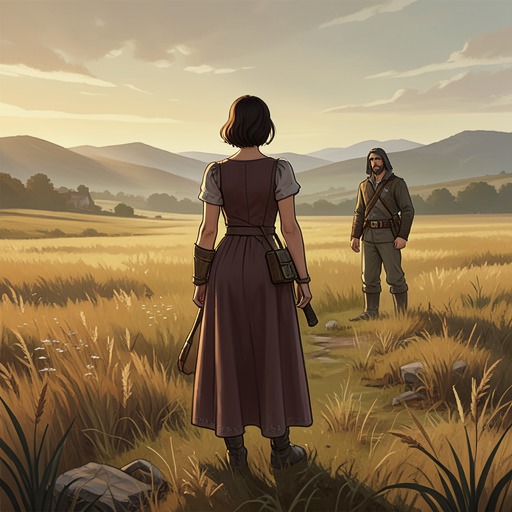
The lovers arrange to speak at night in a garden belonging to Belisa’s father. Arsileo is to climb a mulberry tree opposite a window of her room, bringing him close enough for them to talk. The meeting is a choice, although they have other opportunities: Arsileo often speaks with Belisa in the fields, by the river, or in the grove while she tends her cows. The secluded appointment instead gives Alfeo a precise setting in which to stage the false deaths. Arsenio, who often keeps watch in the street at night, happens upon the meeting, but he does not recognize his son in the tree.
The Staged Deaths
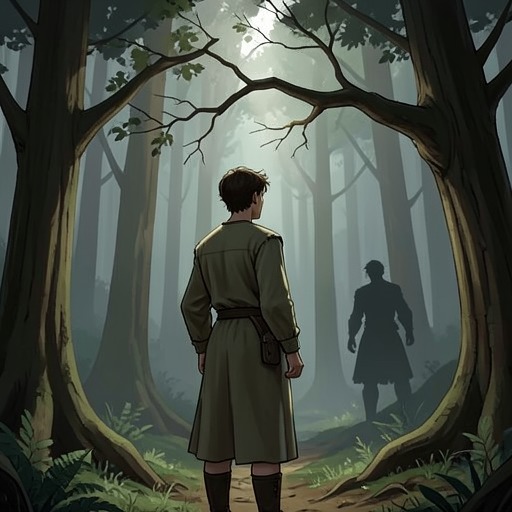
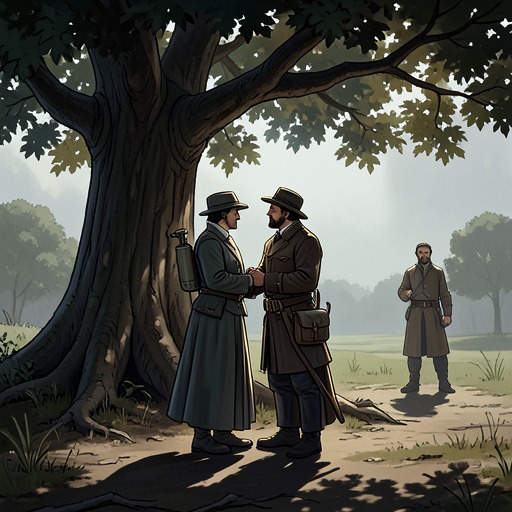
According to Arsileo’s later account, Alfeo makes two spirits assume familiar forms. One takes Arsileo’s appearance and goes to the appointed meeting; the other takes Arsenio’s. The spirit in Arsenio’s likeness shoots the figure in the tree with a crossbow, making the scene look like a father has killed his son. Alfeo then arrives in person, acts as though he has recognized and discovered the victim, and stages the father’s suicide with a sword. The plan depends on the sequence looking coherent to Belisa: the arrow seems to kill Arsileo, and the apparent father, realizing what he has done, seems to take his own life.
Belisa’s earlier telling preserves the scene as she experienced it, not as Alfeo constructed it. She recalls seeing the arrow pierce the figure’s heart and watching the other man fall on his sword; she even remembers the apparent Arsileo speaking her name as he fell. Her testimony makes clear why the trick succeeds: the performance gives her recognizable faces, a plausible cause for the violence, and a final gesture of despair. At that moment she has no reason to distinguish the spirits from the people they imitate. The spectacle is false, but its emotional consequences are real.
Belisa’s Grief and Exile
Belisa blames herself for having arranged the meeting in a place where Arsenio might find them. She later reflects that she had feared precisely such an encounter, yet had not trusted her own apprehension; she imagines that even banishment for Arsileo would have been a lesser misfortune, one that time might heal. Instead, believing that both father and son have died, she leaves her parents’ home without stopping to consider where she is going. She describes herself as overwhelmed and without sense, driven away by the sight of the apparent tragedy.
Her flight becomes a prolonged withdrawal from other people. Belisa says that she has spent six months in the lonely place where she tells her story, without seeing or speaking to anyone and without trying to seek anyone out. When she recounts what she believes happened, the listeners share her sorrow and weep with her. Her grief also extends to Arsenio: she remembers his goodness, the sincere affection he showed her, and the sleepless nights he spent on her account. In her understanding, the deaths have made her responsible not only for losing Arsileo but also for the destruction of a man whose love she had been unable to return in the same way.
Exposure of the Deception
The truth comes out in stages. Arsileo tells Amarilida that Alfeo, whom their community regarded as a powerful sorcerer, had arranged the imitation. He says that Armia told him what had happened and that he believes her account because of what followed. His version explains that the figures Belisa saw were spirits and that Alfeo’s intended result was either her death from despair or, at the least, the desperate flight she actually undertook.
Later, Polidora approaches Belisa in the company of Cintia and Dorida and asks whether she is certain that Arsenio and Arsileo are dead. Belisa answers from the force of her own memory: she saw the arrow strike one and the other use his own sword. Polidora then tells her that both are alive and well, identifies Alfeo as the cause of the deception, and says that she learned the truth from Arsileo himself. Belisa struggles to believe the news and asks how Polidora could know; Polidora offers to take her to Arsileo. Taking Belisa by the hand, she sets off with the two nymphs toward the brook where Arsileo is. Before they reach him, they hear his voice singing: the revelation has already transformed a story of irreversible loss into the prospect of reunion.
Narrative Role and Significance
The episode turns on the difference between a witnessed appearance and the truth behind it. Belisa’s account is sincere and precise, but the apparent faces, weapon, and self-inflicted wound have all been arranged to deceive her. Arsileo’s later explanation does not erase what she saw; it changes what those sights mean. That reversal makes her six months of mourning the consequence of a false report embodied in a convincing scene rather than a response to actual deaths.
The deception also gives Alfeo’s jealousy an unusually destructive form. Unable to win Belisa’s affection, he manipulates her perception of the people she loves and makes her believe that she has lost both at once. Yet the plan does not achieve the death he intends, and its apparent finality can be undone when Arsileo’s survival is disclosed. Polidora’s direct approach to Belisa and her promise to lead her to him carry the story from concealed identities toward recognition; Arsileo’s song, heard before the meeting, marks the moment when Belisa’s remembered tragedy begins to open onto a different outcome.