The group wedding at Diana’s temple
DianaAt the Temple of Diana, the reunited Felismena and Don Félix join the shepherds and shepherdesses for a collective wedding. The ceremony turns private reconciliations into a communal conclusion: after love has been strained by absence, mistaken judgment, and broken promises, the assembled company is married to those they love. Yet Sireno’s arrival also gestures beyond the celebration, leaving the book’s ending both joyful and open.
Arrival at the Temple
After Felismena and Don Félix reconcile, Dorida invites them to the Temple of Diana, where Felicia and the shepherds and shepherdesses are waiting. Don Félix accepts, and he and Felismena travel there together. On the journey, Felismena recounts what has happened since they last met, including her service to Don Félix as a page, which he had not recognized while absorbed in his own concerns.
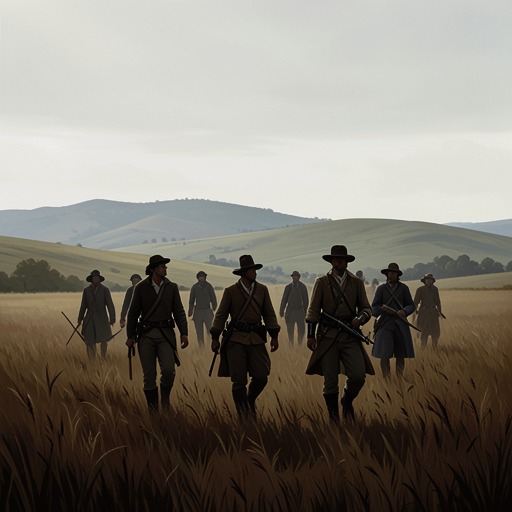
Their arrival follows a violent encounter: three knights had attacked Don Félix, and Felismena rescued him. The pair take the dead knights’ horses and continue toward the temple. The shift from danger on the road to a gathering prepared to receive them gives the wedding a concrete threshold: the lovers enter the company not as strangers or pursuers, but reconciled and welcomed.
Reconciliation Made Public
The wedding follows Don Félix’s admission that he loved Celia and forgot Felismena, though he says he never lost all memory of her worth. He recognizes the injuries his change of heart caused and fears that neither his explanations nor her enduring affection can erase them. Felismena forgives him, explaining that her love has endured through the hardships she underwent for his sake. Their marriage therefore follows an acknowledged breach and forgiveness, rather than concealing the history that made reconciliation necessary.
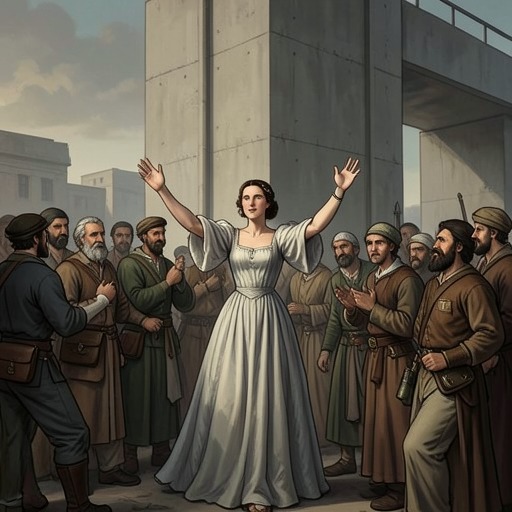
At the temple, Felismena’s private devotion becomes part of a public celebration. The text does not enumerate every couple or describe the rites in detail; it reports that all are married to the people they love, amid general rejoicing. The collective form gathers individual love stories into one occasion without making their different histories identical.
The Company and Its Contrasts
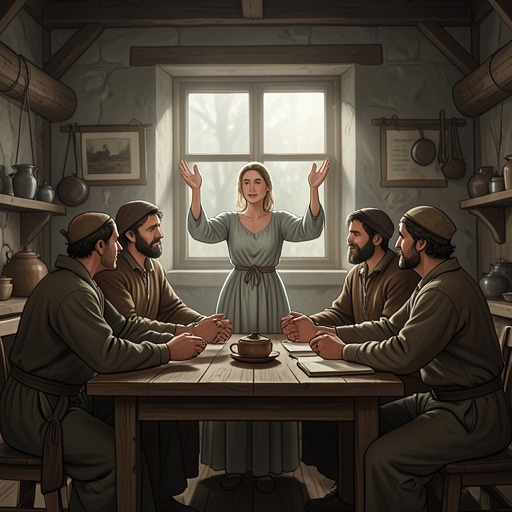
Felicia’s presence links the wedding to the help and guidance that have shaped the later course of the narrative. Dorida has brought the reconciled pair to the temple, and the waiting shepherds and shepherdesses receive them into a community where their union can be celebrated. The scene’s emphasis is not on the mechanics of the ceremony but on the company assembled and the shared joy of its outcome.
That communal resolution stands against the recurring failures of promises elsewhere in the book. Duarda recounts that Danteo promised to marry her, then married another woman; after that wife’s death, she refuses to accept him, insisting on her hard-won freedom. Her story has not been settled by the temple celebration: the narrative specifically associates Sireno’s arrival with further developments involving Danteo and Duarda.
Ending and Continuation
Sireno’s arrival contributes to the happiness of the gathering, but the closing passage does not present him as one of the newly married couples or resolve his own story there. Instead, it points to events to be told in the book’s second part, including the course of the Portuguese shepherd and shepherdess, Danteo and Duarda. The wedding thus offers a powerful ending to the reconciliations completed in this part while preserving a thread of unfinished action.
The ceremony’s significance lies in this balance. It gives the reunited lovers and the gathered company a shared moment of fulfillment, but it does not claim that every conflict has disappeared. Marriage publicly seals the reconciliations achieved; Sireno’s arrival and the announced continuation keep the conclusion open to change.