Diana reunites with Sireno, who has forgotten his love for her
DianaDiana reunites with Sireno, who has forgotten his love for her, in a scene that reverses their former relationship: the shepherd once consumed by longing can now speak freely, while the married Diana grieves over the life and love she has lost. Their reunion at the fountain exposes the unequal aftermath of separation, and turns an old pastoral meeting place into a measure of how profoundly time and fortune have changed them.
Setting and Return
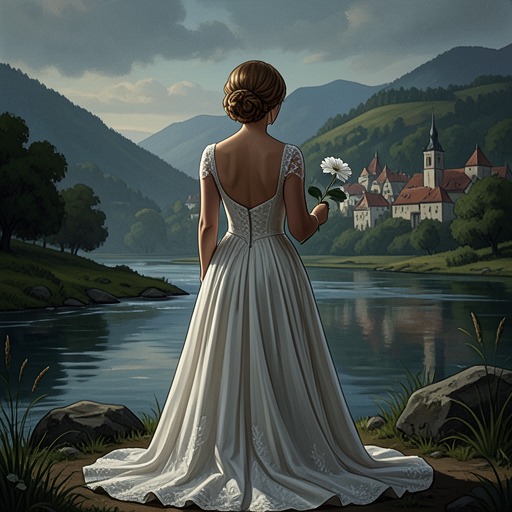
Sireno’s return to the valley brings him back among familiar companions and places. The Ezla River, the meadows, and the fountain among the alders belong to the landscape in which he once pastured his flock and first loved Diana. Earlier, that landscape brought the past upon him with painful force: arriving from the mountains of León, he remembered their meetings and the promises Diana had made beside a clear spring. The remembered bond had once seemed strong enough to withstand parental wishes and pressure from relatives; the present reunion tests that promise against what actually happened.
The scene unfolds through more than one encounter. In the first, Sireno, Selvagia, and Silvano hear Diana singing near the fountain at evening. They conceal themselves among the myrtles so that they can listen. Diana’s loose hair, lowered gaze, and tears frame the song as an expression of present distress, not simply a recollection of old courtship. Its lament asks how a woman can live when she finds herself badly married. The familiar pastoral setting thus holds two kinds of memory at once: Sireno’s former suffering and Diana’s unhappiness in the marriage that followed their separation.
The Reunion and Its Reversal
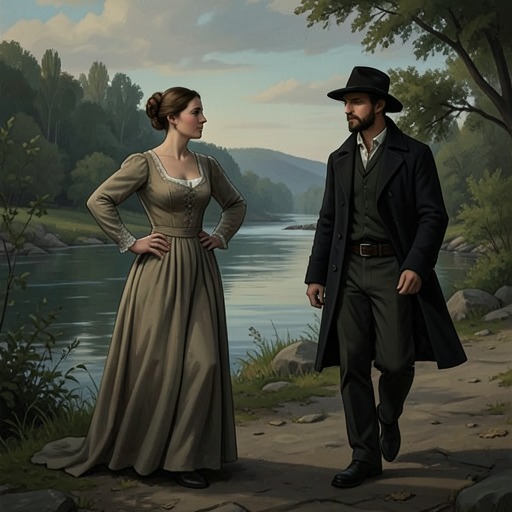
When Diana notices the others, they approach and greet one another courteously. Yet the encounter does not restore their old intimacy. She remarks that she has not seen Sireno in many days; he replies that, once, being seen by her would have cost him his life, but that speaking of past fortune brings some comfort now that he is in safe harbor. The words make the change unmistakable. He can acknowledge how badly he suffered without being overwhelmed by it, and he wishes her happiness even though he believes she once took that happiness from him.
Diana hears his composure differently. She suggests that he cannot have loved her as deeply as he claimed if his speech is now so free. Sireno answers that she mistakes the cause: he is free to speak because he no longer needs to hide how little power the lost relationship has over him. His restraint is not proof that the earlier love was shallow; it is evidence of a change in his condition. Diana, in turn, tries to conceal how much his freedom disturbs her, answering with discretion while her distress remains apparent to those around her.
Love, Marriage, and Responsibility
A later conversation makes the conflict behind the reunion explicit. As the shepherds sit by the fountain, Diana urges Silvano to attend to Selvagia rather than to talk about the flock, the field, or fortune. Her counsel recognizes the happiness of being loved in return, but it also places her beside a couple whose mutual affection throws her own marriage into relief. Sireno turns his eyes away as she speaks. Diana notices, and the exchange that follows reopens the question of whether she wronged him by marrying another man.
Diana defends herself by invoking the authority of her father: she had married while still subject to parental obedience. Sireno counters that obedience and misfortune could not erase a love he had understood as true, and recalls that she might have married without forgetting him. Yet he also makes a harder distinction. Loving a married woman, he says, would have left him exposed to jealousy without the freedom to complain; the husband’s place would make his suffering both acute and difficult to voice. From that perspective, her forgetting him, painful as it was, spared him a worse form of attachment. The exchange does not settle blame. Instead, it shows how obligation, love, and the right to speak about injury pull against one another.
Aftermath and Significance
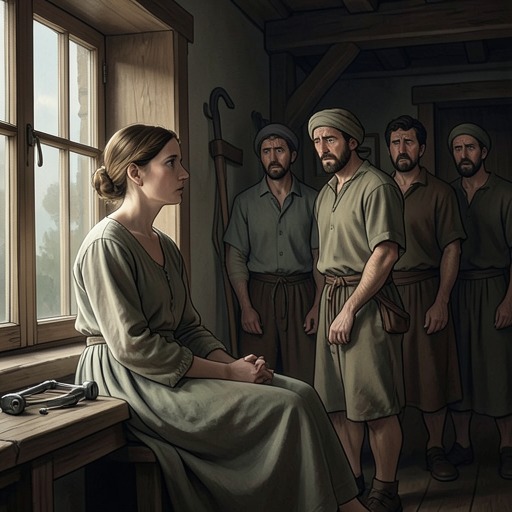
The reunion’s emotional balance is clearest in the responses of the three companions. Selvagia sheds tears at Diana’s song and fears the misfortunes that may follow her. Silvano, who once loved Diana without receiving her affection, sees no reason to grieve over her troubles; he has found reciprocal love with Selvagia. Sireno can pity Diana while also recalling the injury he associates with her. Their changed relationships form a quiet counterpoint to her solitary lament: the old circle still meets, but its affections have been redistributed.
After the shepherds sing, Diana sits with her face resting on her hand and tears falling as she listens. When the song ends, she rises with a sigh and walks down the valley without taking leave; her hair catches on a branch. The gesture gives the scene a physical ending, but not a reconciliation. Sireno does not return to his former despair, and Diana’s grief does not undo her marriage or restore their love. In a work where pastoral landscapes invite characters to remember and sing, the fountain becomes a place where memory can be voiced without making the past recoverable. The decisive change is not that the former lovers meet again, but that they meet on opposite sides of forgetting.