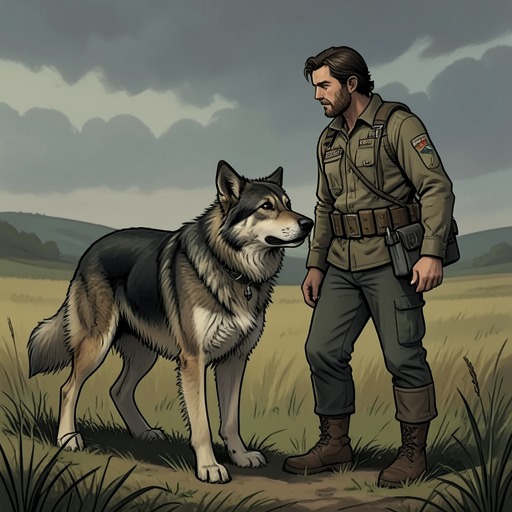
Les chiens qui ne savent rien comprennent ce que nous disons
DingoLes chiens qui ne savent rien comprennent ce que nous disons is the narrator’s paradoxical claim that dogs understand human speech more readily than humans understand theirs. Anchored in Dingo’s responses to ordinary remarks, the expression turns an everyday exchange into a critique of human superiority and a plea to recognize animals as thinking, choosing beings.
The Claim and Its Reversal
The narrator presents the claim as an undeniable fact that people ought to pause over. Dogs, he argues, understand what people say and communicate with one another, with other animals, and with humans. The imbalance is pointed: people possess knowledge and elaborate systems of inquiry, yet have not deciphered animal language; dogs, without formal instruction, are said to have grasped the languages and speech varieties that matter to them.
The sweeping list—from French, English, German, and Russian to Greenlandic, Hindustani, Telugu, regional dialects, and slang—gives the assertion comic excess. Its scale is not offered as a scientific demonstration. Instead, the exaggeration sharpens the reversal: human claims to intellectual authority look less secure when measured against the practical understanding dogs display in daily life.
Dingo as Everyday Evidence
The narrator grounds the idea in Dingo’s reactions to statements about whether he will be taken for a walk. When told in a neutral tone that he will stay home, Dingo first protests, then complains and cries briefly before lying down with his head on the carpet. When told that he will go out, he springs up, cries joyfully, tugs at the narrator’s sleeve and clothing, and urges him toward the door. The narrator interprets those movements and sounds as a clear response to what has been said.
The contrast between Dingo’s two reactions matters as much as the claim that he understands the words. His conduct changes with the announced plan: disappointment gives way to eager movement when the prospect of going out changes. The episode presents communication not as an abstract puzzle but as something already taking place through speech, gesture, and response, even though the human speaker remains dependent on interpretation.
From Understanding to Animal Subjectivity
The expression belongs to a wider reflection on what human beings overlook when they live among animals. The narrator points to animals’ preferences and to the judgment involved in choosing what best meets their physical needs and moral qualities. He argues that animals possess individuality, will, and sensibility, and that treating their lives as human property ignores the intelligence, freedom, and feeling destroyed by cruelty.
Dingo’s refusal to adopt human habits helps give this argument a particular force. The narrator admits that he had tried to impose human ways of living on him, as though one kind of sensibility governed every creature. Dingo resisted, and that resistance eventually changed the narrator’s response: initial irritation gave way to admiration and tenderness joined by respect. The dog is therefore not merely a mirror for human feeling; his distinct preferences and resistance challenge the narrator’s assumptions about how he should live.
Satire of Classification and Civilization
The claim also resonates with the book’s mockery of authoritative language. In Sir Edward Herpett’s letter, the animal is presented as no longer properly a dog: scientific classification places the dingo between dog and wolf, while an elaborate appeal to changing methods and scholarly opinion makes the category seem both solemn and unstable. The narrator’s account of this taxonomy exposes how confidently humans claim to classify a creature whose own life they may not understand.
The same tension appears when the narrator tries to offer Dingo a more polished European ideal of life. He couches his appeal in vague, consoling generalities and is surprised that Dingo appears unimpressed. The gap between human instruction and the dog’s independent judgment echoes the expression’s central reversal: humans may speak at length about animals, civilization, and knowledge, while still failing to understand the beings before them. The claim thus joins comic skepticism toward expertise with a serious insistence that animal communication and individuality deserve attention.