Opioid epidemic in the United States
DopesickThe opioid epidemic in the United States emerges here as more than a story of drugs moving through communities: it is a crisis in which economic distress, medical prescribing, racial inequality, and inadequate treatment access combine to shape who is exposed, who is punished, and who receives help. Rural Virginia offers a concentrated view of these forces. Its local emergencies, from daily overdose cases to overwhelmed treatment referrals, connect to a national toll that was rising sharply and resisted simple solutions.
Economic collapse and the spread of risk
In Roanoke, heroin had once been treated as a matter for police and court reporters, associated in local thinking with a small, mostly African American population. Don Wolthuis, a federal prosecutor, recalled that only a few dozen people might have been using heroin in the area during the 1980s and 1990s. The group was understood as socially isolated and largely invisible. That perception did not anticipate the later expansion of opioid use across a different population, or the public emergency it would become.
The book locates a major part of that change in the collapse of work. In Martinsville and surrounding Henry County, unemployment rose above 20 percent; food-stamp claims more than tripled, and disability rates increased by 60.4 percent. These figures reflected the decline of manufacturing and other sources of employment, not simply individual hardship. The reporting also describes people arriving at food pantries well before opening time and an abandoned furniture factory in Bassett burned after an unemployed man tried to remove copper wiring for resale. Such scenes make visible the economic conditions behind the statistics.
Researcher Shannon Monnat’s account connects these conditions to the flood of opioid painkillers. The epidemic’s drivers, as she described them, included both diminished access to work and rising disability, alongside powerful pharmaceutical promotion and regulatory approval of opioid drugs. She compared economic collapse to kindling and opiates to the spark: a way of distinguishing the conditions that accumulated risk from the substances that set off a faster-moving crisis. The pattern was not confined to rural places, though the book notes that workforce decline was more pronounced where fewer physicians prescribed opioids and fewer residents had college degrees.
Unequal exposure and unequal punishment
The epidemic’s racial dimensions complicate the account of who became addicted and who encountered the criminal-justice system. The Centers for Disease Control and Prevention reported in 2014 that physicians prescribed painkillers to people of color at substantially lower rates than to white patients, in part because of doctors’ mistrust and assumptions about misuse. By then, overdose deaths among young white people had risen to three times their 2002 rate, while the death rate for people of color had remained comparatively unchanged. The book presents this disparity not as a difference in inherent vulnerability, but as an outcome shaped partly by unequal medical treatment.
The contrast continued in policing and sentencing. The statement that society could not arrest its way out of the opioid crisis was often applied to largely white opioid users involved in dealing or property crime to stave off withdrawal, but not as readily to Black and brown people arrested for selling drugs. The book reports that three-quarters of federal drug offenders were Black or Hispanic and that people of color accounted for 57 percent of state-imprisoned drug offenders. Ronnie Jones’s repeated imprisonment illustrates how a conviction can impede employment and contribute to a cycle of incarceration and joblessness. Bryan Stevenson and the Equal Justice Initiative offer a contrasting approach: support in places with more jobs and harm-reduction services, diversion from prosecution for some low-level offenders, and practical assistance with housing, case management, and work. That model treats reentry and reduced drug dealing as connected problems rather than relying on punishment alone.
Emergency care and the treatment gap
By early 2017, fentanyl-overdose calls in the Roanoke region were arriving at twice the rate of the same period a year earlier. In a region of about 300,000 people, emergency-room doctors were seeing overdoses daily, sometimes several serious opioid-related cases at once. In one hour in April, three patients arrived at Roanoke Memorial Hospital, including a tree trimmer who had injected fentanyl-laced heroin twice because he thought the first dose had not worked. After he was revived, he left because he had promised to work for a customer. The episode shows how an emergency intervention could restore someone’s immediate capacity to leave without securing a route into continuing care.
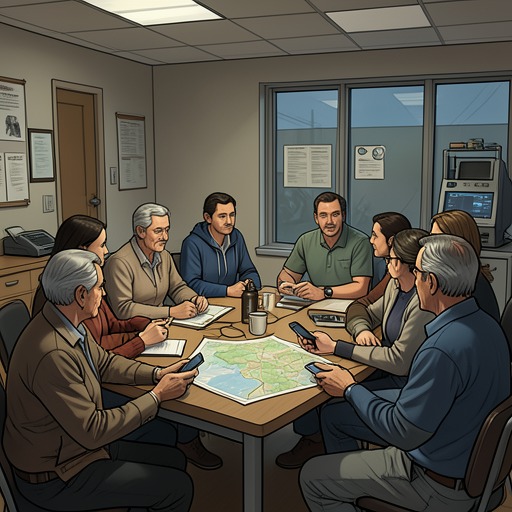
Health-care workers sought to build that route. Physician Karen Kuehl studied hospital procedures in Ontario, where overdose patients were referred from emergency departments to outpatient medication-assisted treatment and counseling. With psychologist Cheri Hartman, she worked toward a comparable transfer in Roanoke. Their efforts ran into bureaucratic, financial, and legal barriers: too few providers of medication-assisted treatment, too few detox and treatment beds, and no established smooth handoff. A state effort to train peer-recovery specialists was also expected to take months before becoming operational. In the meantime, hospital social workers referred people who had survived overdoses to the Hope Initiative, a local program designed to connect people with help.
The Hope Initiative relied on trained volunteers, or angels, to guide participants through treatment and recovery while drawing on housing, mental-health, and employment resources. The project’s spreadsheet listed 36 rehabilitation and aftercare providers across the southeastern United States, with options depending on a person’s finances and bed availability. Yet its first month exposed the distance between a referral plan and treatment actually received: 22 people came in, none entered residential treatment, and only a handful accessed outpatient medication-assisted treatment. Janine Underwood, whose son Bobby Baylis had died after taking fentanyl-laced heroin, was among the people working to make the program function. When a volunteer and John’s father arranged an out-of-state treatment placement for John, Underwood had to persuade the detox center to keep him an extra day and coordinate a family meeting elsewhere. The effort depended on improvised work by individuals because the care system did not provide a reliable transition.
A widening emergency and the limits of response
Virginia’s failure to expand Medicaid formed part of that treatment gap. Unlike Massachusetts, Virginia did not guarantee broad insurance coverage through a comparable state initiative. In June 2014, state Republicans blocked the governor’s Medicaid-expansion proposal, forgoing, according to the book, $6.6 million a day in federal funds and coverage for 400,000 low-income Virginians. In states that expanded Medicaid, the program helped pay for treatment, counseling, and addiction medication, and extended coverage to people who could not afford private insurance but were not eligible under older Medicaid rules. In Virginia, families and health advocates faced the consequences of that policy choice alongside already limited treatment capacity.
The scale of the crisis made delay especially consequential. A study by Don Burke, drawing on overdose deaths since 1979, found that deaths had doubled every eight years. The book reports that 300,000 Americans had died of overdose in the preceding 15 years and presents Burke’s warning that a similarly large toll could occur in the next five without dramatic intervention. In 2016, more than 100 Americans a day were dying from opioid overdose; some epidemiologists anticipated a rise to 250 daily deaths as synthetic opioids spread. These figures are presented as a rapidly worsening trajectory, not as a settled forecast.
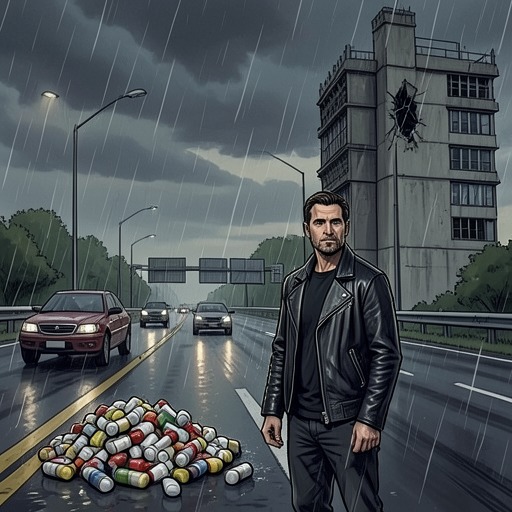
Local indicators in 2017 reinforced the warning. Roanoke’s nonfatal overdoses had more than doubled from the previous year, while fatal overdoses had nearly tripled, likely with some cases uncounted. Authorities reported seizing 4.4 pounds of fentanyl along I-81, described as enough for one million fatal overdoses. Yet dwindling regional news coverage meant that sprawling heroin prosecutions could receive no public attention, leaving residents with the mistaken impression that the crisis had ebbed. The image of communities as canaries in the coalfields therefore carries a double meaning: they signal a danger extending beyond their borders, while their warnings can still go unheard. The epidemic’s persistence reflects the interaction of exposure with economic insecurity, unequal policy, and fragmented care; arrest, rescue, and referral each fall short when the systems around them cannot sustain treatment and recovery.