CHOAM
DuneCHOAM, the Combine Honnete Ober Advancer Mercantiles, is the universal development corporation that forms the economic backbone of the Imperium in Frank Herbert's Dune. It is not merely a trading company but the primary mechanism through which political power is expressed and contested. Control of CHOAM directorships is the real indicator of a House's standing, and the struggle for Arrakis, the sole source of the geriatric spice melange, is fundamentally a war for economic dominance waged through this corporate entity. The novel's narrative is driven by the machinations of those who seek to control CHOAM's most valuable resource, making the corporation an unseen but decisive force in the fate of House Atreides and the entire universe.
Nature and Structure
CHOAM is the universal development corporation, a vast economic entity that controls trade across the known universe. Its full name, Combine Honnete Ober Advancer Mercantiles, suggests a merger of commercial and political interests. The corporation is not an independent power but is controlled by the major forces of the Imperium: the Padishah Emperor, the Great Houses of the Landsraad, and, as a silent partner, the Spacing Guild. The Emperor and his friends command a majority of the voting strength in the CHOAM directorship, a fact that the Reverend Mother Gaius Helen Mohiam reveals to Lady Jessica, noting that this voting strength is likely to increase as others smell the same profits. This structure makes CHOAM a weather vane of the times, reflecting the shifting balance of power between the Emperor, the Landsraad, and the Guild.
Aims and Methods
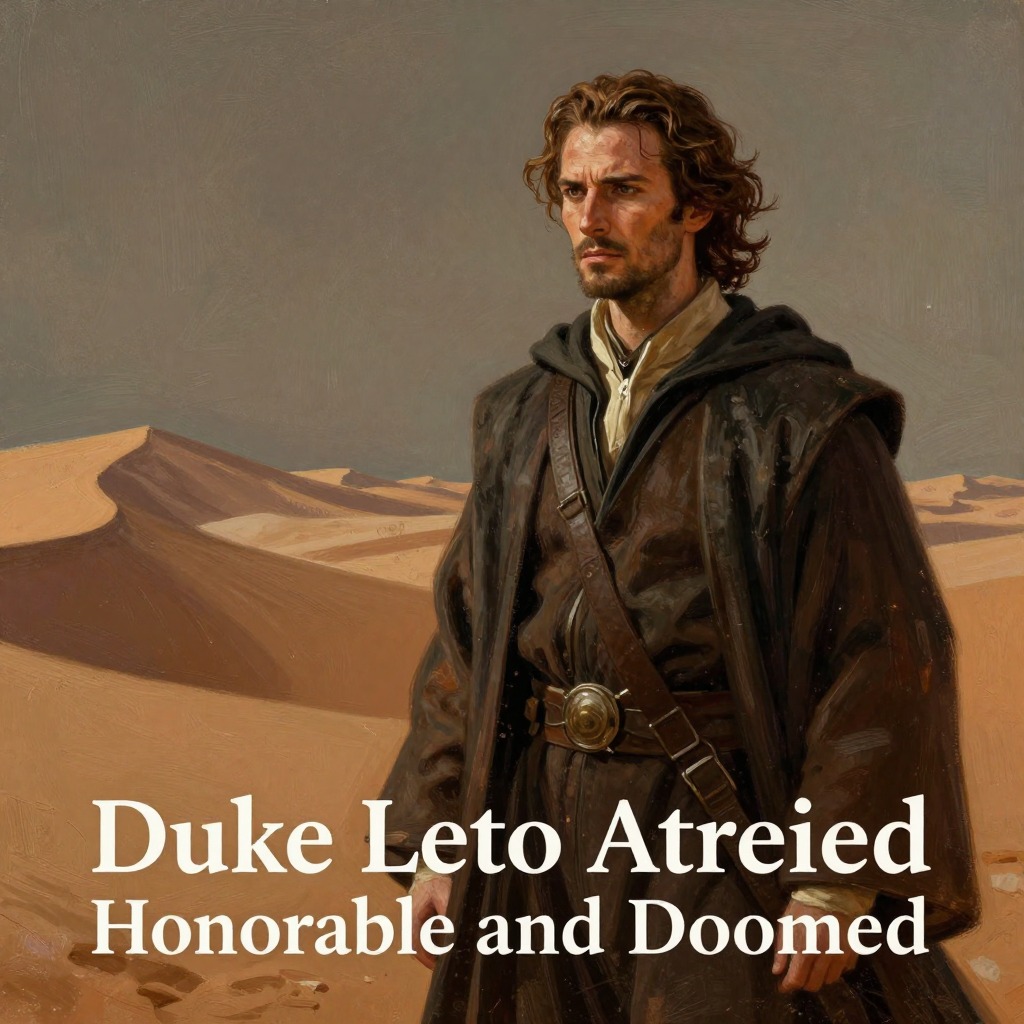
CHOAM's primary aim is profit, and its methods are those of monopoly capitalism. It controls the trade of virtually every commodity, from the prosaic to the exotic. Duke Leto Atreides explains to his son Paul that "few products escape the CHOAM touch," listing logs, donkeys, horses, cows, lumber, dung, sharks, whale fur, and even the pundi rice of Caladan. However, all of this fades before the importance of melange, the spice that is unique to Arrakis and cannot be manufactured. The spice is the key to CHOAM's power, and its control is the ultimate prize. The corporation's directorships are the real evidence of political power, passing with shifts in voting strength within the Landsraad as it balances itself against the Emperor and his supporters. This makes CHOAM a tool for both economic exploitation and political manipulation.
Key Occurrences and Consequences
The struggle for control of CHOAM is the underlying cause of the novel's central conflict. The Baron Vladimir Harkonnen's plan to destroy House Atreides is motivated by the desire to secure an irrevocable directorship in the CHOAM Company, which would bring his House greater wealth than any other in the Imperium. The Emperor's decision to grant Arrakis to Duke Leto is a political maneuver that forces the Atreides into a trap, as the Duke is given a CHOAM directorship as a subtle gain, but is also placed in a position where he can be blamed for any disruption in spice production. The Duke understands this, explaining to Paul that the Harkonnens have been stockpiling melange for over twenty years, intending for spice production to fail and for the Atreides to be blamed. This would make the Atreides name unpopular among the Landsraad Houses, who would look the other way no matter what was done to them. The economic power of CHOAM thus dictates the political and military strategies of the Great Houses.
Significance
CHOAM represents the triumph of economic determinism in the Dune universe. It is the force that binds the Imperium together, but also the source of its instability. The corporation's monopoly on trade, particularly the spice trade, makes it the ultimate arbiter of power. The Guild's monopoly on interstellar transport and the Emperor's control of the Sardaukar are both dependent on the wealth that flows through CHOAM. In the end, Paul-Muad'Dib's victory is not just a military triumph but an economic one. By threatening to destroy the spice, he gains absolute control over the Guild and the Emperor, forcing them to submit to his terms. CHOAM, the instrument of economic control, becomes the means by which a new order is established, demonstrating that in the Imperium, the power to destroy a thing is the real control of it.