Princess Irulan
DunePrincess Irulan, the eldest daughter of Padishah Emperor Shaddam IV, occupies a unique position in the narrative architecture of Frank Herbert's Dune. She is both a participant in the story's political machinations and its primary historian, providing the epigraphs and framing commentary that shape the reader's understanding of Paul Muad'Dib's legend. Her role is defined by her dual function: as a Bene Gesserit-trained princess whose marriage to Paul becomes the legal cornerstone of his claim to the throne, and as the author of the "Manual of Muad'Dib" and other historical works that transform his life into myth. Irulan's perspective offers a crucial lens through which the novel's events are interpreted, making her an indispensable, if often overlooked, architect of the narrative itself.
Identity and Background
Irulan is introduced as the daughter of the Padishah Emperor, a figure of immense political significance in the Imperium. Her father, Shaddam IV, is the 81st of his line to occupy the Golden Lion Throne, and Irulan is one of his five daughters, with no legal sons to succeed him. This absence of a male heir is a central fact of the political landscape, as it makes Irulan a valuable piece in the game of dynastic succession. She is described as tall and blonde, with a face of chiseled beauty and green eyes that look past and through those she observes. Her training is deeply rooted in the Bene Gesserit way, a fact that is evident in her composure and her ability to navigate the treacherous currents of the Imperial court. In her personal reflections, she reveals a complex relationship with her father, noting that he once wished she had been older when Duke Leto Atreides was choosing a woman, a remark that suggests a secret admiration for the man who would become his enemy. This background positions Irulan not merely as a passive observer but as a deeply embedded actor in the very power structures she chronicles.
Role as Chronicler and Historian
Irulan's most distinctive contribution to Dune is her role as the author of numerous epigraphs and historical texts that frame the novel's chapters. These writings, which include the "Manual of Muad'Dib," "A Child's History of Muad'Dib," and "Muad'Dib, Family Commentaries," are presented as excerpts from her scholarly works. Through these epigraphs, she provides the reader with essential context, commentary, and foreshadowing, shaping the perception of Paul as a messianic figure. Her writings often reflect on the nature of power, history, and prophecy, offering a meta-narrative that elevates the story beyond mere plot. For instance, she notes that "A beginning is the time for taking the most delicate care that the balances are correct," a line that underscores the novel's themes of political and ecological equilibrium. Her perspective is not neutral; it is colored by her own position within the Imperium and her eventual role as Paul's wife. This dual role as both participant and historian makes her a uniquely unreliable yet indispensable narrator, as her accounts are both a record of events and a tool for constructing the very legend she describes.
Political Marriage and Ascension
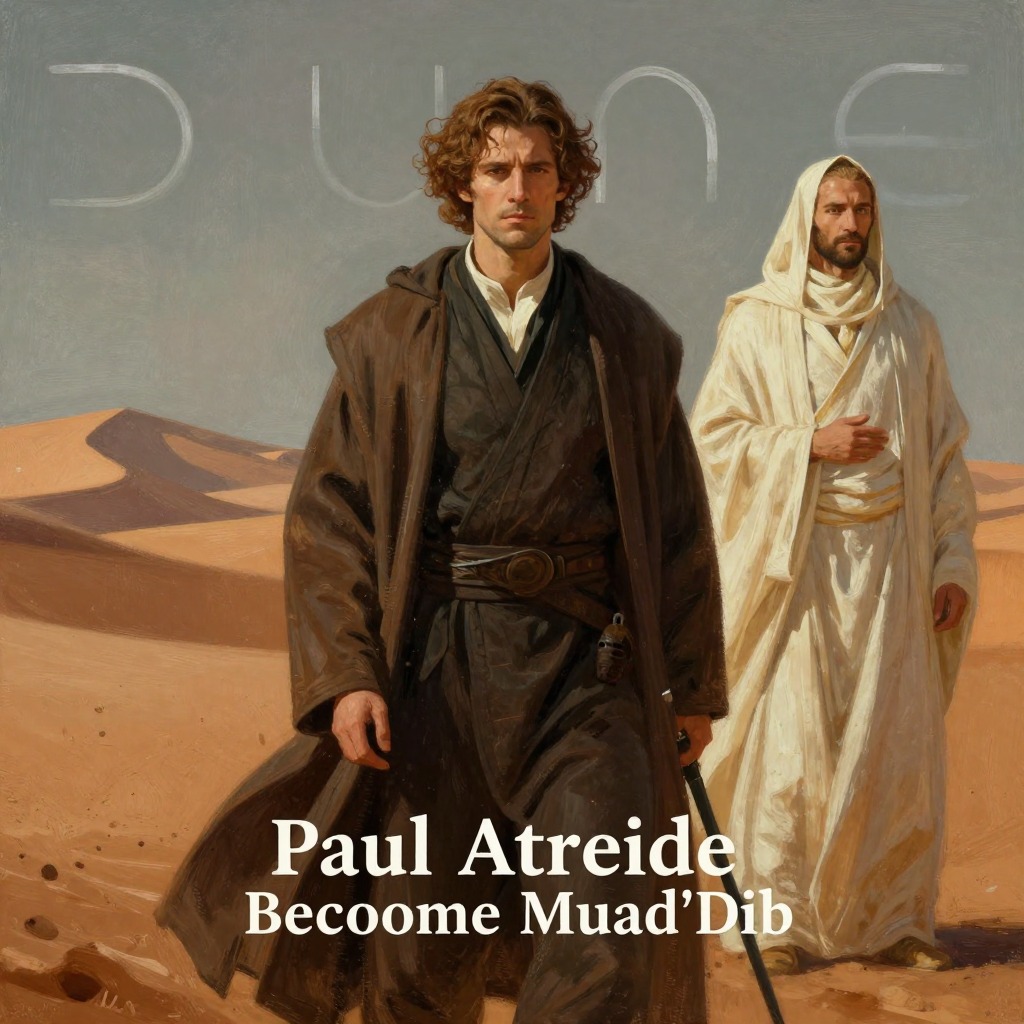
Irulan's political significance culminates in her marriage to Paul Muad'Dib following his victory over the Emperor and the Harkonnens. In the aftermath of the Battle of Arrakeen, Paul, now the undisputed ruler of Arrakis, demands the Emperor's daughter as part of the terms of surrender. He states, "Your daughter wed to me and the way opened for an Atreides to sit on the throne." This marriage is a purely political act, designed to legitimize Paul's claim to the Imperial throne and to weld peace out of the moment of conquest. Irulan, who has been trained for this role, accepts her fate with a stoic composure, telling her father, "For this I was trained, Father." However, the marriage is marked by a profound emotional distance. Paul, who is deeply devoted to his Fremen concubine Chani, makes it clear that Irulan will have no more of him than his name. He promises Chani, "That princess shall have no more of me than my name. No child of mine nor touch nor softness of glance, nor instant of desire." This arrangement leaves Irulan in a state of political power but personal desolation, a living symbol of the cold calculus of royal marriage.
Relationship with Paul and Chani
Irulan's relationship with Paul is defined by its political necessity and emotional emptiness. She is the legal wife, but Chani is the beloved. This dynamic is explicitly acknowledged by Lady Jessica, who tells Chani, "That princess will have the name, yet she'll live as less than a concubine – never to know a moment of tenderness from the man to whom she's bound. While we, Chani, we who carry the name of concubine – history will call us wives." This statement encapsulates the tragic irony of Irulan's position. She is the instrument of Paul's legitimacy, yet she is excluded from the emotional core of his life. Her role is to be a symbol, a piece on the political chessboard, while Chani is the woman who shares Paul's life and bears his children. Irulan's own writings, however, betray a deep awareness of this dynamic. She reflects on the nature of power and the sacrifices it demands, and her historical accounts often serve to elevate Paul's legend while subtly acknowledging her own marginalization. This tension between her public role and private reality makes her a figure of considerable pathos.
Narrative Significance and Evaluation
Irulan's narrative significance extends beyond her role as a character; she is the primary architect of the myth of Muad'Dib. Her epigraphs and historical writings frame the entire novel, providing the reader with a lens through which to interpret Paul's journey. She is the one who places Paul in his time and place, who documents his rise, and who, in her own way, contributes to the very legend she describes. Her perspective is that of an insider who is also an outsider, a member of the Imperial family who becomes a captive of the new order. This dual perspective allows her to offer insights that are both intimate and detached, making her an invaluable guide to the complex world of Dune. In the end, Irulan is a figure of quiet tragedy and immense importance. She is the chronicler of a revolution that displaces her own family, the wife of a man who does not love her, and the keeper of a history that will outlive them all. Her story is a testament to the power of narrative and the often-painful intersection of personal destiny with the demands of the state.