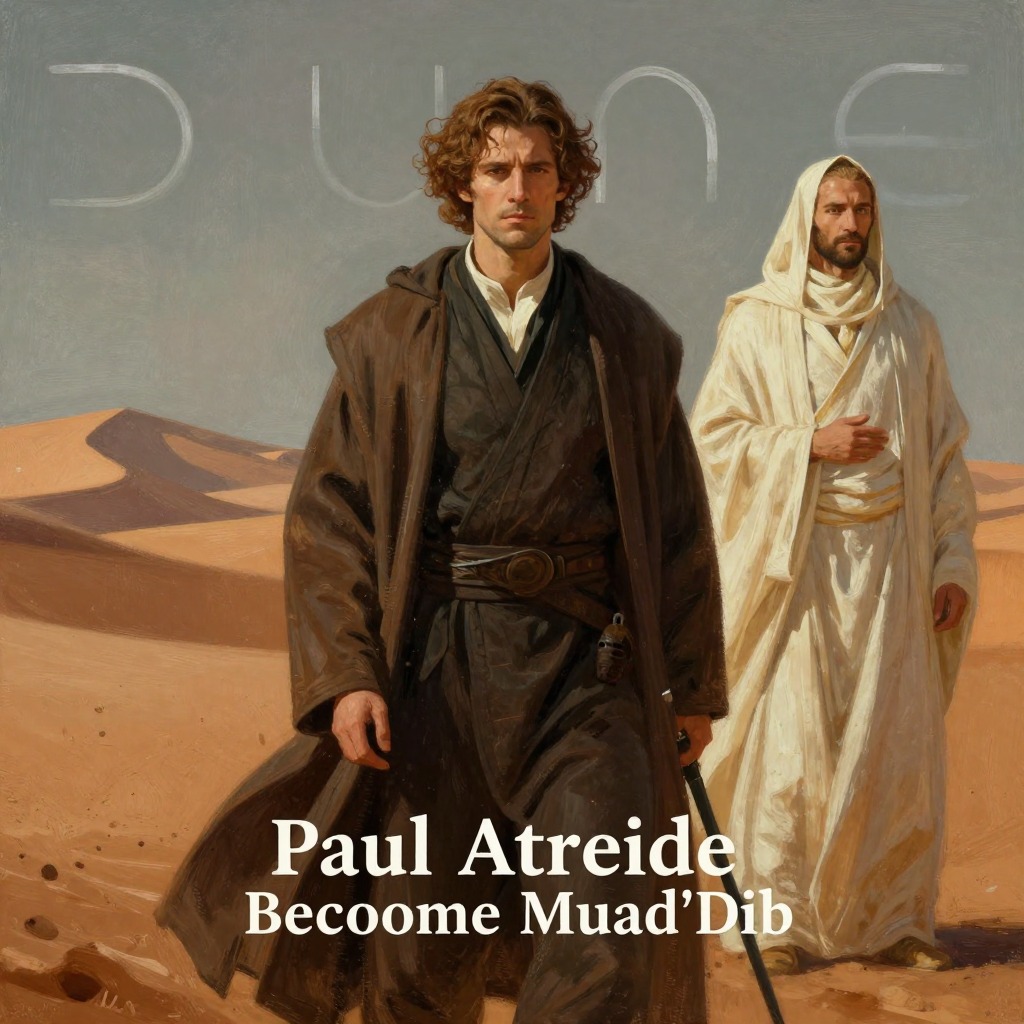
Duke Leto Atreides
DuneDuke Leto Atreides, the charismatic and honorable head of House Atreides, is a central figure in Frank Herbert's Dune, whose fateful decision to accept the fief of Arrakis sets the entire saga in motion. A man of surpassing warmth and surprising coldness, he is beloved by his people and respected by his enemies, yet his very popularity and integrity make him a target in the deadly political games of the Imperium. His death, a carefully orchestrated betrayal, becomes the catalyst for his son Paul's rise as Muad'Dib, transforming a personal tragedy into a universe-shaking jihad. Leto's legacy is not merely his bloodline but the ideals of honor and loyalty that he instilled in his son and his followers, ideals that both inspire and haunt the new Duke.
Identity and Background
Duke Leto Atreides is introduced as the ruler of Caladan, a water-rich planet that has been the ancestral home of House Atreides for twenty-six generations. He is described as tall, olive-skinned, with a thin face of harsh angles softened by deep gray eyes, and he wears a black working uniform with the red Atreides hawk crest. His lineage is distinguished: he is a distaff cousin of the Padishah Emperor Shaddam IV, and his father, the Old Duke, was a man of bravura who died in a bullring. Leto's rule is marked by a sense of justice and a personal magnetism that attracts fierce loyalty, as seen in his trusted advisors: Thufir Hawat, the Mentat Master of Assassins; Gurney Halleck, the troubadour-warrior; and Duncan Idaho, the Swordmaster of the Ginaz. He is also the beloved of Lady Jessica, a Bene Gesserit who defied her order to bear him a son, Paul, rather than the daughter she was commanded to produce.
Life and Plot Trajectory
Leto's life takes a decisive turn when the Emperor, pressured by the Harkonnens, orders him to assume control of Arrakis, the only source of the spice melange. Aware that this is a trap, Leto nevertheless accepts the fief, seeing an opportunity to gain a CHOAM directorship and to develop 'desert power' by allying with the Fremen. He sends Duncan Idaho to negotiate with the Fremen and prepares his household for the move. Upon arriving at Arrakeen, he works tirelessly to secure his position, inspecting spice mining operations and hosting a dinner for local dignitaries. However, the Harkonnen plot unfolds: Dr. Yueh, his trusted Suk doctor, is suborned and betrays him, drugging him and delivering him to the Baron. Leto is captured, and in a final act of defiance, he uses a poison capsule tooth planted by Yueh to kill his captors, including Piter de Vries, though he himself dies in the attempt.
Key Actions and Objectives
Leto's primary objective is to secure a stable and prosperous future for House Atreides on Arrakis. He seeks to win the loyalty of the Fremen, recognizing their potential as a fighting force comparable to the Sardaukar. He also aims to outmaneuver the Harkonnens and the Emperor, knowing that his popularity among the Landsraad makes him a threat. His actions include ordering Thufir Hawat to eliminate Harkonnen agents, sending Gurney Halleck to negotiate with smugglers, and personally overseeing the rescue of spice workers from a sandworm attack. He also takes steps to protect his family, such as installing a poison snooper and arranging for Paul's training. His most significant act, however, is his decision to feign suspicion of Jessica, following Hawat's advice, in order to smoke out a traitor, a deception that he reveals to Paul, asking him to tell Jessica the truth if he dies.
Relationships and Conflict
Leto's relationships are defined by loyalty and love, but also by political necessity. His bond with Lady Jessica is deep and genuine, though he never marries her, keeping her as his formal concubine to preserve political alliances. He trusts her completely, despite the Harkonnen plot to make him suspect her. His relationship with his son Paul is one of pride and hope, as he sees in Paul the potential to become a Mentat and a great leader. He is also close to his lieutenants, particularly Gurney Halleck, whom he values for his loyalty and skill. His primary conflict is with the Baron Vladimir Harkonnen, his mortal enemy, who seeks his destruction. The Baron's hatred is rooted in the old feud between their houses, and he uses every means, including treachery and overwhelming force, to bring about Leto's downfall. Leto also faces conflict with the Emperor, who sees him as a threat to the throne.
Change and Ending
Leto's character undergoes a subtle change as he faces the realities of Arrakis. Initially confident and strategic, he becomes increasingly weary and fatalistic, aware that the trap is closing around him. He confesses to Paul that he is 'morally tired' and that the melancholy degeneration of the Great Houses has afflicted him. His ending is tragic but heroic: drugged and captured, he uses the poison tooth to kill his enemies, including Piter de Vries, and nearly kills the Baron, who only escapes by chance. His death is a turning point in the novel, as it forces Paul to assume the mantle of Duke and sets him on the path to becoming Muad'Dib. Leto's final thoughts are of his son and the hope that Arrakis might become a home for him, a hope that is ultimately fulfilled in a way he could never have imagined.
Narrative Role and Evaluation
Duke Leto Atreides serves as the moral and emotional anchor of the novel's first half. His death is the inciting incident that propels Paul's journey and the Fremen uprising. He is portrayed as a noble and just ruler, a stark contrast to the corrupt Harkonnens, and his legacy of honor and loyalty inspires those who survive him. His character also highlights the themes of political intrigue, betrayal, and the cost of power. Leto's evaluation in the narrative is largely positive; he is remembered as a man of integrity who was undone by the treachery of others. His relationship with Paul, in particular, is crucial, as it shapes Paul's understanding of leadership and duty. The Princess Irulan's commentaries often reflect on Leto's qualities, noting his 'abiding love for his Bene Gesserit lady' and the 'devotion with which men served him,' while also acknowledging the 'surprising coldness' that could emerge in him. Ultimately, Leto is a tragic figure whose death, while a personal loss, becomes the seed of a new order.