Ghosts of the past
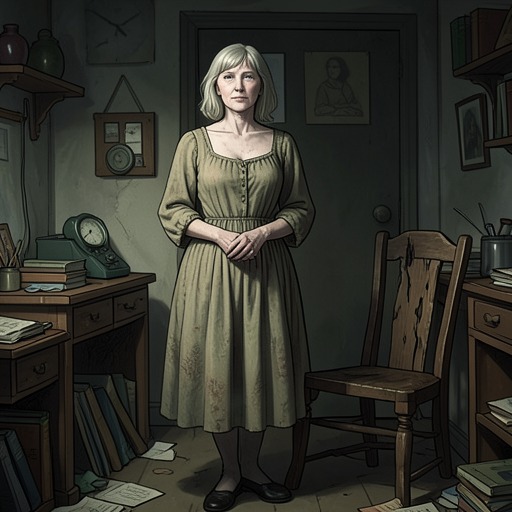
EileenGhosts of the past is a motif through which the novel connects Eileen Dunlop’s family history to her departure from X-ville. Haunting is not presented as a confirmed supernatural event: it appears in Eileen’s father’s fears, in Eileen’s metaphors for separation, and in her description of the winter landscape. The repeated image allows the past to remain present even as Eileen sets out to become someone new.
The imagined presence at home
On the Christmas morning when Eileen prepares to leave, her father is already awake and drunk. He says that something has been watching the house from behind it, and interprets what he heard in the snow as an animal, perhaps a wolf, rather than a person. His account gives the scene a Gothic uncertainty, but the narrative does not establish that anything supernatural—or even an actual animal—was there. What matters is the way his fear makes the yard seem inhabited by an unseen presence.
Eileen answers her father by saying that there are no wolves, only mice. The exchange turns the family’s history of fear into a difference in scale: the threat her father imagines as a wolf is answered with something small and ordinary. Yet the reply does not dispel his distress or undo the conditions of the scene. He drinks the gin she gives him, becomes drowsy, and allows her to lead him to her mother’s bedroom. Eileen lays him down, says good night, and closes the door. The farewell is quiet and domestic rather than dramatic, but the image of a father who believes he has encountered a ghost anticipates Eileen’s later description of herself as one.
A family past that cannot be claimed
As she leaves the family home, Eileen recognizes that she will not return to claim it. She has money and a gun with her, but has not emptied her father’s bank account or cashed her last paycheck. She later considers whether she might inherit the house, then decides she does not want anything there enough to come back for. Her refusal is not presented as indifference to the place: the rooms, furniture, shelves, lamps, floorboards, and banister matter to her, and she expects to grieve them afterward. Departure therefore means severing a bond with a home that remains emotionally significant, not escaping a past that has ceased to matter.
Eileen describes herself as dead in X-ville, a ghost and a lost soul. The metaphor gives her disappearance two meanings at once. She is physically leaving, but she also treats the person she has been as someone who will no longer belong to the town. When an icicle cuts her face as she turns from the house, she understands the resulting scar as a mark of having once been someone else. The image makes the past visible on her body without suggesting that it can dictate her future: the scar records a former self, while Eileen continues away from the house.
Ghosts on the road
The motif follows Eileen beyond the family home. On the road, she leaves Rita Polk asleep in the running Dodge car beside a stretch of snowy woodland, then walks toward a deer. The animal’s breath hangs in the air between them like ghosts. Here the word evokes the cold scene, but it also gathers the emotional residue of what Eileen has just left behind. The deer does not speak or explain anything; it stands before her, then trots away. Eileen cries, wipes her tears across her face, and continues walking through the snow.
That encounter contrasts with her father’s imagined watcher. His fear turns an unseen presence into a possible predator; Eileen’s meeting with the deer is an actual encounter, but the animal neither pursues nor rescues her. Its departure leaves her to continue on foot. The difference matters: the novel uses ghostly language to frame moments of uncertainty and transition, not to resolve them through a supernatural intervention. Eileen’s movement away from X-ville remains her own, carried out with the money, map, and gun she has brought rather than through any assurance that the past has vanished.
Memory and self-reinvention
Ghosts of the past also links private memory to the story’s retrospective narration. Eileen recounts her father’s fear and her own departure from a later perspective, able to name herself as someone who has become separate from the girl she was. Yet the language of haunting resists a clean break: the old home, her father, and the person she once was remain present in the account. The motif gives that persistence a form without claiming that Eileen must return or reconcile with it.
The final movement toward another identity is therefore neither a miraculous escape nor a simple erasure. Eileen later goes by Lena, and the image of the ghost clarifies what that change entails: in X-ville, she considers herself absent, while elsewhere she can begin again under another name. The ghosts belong to memory and to the family’s fearful imagination, but the ending places Eileen in motion. She carries the traces of the past with her while choosing not to go back.