Shame and alienation from the body
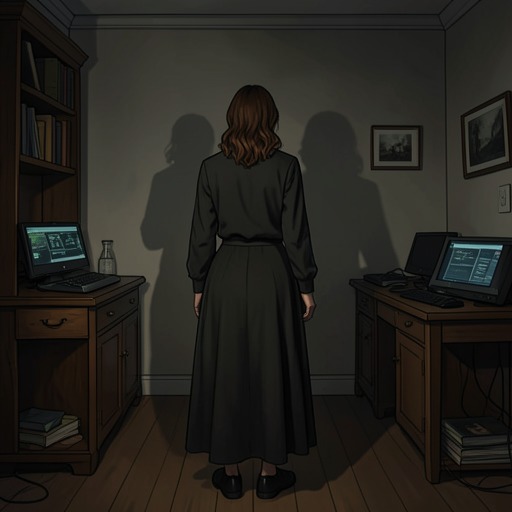
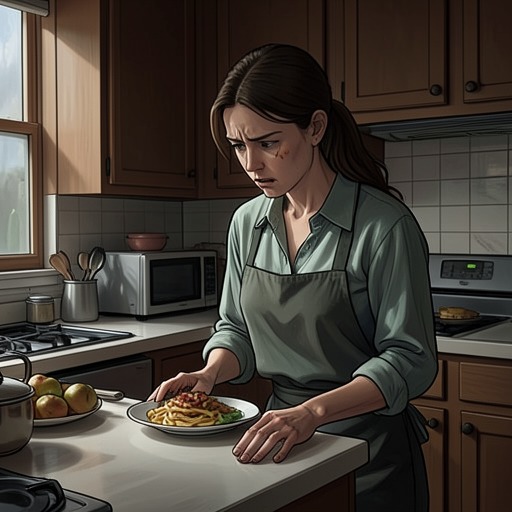
EileenShame and alienation from the body shapes Eileen Dunlop’s understanding of herself at twenty-four, turning physicality into something to conceal, monitor, or imagine from a distance. Her body seems both conspicuous to other people and unfamiliar to her; even when she inspects it, she cannot easily experience it as her own. Recalled by an older narrator, this estrangement is not a single moment of embarrassment but a pattern that touches clothing, desire, self-perception, and the limits Eileen sets around intimacy.
A body imagined from outside
Eileen’s account makes bodily alienation visible in the difference between imagined catastrophe and actual intention. Leaving home one winter evening, she imagines an icicle causing her death, elaborating the thought into a fanciful picture of her body as hollow and strange. Yet she is careful not to slam the door and makes clear that she does not really want to die. The episode conveys how readily she pictures the body as an object that could be penetrated or destroyed, while distinguishing those thoughts from a wish to act on them. Her body appears less as a familiar source of agency than as an imagined vessel whose interior she does not understand.
That distance persists in the way Eileen imagines other people looking at her. She fears that a downward glance might somehow reveal the intimate details of her anatomy, although she suspects no one is actually imagining her naked. The gap between that suspicion and her certainty of exposure is important: the perceived scrutiny does not depend on anyone openly judging her. Eileen anticipates it herself, treating the body as though it were legible to an outside observer and requiring constant protection. Her recollection that she had no sexual experience at twenty-four reinforces the separation between bodily awareness and intimacy; she could be preoccupied with how she might be seen without feeling prepared to share her body with another person.
Clothing, concealment, and self-perception
Clothing functions as a practical shield and as evidence of how carefully Eileen manages visibility. She layers cotton undergarments beneath a blouse and wool jacket, and describes hiding her small breasts beneath those layers. She wears lipstick not to follow fashion but because she dislikes the natural color of her lips and fears the associations it might invite. At twenty-four, she wants to give nothing that might encourage another person to imagine her body. Her dress and makeup therefore express less a wish to attract attention than an attempt to control what attention could mean.
A fitting-room episode makes that effort more complicated. While trying on a gold dress, Eileen removes her clothes and assesses her chest, but refuses to look below the waist. She can judge her feet and legs as acceptable, yet experiences her hips and thighs as territory she cannot comfortably examine. The dress is too large and too long, and its weight and ornament make it an ill-fitting costume rather than a natural expression of her. Still, she wants it. The scene brings together desire for an object associated with femininity and an inability to inhabit the body that would wear it. Eileen even considers taking part of the dress, but instead damages its lining before leaving the store. The episode does not resolve her discomfort; it shows how wanting something and feeling at home in it remain separate.
Desire and guarded boundaries
Eileen’s account distinguishes her interest in other people from any settled wish for conventional sexual intimacy. She recalls envy of Joanie, whose adult relationship seemed to include a confidence and physical ease Eileen did not possess, but says that the prospect of coupling with a man seemed ridiculous to her. What she desired most was a wordless affair, and even that possibility frightened her. Her crush on Randy and other passing attractions did not become relationships. Desire consequently remains imaginable but difficult to approach, constrained by the same bodily shame that makes being seen feel dangerous.
A memory of her high-school prom shows how that guardedness could become a boundary in action. At sixteen, Eileen went with Peter Woodman, spent much of the evening seated while he talked with friends, and did not dance. Later, in his father’s truck, she used her teeth to stop him from going further than she would allow. In her older account, she minimizes the kiss and rejects romantic nostalgia, while remaining uncertain about details of the evening. What she does remember is her resistance. The scene does not establish a general explanation for her later alienation, but it gives a concrete early instance of her body being treated as a boundary she had to defend rather than a source of comfortable closeness.
Retrospective inspection and significance
On a Monday morning, Eileen recalls taking a shower and studying her naked body in the mirror as the hot water ran out. The older narrator contrasts her present aging body with her twenty-four-year-old self, then inventories that younger body through its small, bony frame: sloped shoulders, a rigid chest, and lemon-sized breasts. Her thinness and the bruises on her hips from bumping into things make the account more specific than her own former conviction that she was fat and unwieldy. The mismatch between the body described and the body she believed herself to have shows that her shame distorted perception rather than simply responding to her physical appearance.
The older perspective also changes the force of these memories without claiming that the younger Eileen could easily have changed her feelings. She can look back at the intensity of her self-image with some distance, but recalls that it caused pain and confusion at the time. In the fitting room, she could not navigate parts of her body by looking at them; in the mirror, she could describe her physical features while still treating them as unfamiliar. Across these scenes, inspection does not automatically produce recognition or ownership.
The concept is central to Eileen’s characterization because it links private bodily discomfort to her broader effort to control how she is perceived. Layers of clothing, fear of scrutiny, reluctance toward sexual intimacy, and defensive limits in the prom memory are distinct expressions of that effort, not interchangeable symptoms. The narrative’s retrospective movement makes the younger self both vividly observable and difficult for herself to inhabit: Eileen can now recount the body she once misunderstood, while preserving the loneliness of having experienced it as something other than fully her own.