Hatsuyama
FaustThe Harz Mountains, specified in the play’s setting as the district of Schierke and Elend, provide the named landscape for the Walpurgis-Night episode. They also appear in the translator’s introduction as part of the book’s wider context: the edition presents Faust as a work whose meaning depends not only on what its verse says, but on the rhythms through which it says it.
Setting and Dramatic Context
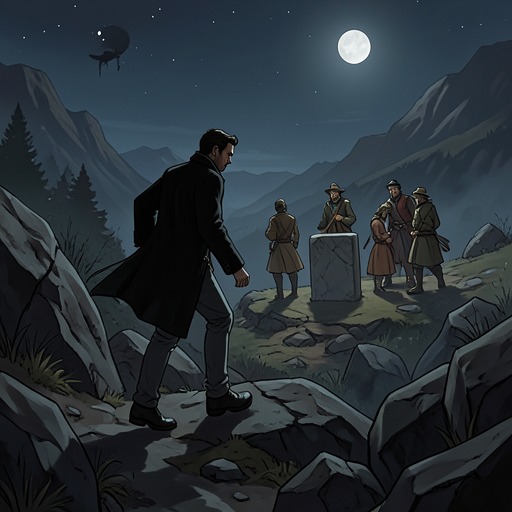
The Walpurgis-Night scene is headed “THE HARTZ MOUNTAINS” and located in the “District of Schierke and Elend.” Faust and Mephistopheles are identified at the scene’s opening, placing their journey within this mountain setting. Mephistopheles remarks that their goal is still some distance away and asks whether Faust wants assistance from a broomstick-steed, while saying that he would gladly see a sturdy he-goat. The brief exchange establishes travel toward a destination, but the cited material does not specify that destination or describe the surrounding terrain.
Place in the Translation’s Account of Form
The introduction’s discussion of translation makes the Harz Mountains relevant beyond their role as a dramatic location. The translator argues that Goethe’s compact verse and predominant iambic measure have points of affinity with English metre, whose inversions and other flexible resources can allow many lines to be carried over with their meaning, metre, or rhyme intact. The landscape heading thus belongs to a work whose settings are presented through a deliberately metrical translation, rather than prose.
Rhythm, Meaning, and the Edition’s Method
The translator rejects the idea that poetic form is a detachable ornament: rhythmical form, the introduction argues, is required by certain ideas and contributes essentially to the fullness of meaning. Rendering poetry as prose is compared to translating music into speech. This claim frames the edition’s effort to preserve the original metres as closely as practicable, while allowing occasional variation in feet and rhyme where the poem’s irregular measures permit it.
The translator says that close reproduction of Goethe’s language also transfers much of its rhythmic character, and that when meaning and music cannot both be retained, meaning takes priority. The Harz episode therefore belongs to a translation project balancing fidelity to sense with the music of verse. The introduction’s emphasis on rhythm gives the scene’s named geography a formal context, without making claims about the mountains beyond the setting information supplied by the text.