Dungeon
FaustThe Dungeon is Margaret’s prison and the setting of Faust’s attempt to reach her before her execution. Marked by an iron door, darkness, damp walls, chains, and straw, it makes confinement tangible; within it, the hope of reunion briefly returns, only to collide with Margaret’s recognition that the day is her last. The prison’s decisive significance lies in that reversal: Faust can open a way out, but he cannot restore the life she has lost or make her accept escape.
Setting and Entrance
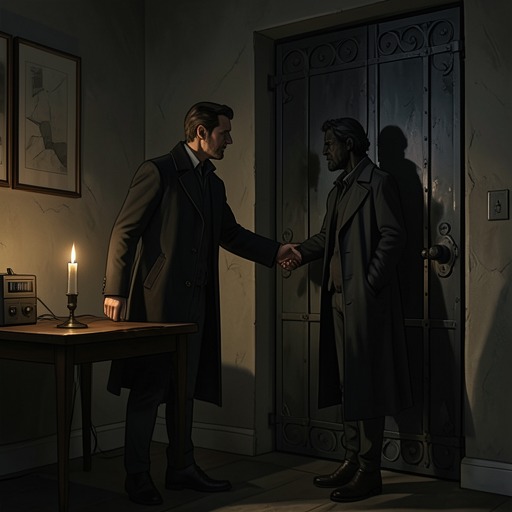
The scene begins outside the cell. Faust arrives with a bunch of keys and a lamp, standing before an iron door. The objects define the practical terms of his purpose: he has a means of entry and a means of seeing, but the door still separates him from the woman he has come to free. His response to the place is not confidence. A shudder comes over him, and the accumulated suffering of humanity seems to overwhelm him as he thinks of Margaret within the dark, damp walls.
Faust also recognizes that her crime arose from delusion, and asks himself whether he is delaying her freedom because he dreads seeing her again. His hesitation has immediate stakes: he understands that delay brings death closer. As he grasps the lock, Margaret’s singing reaches him from inside. The prison is thus first encountered through the conjunction of barrier and voice: she is physically hidden, yet her song makes her suffering audible before he enters.
The Prisoner’s Song and Recognition
Margaret’s song describes a murdered child through the language of a grotesque nursery rhyme. The child accuses its mother of killing it and its father of eating it, while a good little sister gathers its bones and lays them in the woods. The song then changes the child into a beautiful bird of the wood, flying away. Its tale of death and transformation brings the consequences of Margaret’s crime into the cell before the lovers meet face to face.
When Faust enters, Margaret hides herself on the pallet and cries out in fear that they have come for her. He whispers that the hour has come to free her. Her first answer is a plea for pity, not an expression of recognition: she asks whether he is a man and appeals to his compassion. The exchange sets the rescue in motion while showing how far the prison has narrowed her immediate world. At first she experiences the arrival as another threat; only afterward does she recognize Faust and reinterpret his presence as salvation.
Reunion and the Attempt to Escape
Recognition brings an abrupt emotional reversal. Margaret clasps Faust and exclaims that he has come to save her; for a moment, the anguish of dungeon and chain seems to vanish. Her joy moves through remembered places: the street where she first looked at him, then the garden where she and Martha waited for his coming. The cell briefly gives way to a recollection of their earlier courtship, and the promise of escape is joined to the memory of a shared past.
That hope does not become a simple release. Faust struggles to leave and urges Margaret to come with him, but her response shifts from the happiness of reunion toward a vision of what awaits her. The cell has brought the lovers together physically, yet it cannot make them inhabit the same understanding of the moment. Faust acts as though a route out can still be taken; Margaret increasingly sees the scene through the certainty of judgment and death.
The Last Day and the Prison’s Meaning
Margaret recognizes the dawn as her last day. She contrasts the execution awaiting her with the wedding day she had imagined, and tells Faust not to say that he has been with her. Her words connect the prison to the loss of a future as well as to the immediate threat of death: the garland and its chances are over, and a hoped-for celebration has become impossible.
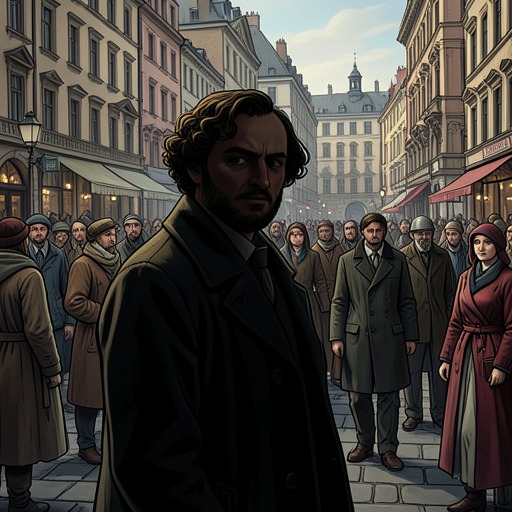
She then imagines the public execution in precise stages. The crowd throngs the square and streets; the death bell tolls, the wand is broken, and she is seized, bound, and delivered to the block. The blade that has fallen over other necks is now poised over hers. Against this imagined public scene, the Dungeon is both enclosure and threshold: it holds Margaret before the sentence is carried out, while her thoughts carry her forward to the scaffold. Faust answers her vision with anguish, wishing he had never been born.
Across the scene, the prison concentrates the story’s reversals without resolving them. The locked door seems to promise that an act of rescue might restore freedom; Faust’s entry brings recognition and a brief return of intimacy; dawn then makes the approach of execution unavoidable in Margaret’s mind. The movement from chain and fear to joy, and from joy to the anticipated blade, gives the Dungeon its central dramatic force: it is where love can return as memory, but cannot erase the consequences that have brought Margaret there.