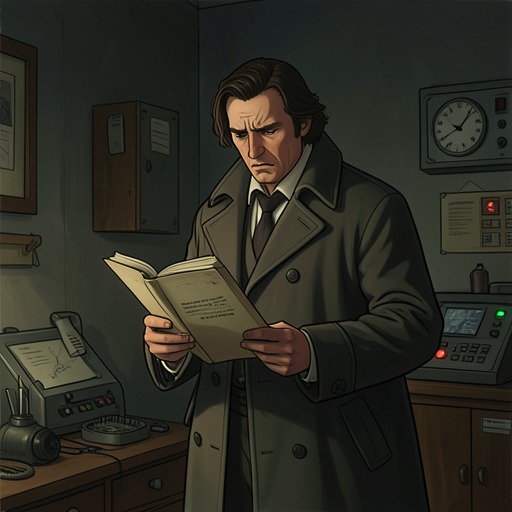
In the Beginning Was the Act
FaustIn Beginning Was the Act names the decisive final step in Faust’s attempt to translate the New Testament’s opening into German. Faced with the inadequacy of a literal rendering, he considers Word, Thought, and Power before settling on Act. The choice turns translation into interpretation: it gives priority to action as the beginning of creation and anticipates the drama’s persistent concern with striving and deeds.
The Translation Scene
Before opening the volume, Faust describes a return of spiritual dissatisfaction. Though hope and reason have revived, contentment soon drains away, leaving him thirsting for revelation. He turns to the New Testament with what he calls an honest purpose, seeking to render its sacred original in his beloved German. The search for a first word is therefore both linguistic and spiritual: he is trying to determine what kind of principle can stand at the beginning.
From Word to Act
Faust first encounters the traditional formulation, “In the Beginning was the Word.” He balks at assigning such importance to the Word and tests alternatives in sequence. Thought seems to name an inward principle; Power suggests the capacity to bring something about. Each version is weighed rather than accepted at once. Finally, an inner warning that the sense has not yet been fairly tested leads him to the formulation that he regards as light: “In the Beginning was the Act.” The progression makes the line’s force depend on its alternatives. Act is not an isolated slogan but the outcome of a staged argument over what can properly be called first.
Meaning and Dramatic Resonance
The substitution shifts the emphasis from utterance or thought toward doing. Within the scene, that shift answers Faust’s effort to find a formulation that satisfies both the words before him and his sense of their meaning. Its dramatic resonance extends beyond the translation exercise: the play repeatedly places striving and action at the center of Faust’s experience, so the line provides an early interpretive key without resolving the consequences of his future deeds.
Form and Translation
The translator’s introduction argues that poetic form is not a detachable ornament: for certain ideas, rhythm is part of their full expression, and translating poetry into prose is likened to translating music into speech. The discussion of Faust’s German passage underscores how closely the English version seeks to preserve the sequence of thought while carrying its verse rhythm. The translator states that, when meaning and music could not both be retained, meaning took preference; the aim was nevertheless to transfer the original’s rhythmic character along with its language. In this account, Faust’s succession of possible words matters as a piece of thought, while the verse in which the decision unfolds contributes to how that thought is experienced.