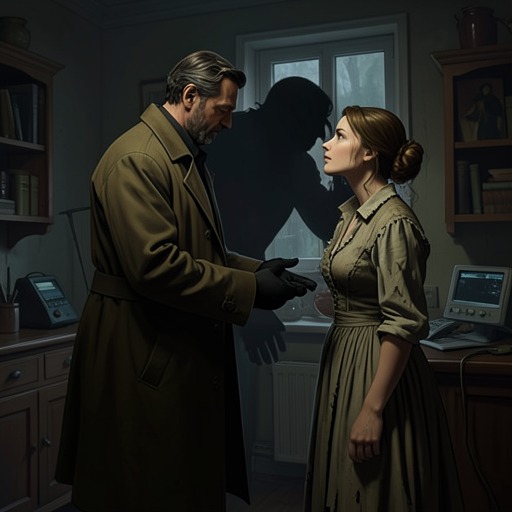
Two Souls, Alas, Reside Within My Breast
Faust“Two Souls, Alas, Reside Within My Breast” is Faust’s declaration that he is pulled between attachment to the world and the desire to rise beyond it. The image does not resolve this division: it makes opposing longings the defining condition of his aspirations, while the scene’s verse gives that conflict a deliberate musical form.
The Divided Longing
Speaking to Wagner, Faust answers the suggestion that intellectual pursuits can carry the mind from page to page and make even winter nights beautiful. He rejects the idea that a single impulse explains him. Instead, he describes two forces within his breast, each withdrawing from and repelling the other.
One soul holds the world in an embrace of attachment and desire, represented by its “tenacious organs.” The other sweeps above earthly dust toward elevated, ancestral spaces. These are not simply two moods: the poem sets embodied involvement against upward aspiration, giving the conflict both a bodily and a spatial shape.
From Division to Aspiration
The image leads directly to Faust’s wish for movement beyond ordinary human limits. He calls on airy spirits to descend from the space between Heaven and Earth and carry him into new forms of being. He imagines a magic mantle that could transport him wherever he wished, and says he would not exchange that gift even for royal wealth.
The wish makes the two souls’ tension active. Faust is not content merely to recognize his opposing attachments; he longs for an instrument that would let him range across the world. The passage presents expansive desire as the consequence of his division, without suggesting that either impulse has overcome the other.
Wagner’s Warning and the Scene’s Contrast
Wagner responds by warning Faust against invoking spirits. He describes them as dangerous beings that arrive from every quarter, present themselves as heavenly, and deceive those who trust them. His account counters Faust’s hope that supernatural powers might carry him toward new experience: where Faust sees possibility, Wagner emphasizes exposure to harm and deception.
Their exchange also clarifies the expression’s dramatic function. Faust’s inward conflict opens outward into a disagreement about whether the unseen world promises enlargement or danger. Wagner’s caution does not settle Faust’s longing; it places that longing beside a warning that makes its risks explicit.
Form and Meaning
The translator’s introduction argues that poetry is not a detachable meaning wrapped in decorative language: rhythmical form contributes essentially to meaning, and translating poetry into prose is likened to translating music into speech. The expression therefore belongs not only to Faust’s statement about himself but also to the formal argument made by the translation. Its paired souls, opposing directions, and measured lines give the conflict an audible structure.
The translator describes the work as an attempt to reproduce Goethe’s original metres while allowing limited changes in feet or rhyme where the irregular design permits them. He says that when meaning and music inevitably conflicted, he preferred meaning, but also found that closer reproduction of the original language often carried more of its rhythm with it. The passage’s force lies in that union: division is expressed as an opposition of images and impulses, yet held together in verse.