Our Saviour's Church
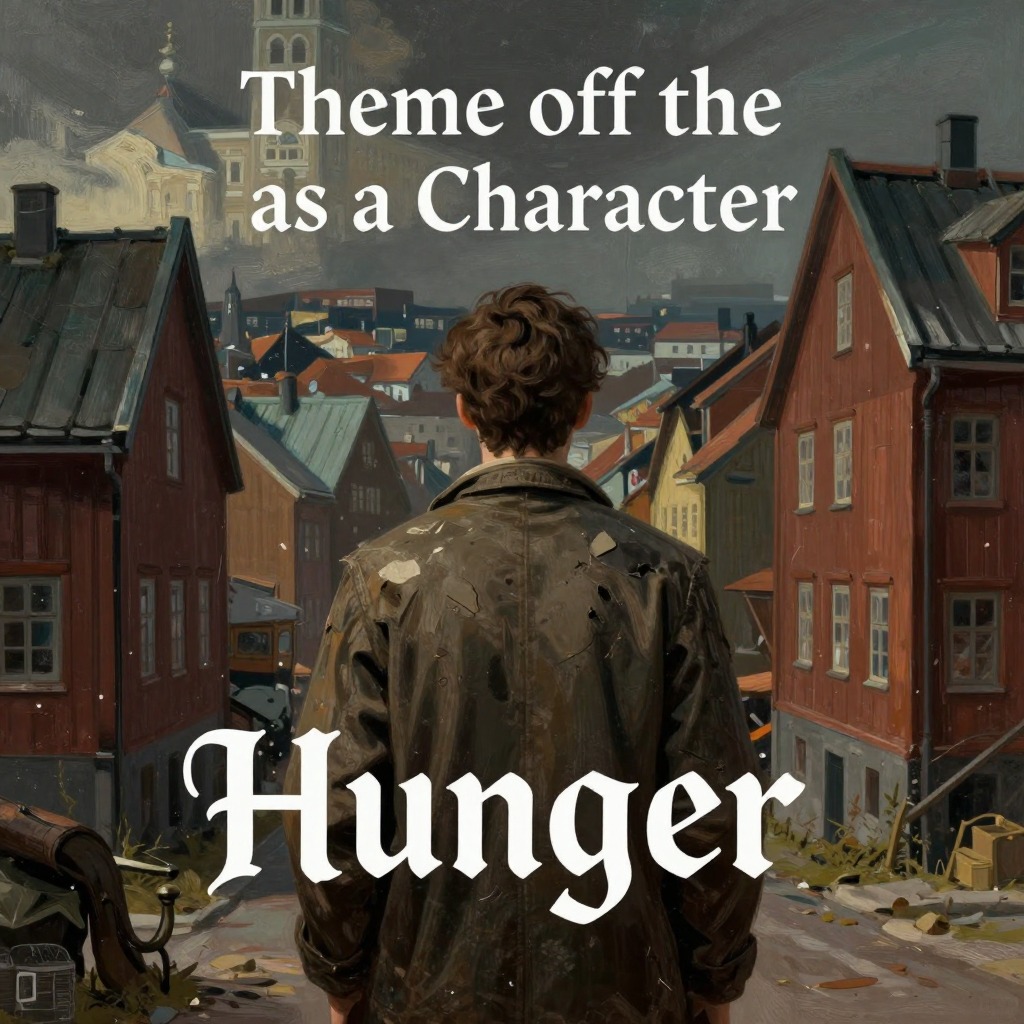
HungerOur Saviour's Church stands as a fixed point in the geography of the narrator's starvation and wandering in Christiania. Its clock tower, visible from the market square, marks the hours that structure his days of fruitless searching for work and food. The churchyard, with its benches and mortuary chapel, becomes a place of rest, reflection, and collapse, while the church itself is a silent witness to his most desperate prayers and curses. The building is not merely a backdrop but an active presence in the narrator's mental landscape, its bells and dials measuring out the slow, agonizing time of poverty.
A Clock and a Compass in the Starving City
The narrator repeatedly checks the time by the dial on Our Saviour's Church. On the first morning of the novel, after drinking from the fountain in the market-place, he looks up and sees that the dial marks ten o'clock on Our Saviour's tower . This act of looking up at the church clock is a habitual gesture, a way of anchoring himself in the city's routine. Later, when he is desperate for a situation, he notes that the clock on Our Saviour's points to half-past one . The church's timekeeping is a constant, reliable measure against which his own chaotic, hunger-driven schedule is set. The church's position also orients his movements; he walks past it, sits near it, and uses it as a landmark in his aimless circuits of the city.
A Sanctuary for Despair and Prayer
The churchyard of Our Saviour's Church is a place of refuge. The narrator sits on the slope near the Mortuary Chapel, dozing in the damp air, musing, half-sleeping, and shivering . It is here, in the quiet of the cemetery, that he confronts his own mortality and the possibility of giving up. He sits with his elbows on his knees and his head in his hands, finding a cramped position that eases the gnawing in his chest . The churchyard is also where he counts his shaving-tickets, a small treasure that briefly lifts his spirits . It is a place of both physical rest and spiritual reckoning, where he prays to God for a position as a grocer's bookkeeper and where, after a night of delirium, he thanks God aloud for the inspiration that produced a successful story . The church is the site of his most fervent, if desperate, religious expressions.
The Site of a Final, Blasphemous Reckoning
The narrator's relationship with the church culminates in a scene of profound despair and defiance. After failing to keep down a piece of raw meat, he stands in a passage near the church and unleashes a torrent of curses against God, whom he addresses as "Heaven's Holy Baal" and a "Gracious Monster on High" . He renounces all divine works and pomps, vowing to execrate his thought if it dwells on God again. This outburst, a direct address to the heavens from the shadow of the church, marks the absolute nadir of his spiritual crisis. The church, which had been a place of prayer and a marker of time, becomes the stage for a final, blasphemous rejection of the deity who has, in the narrator's view, abandoned him.
A Recurring Landmark of the City's Indifference
Beyond its role in the narrator's personal drama, Our Saviour's Church is a fixture of the urban landscape that he traverses. It is part of the city's "ever-increasing noise" that lures him out of his attic . The church is a constant presence in the background of his wanderings, a silent, monumental structure that contrasts with his own transient, homeless state. When he is turned out of his lodging, he sits on a bench near the church, dozing and suffering . The church's bells and its clock are part of the city's sensory fabric, a rhythm that continues regardless of his personal agony. It is a symbol of the established, orderly world from which he is utterly excluded, a world that keeps time and holds services while he starves in its shadow.