Vaterland
HungerVaterland is the working-class district of Christiania where the narrator, after weeks of homelessness and hunger, takes a room in a lodging-house for travellers. It is the setting for the fourth and final part of the novel, a raw, wet winter landscape of fog, darkness, and poverty that mirrors the narrator's own exhaustion and failing mental powers. The district is defined by its poor streets, its proximity to the railway wharf and the sea, and its population of transient labourers, sailors, and struggling families. Here the narrator's long battle against starvation reaches its lowest point, and here he finally makes the decision to leave the city altogether.
Location and Atmosphere
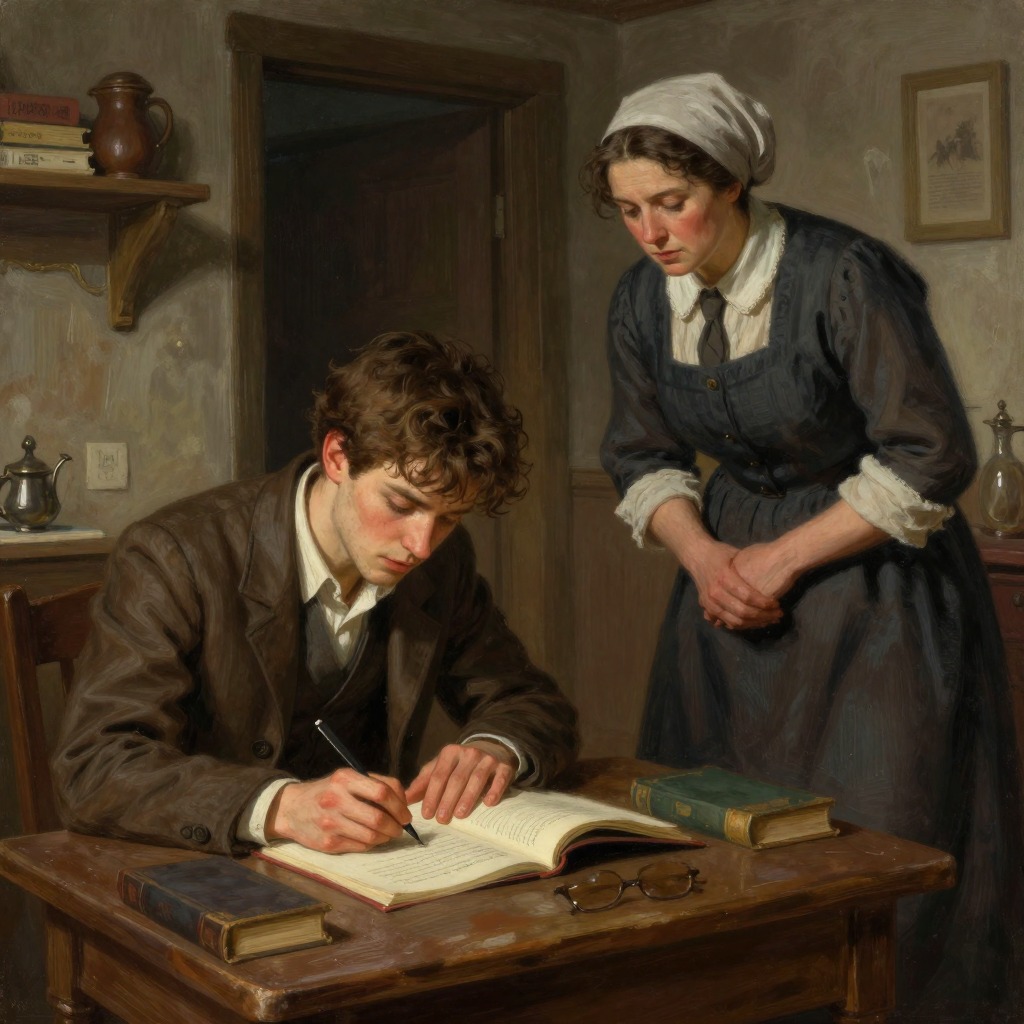
Vaterland is described as a poor district, its streets lined with shabby houses and its air thick with fog. The winter is raw and wet, almost without snow, and the gas lamps burn nearly all day. The narrator notes that every sound—church bells, carriage harnesses, voices, hoofbeats—sounds choked and muffled through the close, damp air. The lodging-house where he stays is a place for travellers, a rough establishment run by a pregnant landlady and her idle husband, who spends his days playing cards with anyone who comes in. The family room is crowded: the husband, wife, the wife's elderly father, four children, and a servant girl all live together in one common space. The old man is paralysed and cannot move his arms; the children torment him by poking straws into his ears while the father laughs. The narrator sleeps on the floor of this room or in the unheated anteroom, and the whole household gradually turns hostile toward him when he cannot pay.
The Narrator's Decline
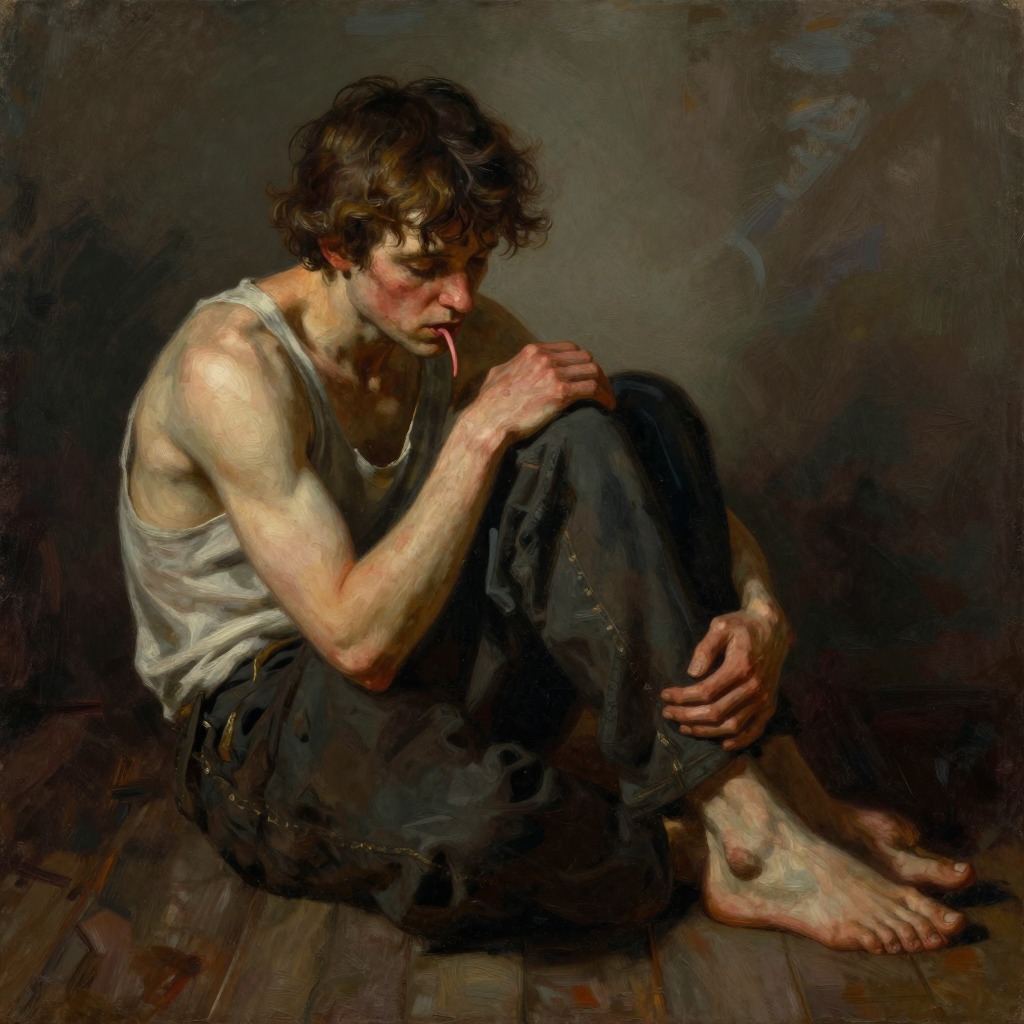
In Vaterland the narrator's physical and mental deterioration accelerates. He has been living on bread and butter given by the landlady morning and evening, and after three weeks he has exhausted even that credit. When the landlady asks him to check an account, he cannot add up the figures—a simple sum involving five-sixteenths of a pound of cheese defeats him completely. He sweats, blinks, mutters numbers aloud, but his brain will not function. The landlady loses faith in him and tells him bluntly that she cannot give lodging on credit. He tries to work on an allegory about a fire in a bookshop, but the inspiration will not come. He begins a one-act drama called "The Sign of the Cross," set in the Middle Ages, and writes a dozen pages, but the noise of the children crying and the card-players disturbs him. When a sailor arrives and pays a month in advance for the narrator's room, the narrator is forced to move downstairs into the family quarters. The landlady's servant mocks him, asking if he has been to a dinner party at the palace, and laughs at his torn shoes and falling hair. The narrator endures all this in silence, afraid to be turned out into the winter streets.
The Final Break
After a violent quarrel in the family room—the old man spits at the children, the husband threatens the narrator, the landlady screams at everyone—the landlady tells the narrator that this is the last night he will sleep there. He leaves before dawn, wandering through the empty streets until he finds a seat near the fortress and dozes. He is hungry, having had no food for twenty-four hours. Later he returns to the lodging-house to say goodbye and to retrieve his papers, but the landlady finds him sitting in his former room and shrieks at him to leave. He walks out slowly, furious, and at the gate a commissionaire hands him an envelope containing half-a-sovereign—sent, he realizes, by Ylajali. In a fit of rage and shame, he crumples the envelope and throws it in the landlady's face. He staggers down the street, his senses swimming, and eventually makes his way to the railway wharf.
Departure
At the wharf, the narrator sees a Russian barque, the Copégoro, lying in ballast. He speaks to the captain, a Swede, and asks if he needs a man. The captain hesitates, then agrees to let him try. The narrator signs on, and as the ship sails out of the fjord, he drags himself up once, wet with fever and exhaustion, and gazes back at Christiania, where the windows gleam brightly in all the homes. Vaterland, with its fog, its poverty, its hostile landlady, and its paralysed old man, is left behind. The district that had been his last refuge in the city becomes the place from which he finally departs, not in triumph but in a kind of exhausted surrender to the sea and to an unknown future.