Christiania
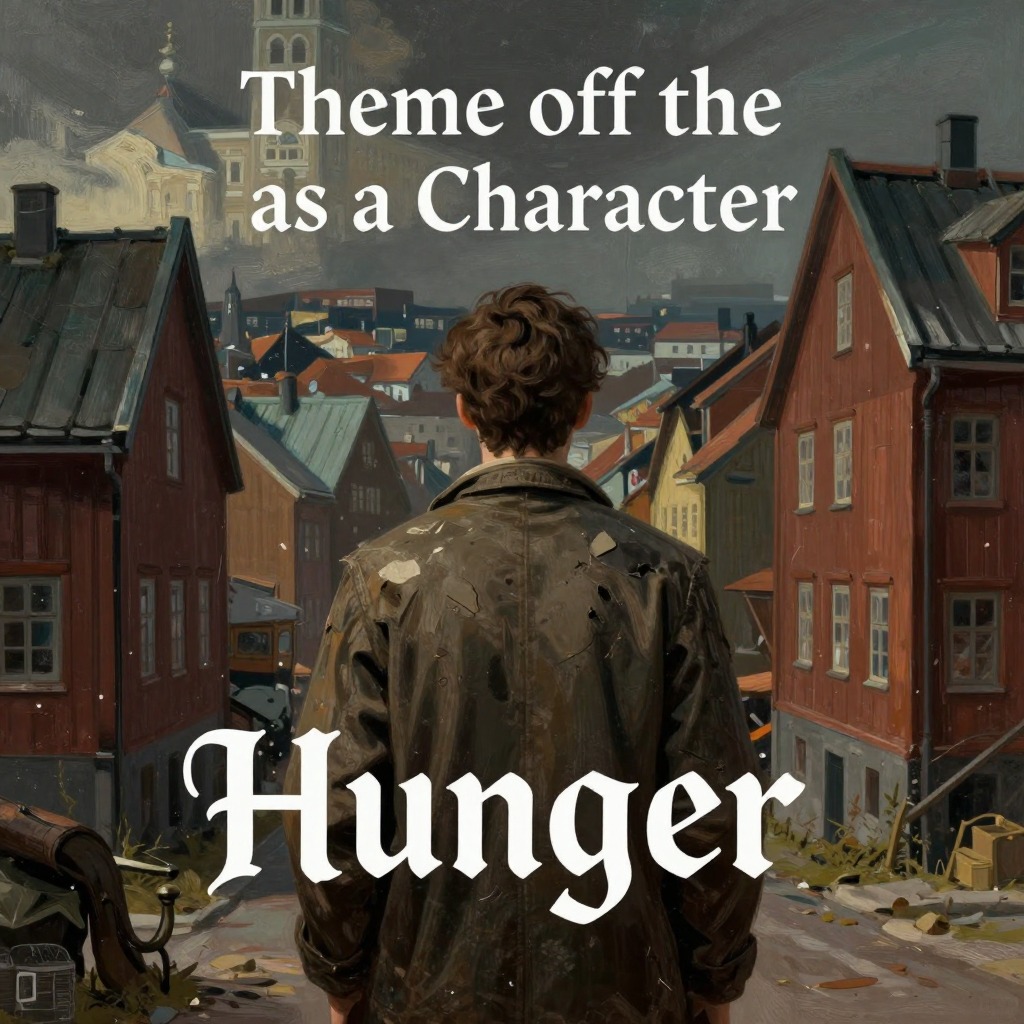
HungerChristiania, the Norwegian capital where the novel is set, is not merely a backdrop but an active, oppressive force that shapes the protagonist's psychological and physical deterioration. The city's streets, parks, and institutions become a labyrinth of humiliation and despair, mirroring his internal chaos and relentless hunger. From the outset, the narrator declares that no man departs from this singular city without carrying away the traces of his sojourn there, a prophecy his own experience fulfills with brutal precision.
Geography of Despair
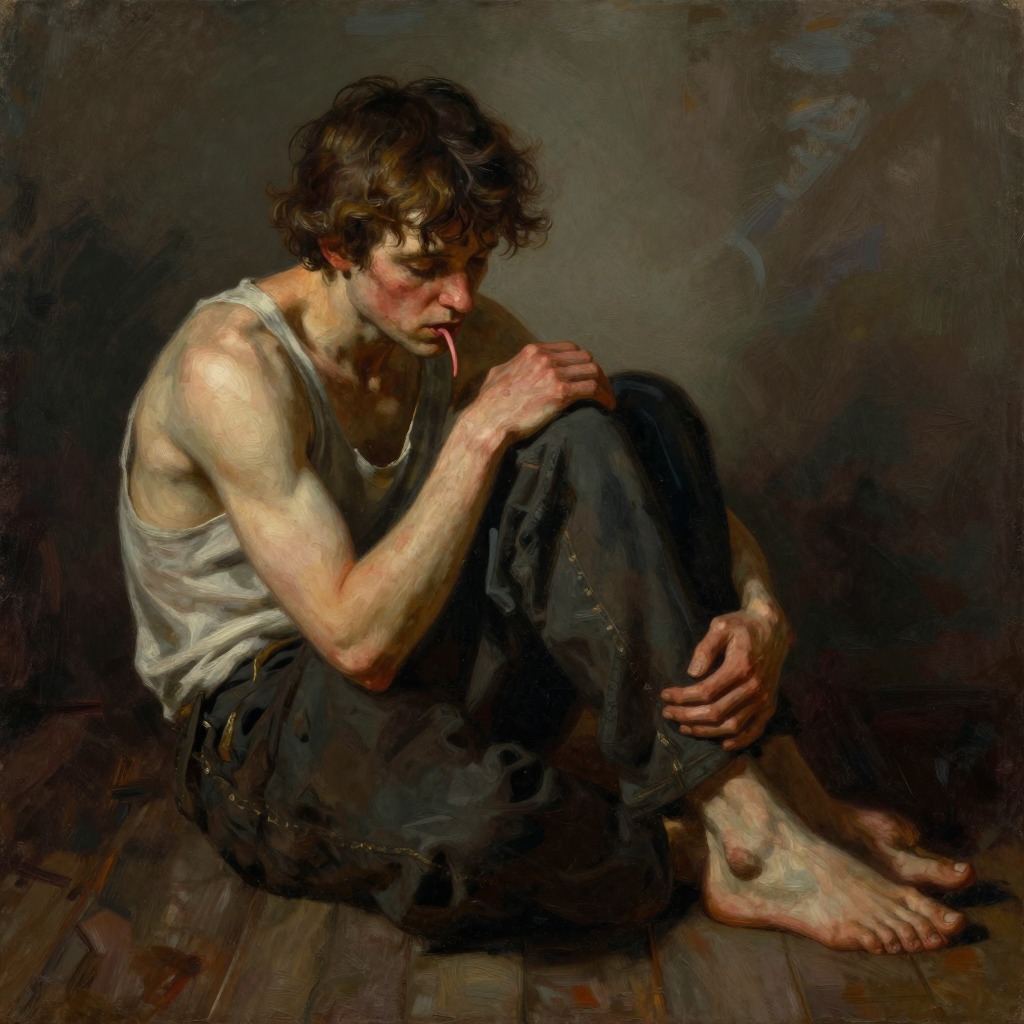
The protagonist's Christiania is a city of stark contrasts and unforgiving spaces. He begins in a cramped attic, its walls papered with old issues of the Morgenbladet, where he can read advertisements for winding-sheets and new-baked bread. The bare room, with its rocking floor and lack of a stove, feels like a "gasping, sinister coffin." From this confinement, he ventures out into a city that alternately exhilarates and torments him. The clamorous traffic of the morning, the roll of vehicles and hum of voices, initially lifts his spirits, but this mood is easily shattered by chance encounters—a woman with a single yellow tooth at a butcher's stall, an old cripple whose labored movements become an unbearable irritation. The city's public spaces, meant for leisure and community, become sites of exclusion and shame. He is roused from a bench in the park by a keeper who tells him he must not sleep there. He is rejected from the Fire Brigade on account of his sight, and a place as a debt collector eludes him because he cannot raise the fifty shillings security. The city's institutions, from the newspaper office where he peddles his manuscripts to the pawnbroker's where he sells his belongings, form a circuit of rejection and depletion.
The City as a Labyrinth of Hunger
The protagonist's movements through Christiania are dictated by the relentless pangs of hunger. He wanders from the market square to the churchyard, from the railway wharf to the woods at Bogstad, driven by a desperate search for food or a few shillings. The city's landmarks become associated with specific humiliations: the fountain where he drinks water to stave off his appetite, the baker's window where he covets a penny loaf, the eating-house in Möller Street where he sniffs the smell of roasting meat but cannot enter. He is reduced to begging for a bone from a butcher in the meat bazaar, gnawing at it in a dark passage until he vomits. The city's very geography is mapped by his suffering: the long walk to the Opland Café to find a friend who might lend him sixpence, the endless tramp to the pastor's house only to find him gone, the desperate journey to the pawnbroker's with a handful of buttons. Each street, each corner, holds the memory of a failed attempt to secure a meal.
The City as a Stage for Madness
As hunger erodes his sanity, Christiania becomes a stage for his increasingly bizarre and desperate performances. He invents a fantastical story about a man named Happolati to torment an old man in the park, fabricating an electric psalm-book and a daughter named Ylajali. He follows a young woman, whom he names Ylajali, through the streets, accosting her with the nonsensical phrase, "You are losing your book, madam!" He gives a false name, Andreas Tangen, and a false occupation, journalist for the Morgenbladet, to the police when he seeks shelter in the guard-house. He stages a mock discovery of a paper cone filled with money, laughing hysterically as a policeman picks it up. The city's public spaces—the park, the street, the market—become the arena for these acts of delirium, where the line between reality and hallucination blurs. The city itself seems to conspire in his madness: the darkness of the cell in the guard-house becomes an "unfathomable black eternity," and the sound of a street organ reduces him to tears.
The City as a Place of Fleeting Grace
Despite its cruelty, Christiania also offers moments of unexpected kindness that briefly pierce the protagonist's isolation. A policeman, instead of arresting him for his erratic behavior, gently advises him to go home and offers to accompany him. The "Commandor," an editor, gives him half-a-sovereign after finding him starving in the street. A waitress in an eating-house offers him a glass of ale from her own pocket. A young artist friend, C. Zacharias Bartel, though unable to offer shelter, greets him with a familiarity that suggests a former life of connection. These moments, however, are fleeting and cannot reverse the city's fundamental indifference. The protagonist's final act is to leave Christiania altogether, signing on as a crewman on the barque Copégoro, bound for Leith and then Cadiz. As the ship sails out of the fjord, he gazes back at the city where the windows gleam so brightly in all the homes, a world from which he has been irrevocably excluded. His departure is not a triumphant escape but a surrender, a final acknowledgment that Christiania has left its indelible traces on him, traces of hunger, madness, and a profound, unutterable loneliness.