Waistcoat
HungerThe Waistcoat is a crucial object in the unnamed narrator's struggle for survival in Knut Hamsun's Hunger, serving as a primary means of generating quick cash through repeated pawning. Its loss and absence mark the narrator's physical decline, social humiliation, and the progressive stripping away of his identity, while its memory becomes a symbol of his lost respectability and the desperate measures he is forced to take.
Identity and Initial Sacrifice
The narrator's waistcoat is first introduced not as a garment but as a commodity, a resource to be liquidated. On the first day of the narrative, desperate to help a starving binder he meets on the street, the narrator hurries to a pawnbroker on Pyle Street. He hastily removes his waistcoat, rolls it up, and pawns it for one shilling and sixpence. He tells the pawnbroker, "If it weren't that it was beginning to be a little tight for me, of course I wouldn't part with it," a lie that masks the dire necessity of the act. This initial transaction establishes the waistcoat as the narrator's most readily convertible asset, a first step in a long process of divestment. The pawn ticket and the pencil left in the pocket become the subject of a later, elaborate return visit, where the narrator spins a fantastic story about the pencil being the instrument with which he wrote his dissertation on "Philosophical Cognition."
Absence and Physical Decline
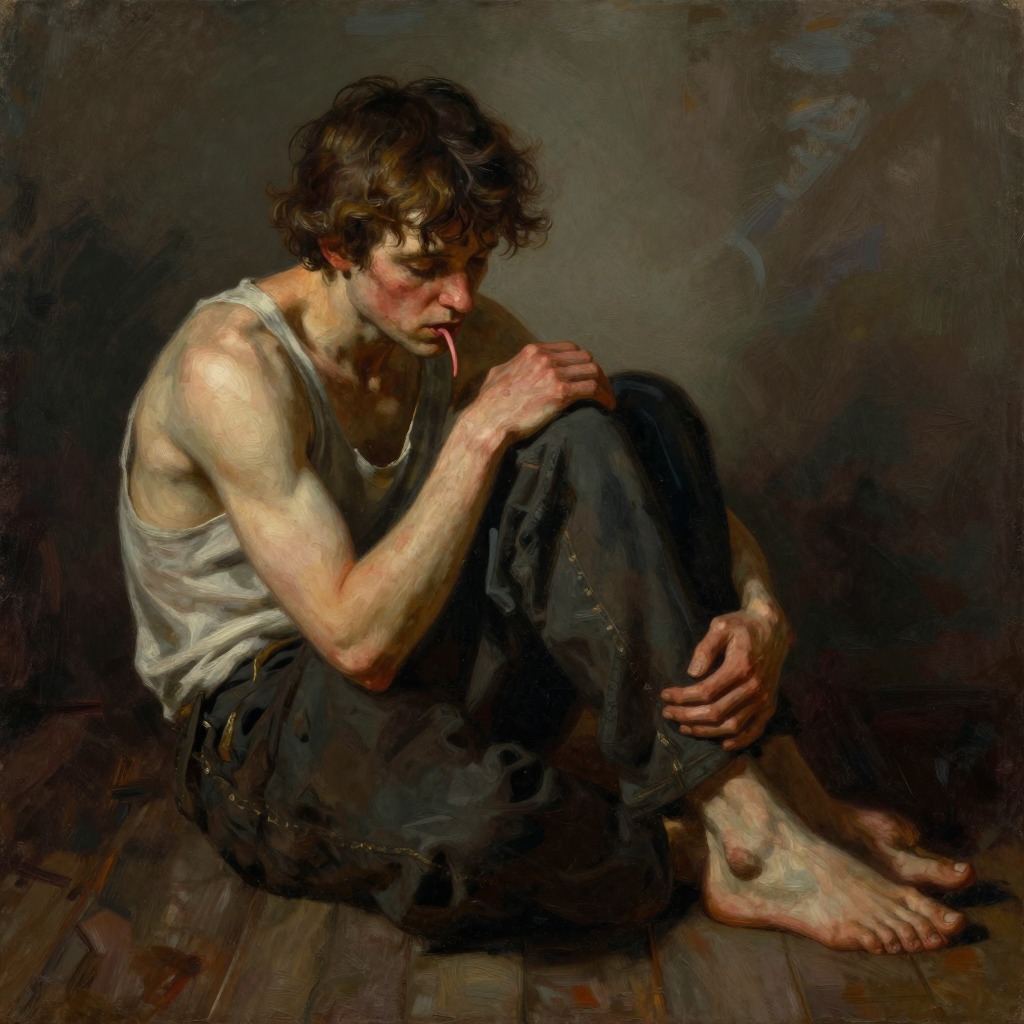
The loss of the waistcoat has immediate and lasting physical consequences. Later that same day, as the narrator sits in the park struggling to write, he notes, "It got chilly; and I no longer owned a waistcoat. I buttoned my coat right up to my throat and thrust my hands in my pockets." This simple act of buttoning his coat becomes a recurring gesture of self-protection and concealment. The absence of the waistcoat is a constant reminder of his poverty and vulnerability to the elements. Weeks later, when he visits the "Commandor" to submit an article, he is acutely self-conscious: "I turn aside, so that he may not see that I have no waistcoat on, when I open my coat to take the manuscript out of my pocket." The missing garment forces him into a posture of shame, hiding his destitution from a potential benefactor.
Symbol of Lost Respectability and Social Shame
The waistcoat becomes a powerful symbol of the narrator's lost social standing. When he encounters Ylajali for the second time, he is painfully aware of his appearance. He worries that she will notice his shabby clothes and, specifically, "perhaps she might even notice that I had no waistcoat on." This fear of exposure is so acute that it prevents him from suggesting they visit the Tivoli, a place of public amusement where his poverty would be on full display. The narrator's desperation to reclaim a semblance of respectability is evident when he goes to the bazaar to look for a second-hand waistcoat, hoping to find "something to put on under my coat; it didn't matter what." This quest for a cheap replacement underscores the waistcoat's role as a minimum requirement for social decency. The memory of the waistcoat also haunts him; when he later contemplates giving his own waistcoat to a little organ-girl, he is shocked to discover he no longer has one, a moment that crystallizes how far he has fallen.
Narrative and Thematic Significance
The waistcoat's trajectory—from a pawned asset to a painfully absent marker of decency—mirrors the narrator's own descent. It is one of the first belongings he sacrifices, and its loss is a concrete step in the process of being "bared of every conceivable thing." The narrator's repeated attempts to hide its absence, and his shame when he fails, reveal the deep connection between material possessions and personal identity in a society that judges by appearances. The waistcoat is not merely a piece of clothing; it is a fragile shield against the world's contempt, and its loss leaves the narrator exposed, both physically and socially, to the full force of his hunger and humiliation.