Pencil
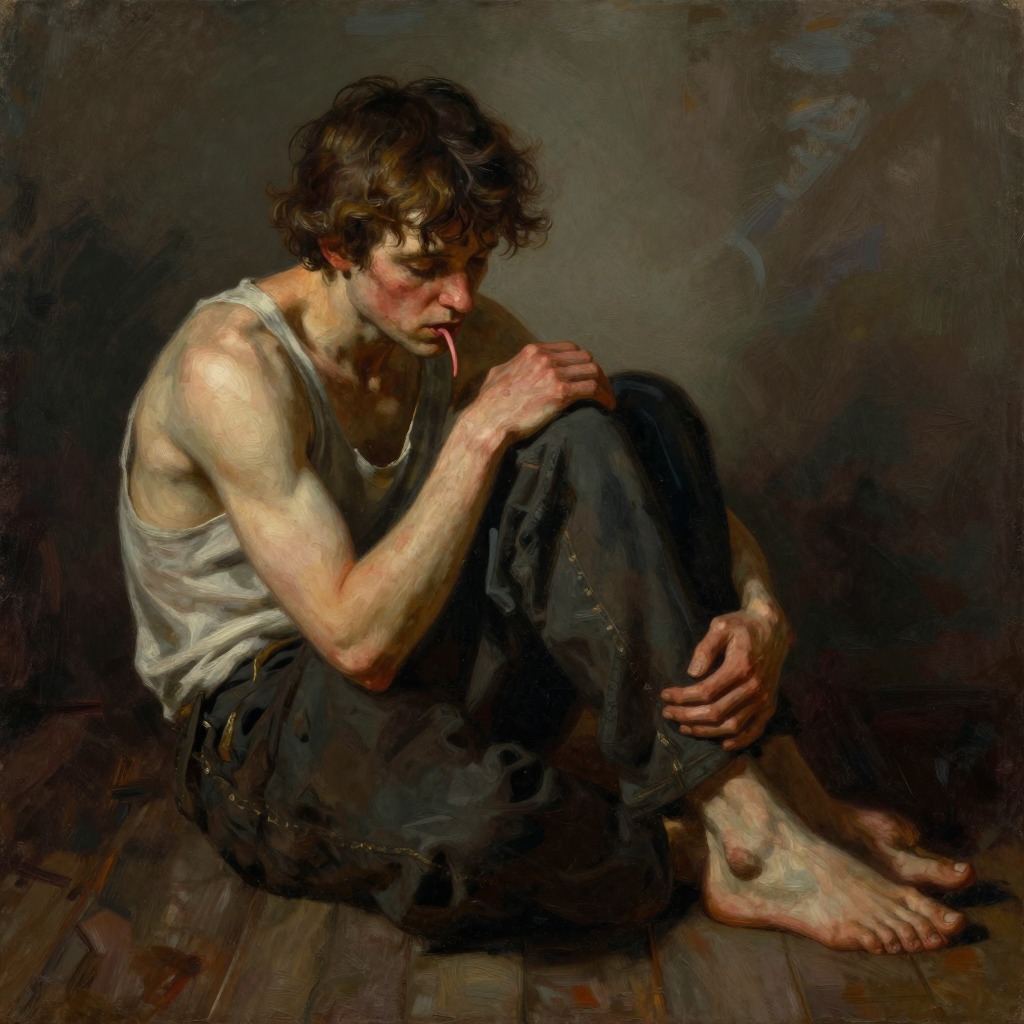
HungerThe pencil is a deceptively modest object that threads through the narrator's ordeal in Hunger, serving as the primary tool of his trade and a constant, often frustrating, companion in his battle against starvation and mental collapse. More than a mere writing implement, it becomes a tangible link between his fleeting moments of inspiration and the harsh reality of his penniless existence, its presence or absence dictating his ability to transform thought into the coin that might buy his next meal.
Identity and the Tool of the Trade
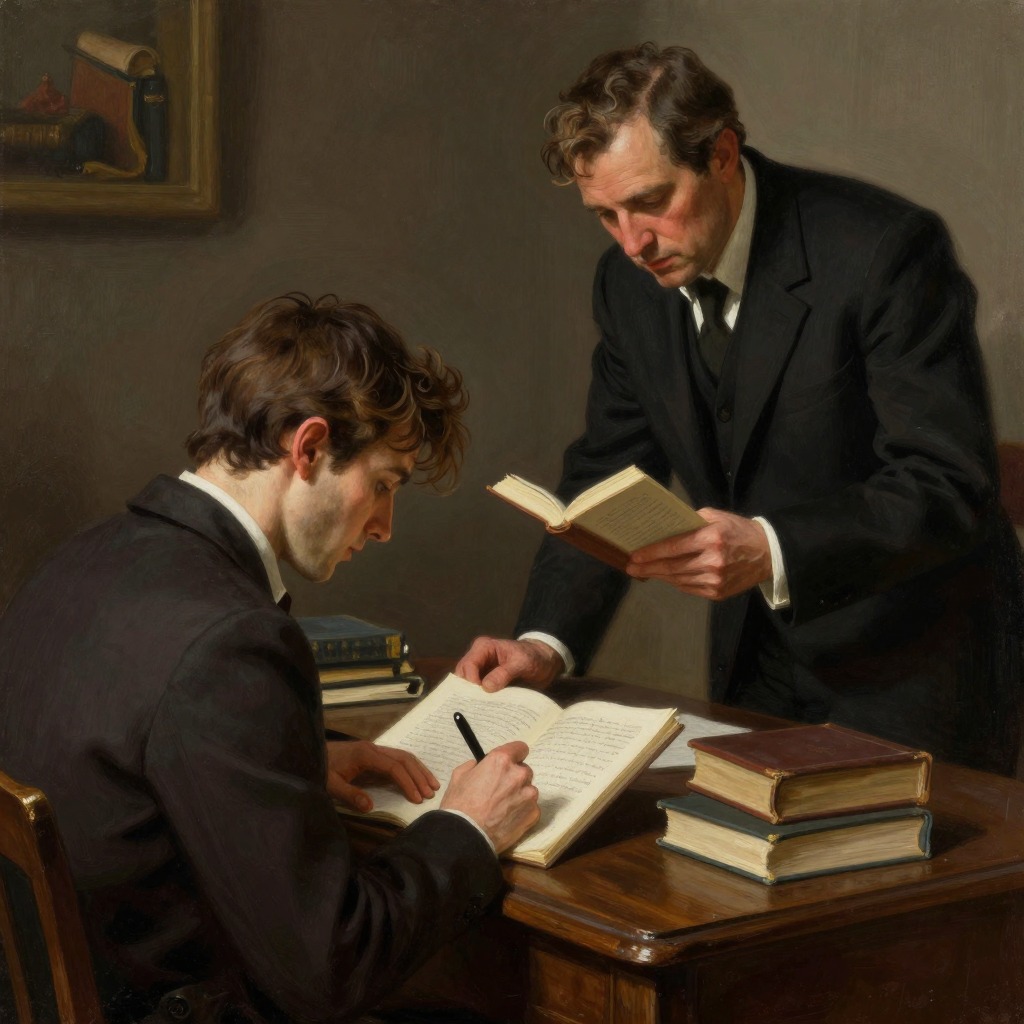
The narrator, a struggling writer in Christiania, relies on the pencil as his sole means of production. He habitually pockets "paper and pencil as usual" before venturing out each day, the pencil being as essential to his identity as a journalist and aspiring author as his worn-out clothes are a mark of his poverty. It is the instrument through which he hopes to convert his feverish ideas into marketable feuilletons, the only way he can earn the occasional five shillings that stave off complete destitution. The pencil is not merely a possession; it is the physical embodiment of his profession and his last, best hope for escape from the grinding cycle of hunger.
Loss, Recovery, and the Fabrication of Worth
The pencil's significance is thrown into sharp relief when the narrator, having pawned his waistcoat to buy food, discovers he has left the pencil in its pocket. This loss immediately derails his ambitious plan to write a treatise on "Philosophical Cognition," reducing him to a state of frantic despair. He paces before his bench "like a maniac," realizing that a grand, three-part article has been "downright stranded by the simple fact of my not having a pennyworth of pencil in my pocket." His return to the pawnbroker to retrieve the pencil sparks a bizarre performance. To justify his journey for such a trivial item, the narrator invents an elaborate story, claiming the pencil is the very one with which he wrote his dissertation on "Philosophical Cognition, in three volumes." He declares it is "almost as much to me as a little human creature," a lie that elevates the humble stump of graphite into a sacred relic of his own genius. This act of fabrication reveals how desperately he clings to the pencil as a symbol of his potential, even as his actual circumstances grow more desperate.
The Pencil in Moments of Creation and Collapse
When inspiration does strike, the pencil is the conduit for a frantic, almost supernatural flow of creativity. Waking early one morning, the narrator seizes his pencil as "a vein had burst in me," writing page after page of a story he believes to be a masterpiece. The pencil here is an extension of his possessed state, a tool that cannot keep pace with the torrent of his thoughts. Conversely, in his moments of greatest weakness, the pencil becomes an instrument of futile effort. He sits in the park, mechanically writing the date "1848" in every corner of his paper, waiting for a workable idea that never comes. Later, when he attempts to write under a street lamp, the pencil fails him, and he cannot find the words to finish his essay. The pencil's presence in these scenes underscores the cruel unpredictability of his talent, a gift that appears and vanishes as capriciously as his access to food.
The Pencil as a Marker of Descent and a Final Link to Hope
As the narrator's physical and mental state deteriorates, the pencil remains a constant, though increasingly futile, companion. He carries it with him even as he sleeps in the woods and begs for bones from butchers. It is the tool he uses to write the allegory about a bookshop fire and the drama "The Sign of the Cross," projects that promise salvation but ultimately end in frustration and self-destruction. The pencil is present when he tears his manuscript in two and tramples his hat in the street, a final, violent act of despair. Yet, even in this nadir, the pencil is not entirely abandoned. It is the instrument he would have used to finish his work, had he not been driven to the point of collapse. In the end, when he signs on to the Copégoro and leaves Christiania, the pencil is left behind, a silent testament to the life he could no longer sustain. Its journey from a tool of creation to a symbol of lost potential mirrors the narrator's own arc, making it one of the most potent objects in the novel's stark material landscape.