Manuscript
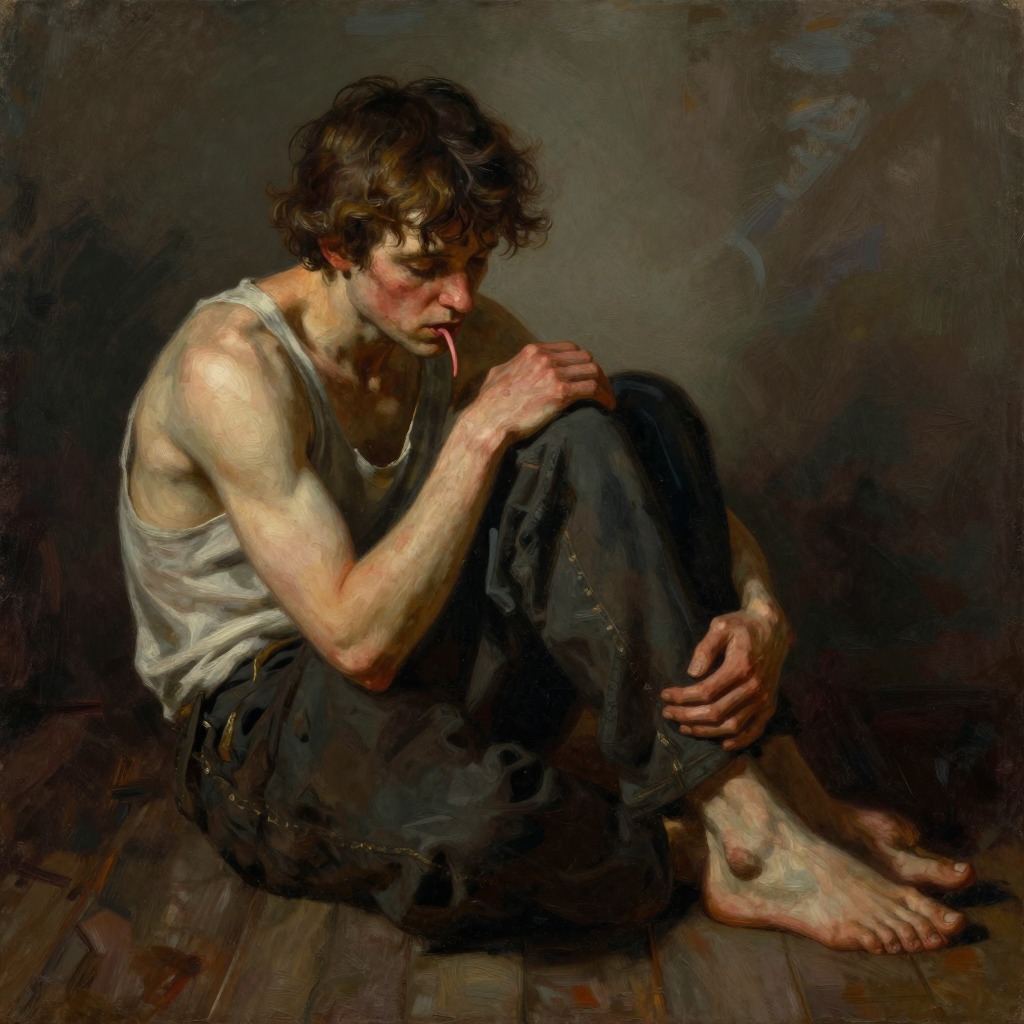
HungerThe Manuscript is the narrator's only tangible asset and the fragile bridge between his starving existence and the possibility of a meal, a paid rent, or a moment of self-respect. It is the object upon which his entire identity as a writer—and therefore as a human being worth saving—depends. Throughout the novel, the manuscript is written, submitted, rejected, accepted, lost, torn apart, and abandoned, each transformation marking a new stage in the narrator's physical and mental decline.
Creation and Inspiration
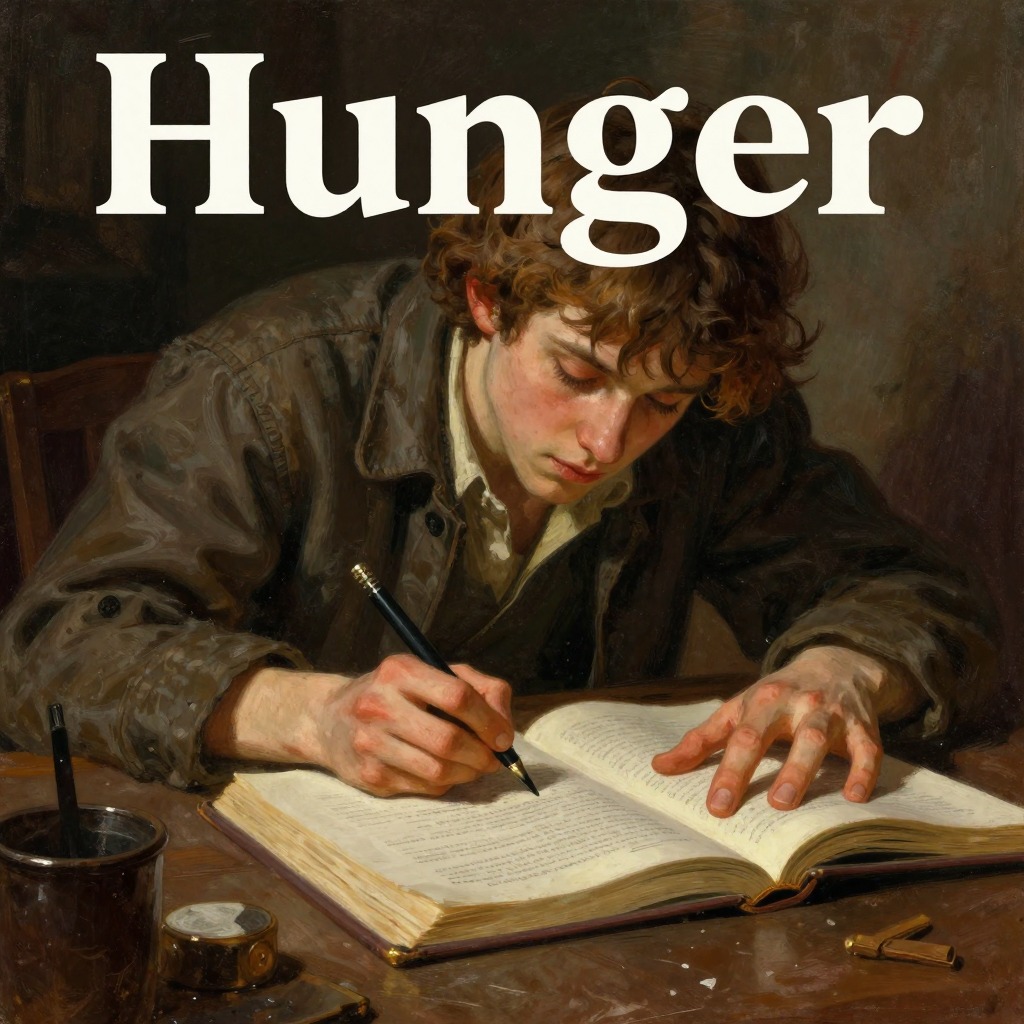
The narrator's creative process is erratic and physically punishing, often occurring in bursts of feverish clarity that feel like divine intervention. One morning, still in bed, he is seized by an inspiration so powerful that he writes fifteen to twenty pages without pause, filling page after page as if a vein had burst in him. He describes the experience as an "intense, peculiar exhalation of light and colour" emanating from his fantasies, and he is so moved by his own words that he weeps with enthusiasm, crying out, "It was God! It was God!" This manuscript, which he values at half a sovereign, represents his salvation, and he carries it with him as a talisman, buoyed by hope and satisfaction. At other times, the act of writing is a struggle against a barren mind. He sits in a park, writing the date "1848" scores of times, waiting for a workable idea, only to feel his brain snap and his head empty, leaving him hollowed out. The physical toll is severe: he writes with his hands bound in rags because he cannot endure the touch of his own breath on them, and his hair falls out in masses as he works.
Submission and Rejection
The narrator's relationship with editors is a cycle of hope and humiliation. After completing a story he believes to be a masterpiece, he delivers it to the newspaper office, impressing upon the clerk that it is of uncommon importance. The editor's response is delayed, and the narrator's confidence wavers, swinging from certainty that the story is a stroke of genius to the conviction that it is worthless. When he finally receives a reply, the editor has accepted the story, calling it "worked out with talent," and pays him half a sovereign. This success is fleeting. A later article, on which he had built great hopes, is returned to him, and he destroys it immediately without even rereading it. He then approaches the "Commandor" with a character sketch of Correggio, but the editor rejects it gently, suggesting he write something more commonplace. The narrator, humiliated, resolves not to return until he can bring something that will astonish the Commandor and earn half a sovereign without hesitation.
The Allegory and the Drama
As his condition worsens, the narrator's literary ambitions become more grandiose and more impossible. He begins an allegory about a fire in a bookshop, intending it to be a profound thought that will repay the Commandor's kindness. The allegory is meant to depict not books burning, but human brains, a "perfect Bartholomew's night of these burning brains." He works on it in a lodging house, but his landlady's eviction notice and the chaos of the household prevent him from finishing. Later, he conceives a one-act drama titled "The Sign of the Cross," set in the Middle Ages, centered on a magnificently fanatical harlot who sins against heaven out of pure contempt. He writes for two hours without pause, producing a dozen pages, but the effort leaves him exhausted and stiff with cold. The drama, like the allegory, remains unfinished, a testament to his failing powers.
Destruction and Abandonment
The narrator's frustration with his own inability to write culminates in violent acts of destruction. When he cannot find the right words for the inquisitor's address in his drama, he breaks his pencil between his teeth, jumps to his feet, tears his manuscript in two, tears each page in two, and flings his hat into the street to trample upon it. This is not an isolated incident; he has destroyed a previous article in anger after it was rejected. The physical state of the manuscript mirrors his own: it gets wet in the rain, and he spreads it out in the sun to dry. He carries it with him constantly, feeling for it in his pocket, and when he is about to give himself up for a theft, he snatches it up from the street, convinced it contains his "newspaper leader" and "many important papers." The manuscript is both his most precious possession and the object of his most violent rage.
The Final Failure
In the final part of the novel, the narrator's creative faculties have all but deserted him. He sits in a lodging house, trying to work on his allegory, but he cannot even add up a simple grocery bill, and his brain fails him completely when confronted with a fraction of a pound of cheese. He attempts to write scenes of his drama while sitting on a wharf, but the bustle of the harbor and the salt air distract him, and he cannot capture the "musty air of the dim Middle Ages." He tries to force himself to write, lying to himself that a new supreme moment has seized him, but the words are hollow. Finally, he tears the manuscript in two, tears each page, and tramples his hat, declaring himself lost. The manuscript, once the symbol of his hope and talent, has become the final proof of his intellectual and spiritual bankruptcy, and he abandons it on the street, a pile of torn paper that marks the end of his life as a writer in Christiania.