Death of Judas Iscariot
JudasDeath of Judas Iscariot is the tragic conclusion to Judas’s role in bringing Jesus to Jerusalem. As the Sabbath and Passover begin, he recognizes that he ignored the moment when he might have turned back; with the world seeming empty, he returns to the fig tree Jesus cursed and hangs himself from one of its branches.
Background and Regret
Judas’s final act follows his anguished recollection of the fig tree. He had questioned why Jesus cursed a tree that could not yet bear fruit, and imagined that he should have stopped Jesus and urged him to return to Galilee rather than continue toward Jerusalem. In that imagined alternative, Jesus would have traveled from village to village, helping the unfortunate and spreading his message of love and charity, while the disciples followed him. Judas acknowledges that he did not act on this insight: instead, he persisted in leading Jesus to Jerusalem.
The Final Night
The scene takes place as night falls and the Sabbath and Passover begin. For Judas, the familiar evening light on the hills and the wind from the sea cannot restore meaning; he describes the world as empty. He briefly imagines another life: returning to the inn, protecting its pregnant, pockmarked servant, becoming a father to her unborn child, and adopting the stray dog. But the inn is already shut and dark, and no one is there.
The Fig Tree and Death
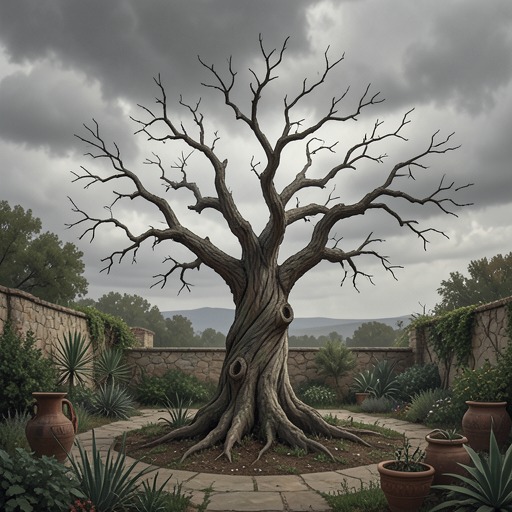
A first star appears, and Judas speaks to it softly, telling it not to believe. At the bend in the road, the cursed fig tree awaits him, now dead. He examines its branches carefully, chooses one, and ties the rope to it. The narration ends with this deliberate preparation, making the tree that had prompted his recognition the setting and instrument of his death.
Significance
Judas’s death is bound to a choice he understands too late: he could have tried to turn Jesus away from Jerusalem, but instead helped bring him there. The imagined return to Galilee and the modest possibilities of life at the inn stand against the path he actually took. The cursed fig tree joins that counterfactual regret to the final action: Judas returns to the sign he had failed to heed, and the narrative closes on his preparation to die.