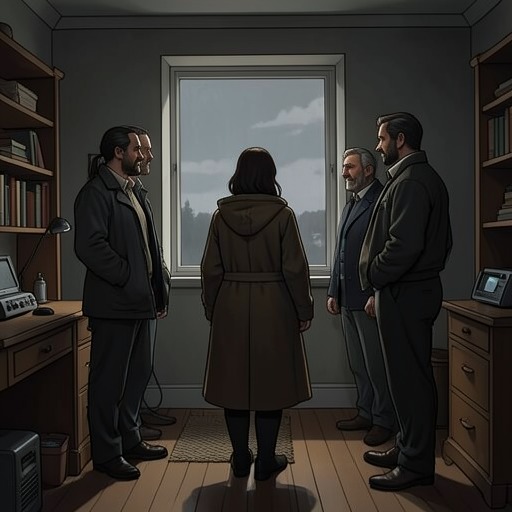
Lelia returns to Montanina
LeilaLelia’s return to Montanina follows a struggle over where she may live and who may direct her future. Her father’s revocation of permission to travel with Donna Fedele makes a return home seem unavoidable, while Lelia’s inheritance from Marcello Trento and her approaching majority give the conflict a practical as well as an emotional edge. She eventually yields, but not as a passive submission: on the way back, she refuses a concealed plan to put her in a carriage and sets out on foot.
The Revoked Permission
At the Villino delle Rose, Lelia receives two letters in one morning. Her father’s letter, revised by Francesco Molesin, withdraws his consent for her to accompany Donna Fedele. He says that Teresina and the housekeeper have left, that his health is worsening, and that his daughter’s return is now absolutely necessary. The appeal makes Lelia’s presence at Montanina sound like a domestic necessity, but the circumstances also expose her dependence on her father’s decisions: although she has inherited Marcello Trento’s estate, she is still twenty years old and a few months short of majority.
The second letter comes from the archpriest of Velo. It asks Lelia to continue Marcello’s charitable help to a poor family in Lago di Velo, offering both material support and visits. Neither Lelia nor Donna Fedele suspects a connection between the two letters. In the account of the episode, however, their juxtaposition places a personal demand beside a religious and charitable one: Lelia is summoned home by her father while also being asked to take up work associated with the man whose death and inheritance have altered her life.
Donna Fedele’s Counsel and Lelia’s Surrender
The paternal letter strikes Lelia like a lash. Donna Fedele lets her give way to her distress, then gently urges her to think before deciding. When that appeal to reflection makes Lelia weep, Donna Fedele consoles her and acknowledges the legal obligation to obey her father, without treating obedience as the only consideration. She argues that Lelia could do good by bringing dignity and Christian conduct into his household. If there were scandals there, she would not be compelled to stay: Donna Fedele would protect her, and in a few months, when Lelia came of age, her father could remain at Montanina only with her approval.
Lelia then reveals that she intends to refuse Marcello’s inheritance as soon as she becomes an adult. Donna Fedele is shaken and reproaches her for what she sees as unreasonable pride and an insult to the dead man. Lelia defends herself; the argument grows sharp enough for her to challenge Donna Fedele’s right to speak to her in that way. Donna Fedele falls silent. Lelia’s anger gives way to grief, and she throws her arms around her friend’s neck and agrees to do as she wishes. The decision to return is therefore bound up with a second concession: Lelia has not renounced her intention about the inheritance, but for the moment she yields to Donna Fedele’s counsel about going home.
The Journey Is Not Allowed to Be Directed for Her
Lelia does not leave at once. Donna Fedele is too ill to travel, and they agree to wait until her elderly cousin Eufemia Magis arrives from Santhià. Donna Fedele plans to go to Turin for medical advice when she is strong enough to make the journey. Lelia’s attachment to her friend and anxiety about leaving her make the delay matter; the return is not simply a prompt response to her father’s order.
When the service for Marcello is to begin in Velo, Lelia walks there with Teresina rather than taking her place beside her father. She sits near the main door, ready to leave as soon as the funeral is over. At the canonry, Don Emanuele asks her to become one of two visitors for poor mothers unable to work because of illness or childbirth. The other proposed visitor is Bettina Fantuzzo, who is visibly reluctant to undertake visits in person. Lelia does not know whether she will still be at the villa the next morning, because she is determined not to leave before Eufemia arrives. The charitable appointment thus presses against the same uncertainty as her return: others are already making plans for what she should do and where she should be.
The Return to Montanina
Don Tita and Don Emanuele bring Lelia’s father into the canonry and present his arrival as part of an effort to get her home. Don Tita jokes that Girolamo da Camin does not know how to act as a father and offers to teach him; he has arranged a carriage from Arsiero, ostensibly to spare Lelia a walk in the heat. Lelia understands that her father means to take her by surprise to Montanina and that the archpriest is helping him. She does not know that Molesin had suggested the plan, or that her father, after first seeming to accept Molesin’s proposal, had separately asked Don Tita to press her to return.
Lelia refuses the carriage and insists on going on foot. Her father immediately backs down, and she leaves after barely saying goodbye. The episode ends not with a reconciliation or a successful show of paternal authority, but with a limited, uneasy compliance: Lelia does return toward her father’s home, yet she prevents him and his clerical allies from controlling the means of her departure. Her resistance makes the distinction between accepting a destination and consenting to be managed unmistakable.