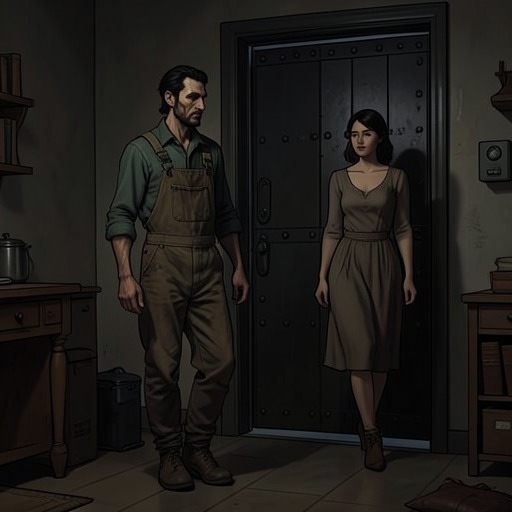
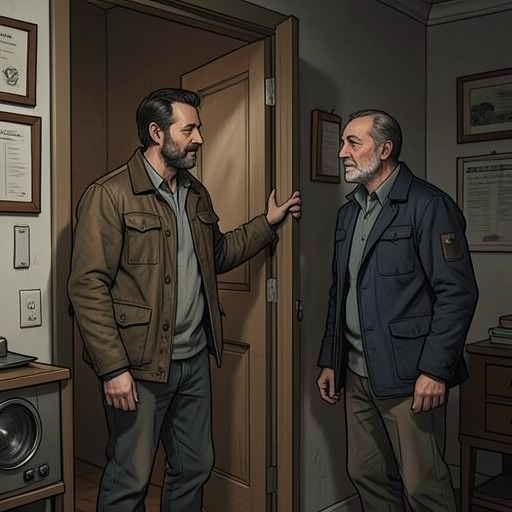
Marcello asks Don Aurelio to arrange a match between Lilia and Massimo
LeilaMarcello Trento’s appeal to Don Aurelio to help bring Lelia Camin and Massimo Alberti together turns a private anxiety about Lelia’s future into a tentative marriage plan. Marcello hoped the union might protect her from falling under either parent’s influence, while respecting her grief for Andrea Trento and her reluctance to accept an inheritance. The proposal was not a formal arrangement: it depended on Lelia’s willingness, on Massimo’s feelings, and on Don Aurelio’s ability to guide a young man who resisted being steered toward marriage.
Background and occasion
The conversation took place in the sacristy after Mass. Marcello spoke as though he believed himself near death, though he did not explain why; he referred only to his age of seventy-two. Don Aurelio noticed a new placidity in him and a fresh gentleness in his voice and eyes. That altered manner accompanied an unexpectedly intimate request: Marcello was troubled about the future of the girl he regarded as his own daughter.
Two risks shaped his concern. He feared that Lelia might refuse to be provided for in his will, and that she might then fall into the power of one or the other of her parents. Marriage to Massimo, the friend of Marcello’s late son, seemed to him a way of preventing at least the second outcome. The first might also be partly eased if Marcello left Lelia only the villa, rather than making a larger provision she might find harder to accept. He hoped neither she nor her future husband would reject that bequest and thereby seem to slight his memory.
The proposed match
Marcello did not think a twenty-two-year-old woman could fairly be asked to mourn forever or to renounce marriage irrevocably. Lelia needed to understand that he anticipated and accepted the possibility of another future for her. He believed that, while he was still alive, she might hesitate to do anything that seemed an affront to Andrea’s memory. If she could be persuaded that Andrea would not disapprove of the marriage from heaven, Marcello thought she might consent.
The plan therefore rested on a delicate distinction: Marcello was not asking Lelia to forget Andrea, but to accept that grief did not have to close off the rest of her life. His proposed bequest of the villa was part of the same accommodation. It could answer some of Lelia’s wishes while allowing him to hope that marriage would secure her future. Yet he recognized that the decisive uncertainty was Massimo, whose own wishes he did not know.
Don Aurelio’s reservations
Marcello had heard Massimo praised by Don Aurelio, but did not know whether the young man had existing attachments, personal affections, or any intention of marrying. Don Aurelio replied that Massimo had no undisclosed entanglements, as far as he knew, and did not seem to be in love, though he could not be certain. Massimo was susceptible to sympathies, but had written candidly to him about feelings that a glance could kindle and a conversation extinguish.
Don Aurelio understood that Massimo was not opposed to marriage in principle. He was, however, firmly unwilling to marry without love or to let another person dictate his choice. Don Aurelio recalled that advice had already diverted him from a marriage that might otherwise have taken place. Though the priest would have welcomed Massimo’s forming what he considered an ideal family, he knew that simply recommending a match could defeat the purpose. He was inexperienced in this kind of negotiation and could not promise the artful approach Marcello’s request seemed to require.
A promise under pressure
Don Aurelio withheld one of his strongest reservations: Lelia herself remained an enigma to him. He could not tell whether the inner life behind her reserve held genuine feeling or something less trustworthy. He nevertheless found himself unable to refuse Marcello. In the short time he had known him, he had come to revere the older man’s warmth, humility, faith, and love of the divine Word, and promised to do his best.
Only afterward, as he walked away, did the practical difficulty of that promise fully take shape. He would first need to discover whether Massimo’s heart was free and then find a way to approach him without revealing a predetermined intention. Don Aurelio had not yet known that he himself was to be dismissed from the curacy of Lago di Velo within fifteen days, leaving little time to pursue the plan. He considered confiding in Donna Fedele Vayla, who understood such matters and might know Lelia better than he did, and recognized that opportunities to observe Lelia and Massimo together had become precious.
Significance
The request exposes the competing forms of care and control around Lelia’s future. Marcello’s will and proposed marriage are meant as protection, but both depend on decisions that Lelia and Massimo must make for themselves. His attempt to imagine a future for her beyond mourning is compassionate, yet it also enlists Don Aurelio to influence a choice Massimo insists must arise from love rather than suggestion. The plan remains uncertain at its inception: Marcello can offer the villa and his blessing, but neither affection nor consent can be secured by inheritance or by a priest’s counsel.