2001 Altai camp raid and Limonov's arrest
LimonovThe 2001 Altai camp raid and Eduard Limonov’s arrest brought the National Bolshevik movement’s collision with the Russian security apparatus into a sharply revealing scene. Special forces arrived at dawn, searched the camp for weapons, and took Limonov and six activists into custody. The raid’s most telling aftershock came not from the search but from the officer escorting Limonov, who disclosed that he had been involved in a previous operation against the party and acknowledged that its drug evidence had been fabricated.
Political Background
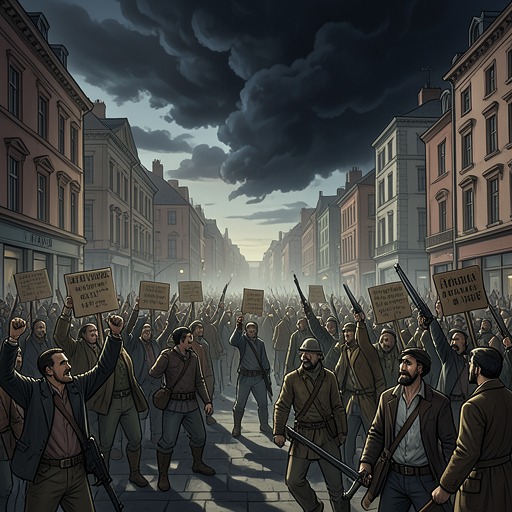
The raid belongs to a political history in which the language of legality and the identities of its defenders are repeatedly contested. In 1993, Limonov went to the Russian White House during the confrontation between Boris Yeltsin and the rebel parliamentary leadership. Several thousand patriots had gathered there; some were fascists, but the book also notes the contradiction that these people presented themselves as defenders of constitutional order against a president they accused of moving toward dictatorship. Limonov joined the occupied building, moving between meetings as supporters discussed the crisis and formed a government. That earlier episode supplies a precedent for his presence at the edge of an oppositional movement: political confrontation is not merely an idea to him but a place to go and participate.
Inside the White House, Limonov argued to Alexander Rutskoy that Western governments would support Yeltsin, whom he described as a traitor, and that the conflict should be understood as an elected parliament resisting dictatorship rather than as a coup. The account presents this as tactical persuasion, delivered when Rutskoy was under pressure and uncertain of the army’s loyalties. It does not establish a direct connection between that 1993 standoff and the later arrest, but it shows the political vocabulary through which Limonov framed opposition: constitutional legitimacy could be claimed by those confronting the existing government as well as by the government itself.
The party’s identity was also internally disputed. In Zakhar Prilepin’s novel about the National Bolsheviks, a sympathetic former teacher finds the party’s name, flag, and slogans disturbing, yet sees its militants’ stunts—tagging trains, unfurling banners on inaccessible monuments, and throwing tomatoes at a governor—as courageous acts in a country where disturbing the peace can bring imprisonment. The same conversation exposes a deeper divide: patriotic rhetoric and Soviet slogans could express a desire for something beyond a return to communism or a conventional, comfortable life. This context helps explain the political atmosphere surrounding the raid without reducing the arrested activists to a single ideological description.
The Dawn Raid
The operation began at the crack of dawn, when barking woke the sleepers. About thirty special-forces men burst into the cabin, armed and accompanied by German shepherds. Limonov had lost his glasses and could not see clearly. Barefoot and wearing wool underwear, he was made to kneel outside in the lingering snow; as the group’s leader, he was the first permitted to get dressed. Even amid the arrest, the encounter was not simply impersonal: the soldier leading him back into the cabin said he admired Limonov’s books and seemed proud to be arresting their author, almost as though he wanted an autograph.
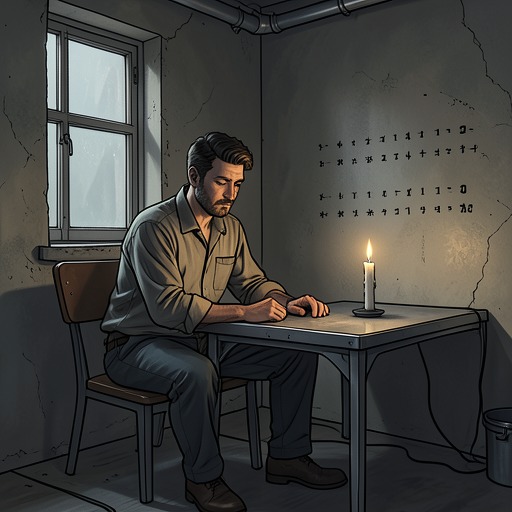
The questioning started with a demand to know where the weapons were. Limonov denied knowing of any. The search that followed was meticulous, using dogs and metal detectors, but the officers found no weapons beyond two hunting rifles. The narrative stresses the significance of what was absent: despite the apparent ease with which weapons could have been planted, the Federal Security Service did not do so. That restraint sits alongside the coercive force of the raid, making the search both a demonstration of state power and a detail that complicates any simple picture of the operation as fabricated from beginning to end.
Arrest and Transfer
The six National Bolshevik activists were roughly loaded into an army truck with their hands on their heads. Limonov, by contrast, was placed in a comfortable sedan with Colonel Kuznetsov, a large officer wearing mirrored sunglasses. After the raided camp had disappeared from view, Kuznetsov took vodka and zakuski from a small refrigerator in the car. The prisoners had an eight-hour drive to the Federal Security Service base at Gorno-Altaysk, where a special plane was waiting. Kuznetsov called the arrangements VIP treatment, drank shot after shot, and pressed Limonov to drink with him, though Limonov did so less eagerly.
The car journey shifted the scene from armed seizure to an unsettling familiarity. Kuznetsov said that, after spending so much time on the activists’ dossier, the National Bolsheviks were almost like family to him. Limonov had believed he knew the officer responsible for the case; Kuznetsov corrected him, saying that the man had been removed two years earlier, during the affair involving filmmaker Nikita Mikhalkov. Kuznetsov claimed that he himself had acted against the group at Mikhalkov’s request and had also detained National Bolsheviks heading to Riga two months before the camp raid.
The Riga Admission and Significance
Limonov said that the Riga arrest had been a setup because the activists had no drugs. Kuznetsov agreed: they had none, he said, and laughed at the episode. His admission gives the earlier arrest a concrete meaning within the account: it was not simply a mistaken search but, in the officer’s own telling, a knowingly false drug case. The episode does not prove that the Altai camp raid itself was staged—the exhaustive search there produced two hunting rifles—but it reveals that the officer overseeing the transfer had previously used fabricated evidence against the movement.
The raid therefore closes around two different forms of evidence. At the camp, the search fails to uncover the cache suggested by the questioning; in the car, the officer’s casual confession confirms that political policing had already included a manufactured accusation. The juxtaposition is characteristic of the book’s treatment of power: the state appears through weapons, dogs, vehicles, and confinement, but also through the private conversation in which an official acknowledges the manipulation behind a case. For Limonov, the arrest is both a physical removal from the camp and an encounter with an adversary who has spent years studying the movement—and who, over vodka on the road to Gorno-Altaysk, admits that one of his earlier operations rested on a lie.