Limonov refuses to plead guilty
LimonovLimonov’s refusal to plead guilty is a pivotal prison negotiation in which a possible release is made conditional on a confession, and his resistance turns on the difference between being freed and appearing to surrender. Pristavkin offers to arrange his release if he admits guilt as a formality; Limonov initially refuses because his reputation as a tough man who does not fold matters more to him than immediate freedom. He later accepts a lawyer’s carefully framed alternative, which avoids the question of guilt while stressing that he never contested the verdict. The episode thus makes the terms of his release inseparable from the story he can tell about himself.
The offer in the director’s office
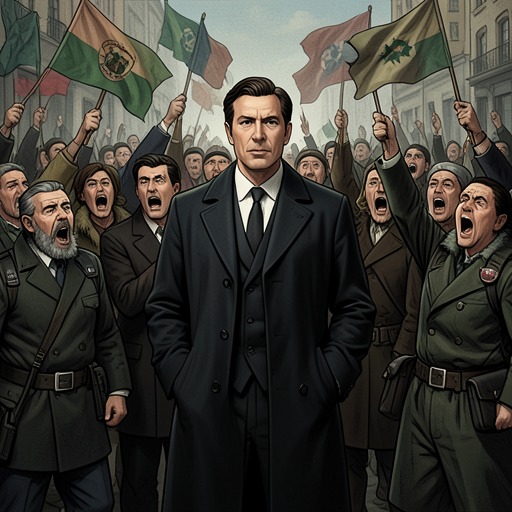
Pristavkin takes Limonov by the arm and leads him into the office while the others watch in amazement. Limonov imagines that, if the choice were his, he would remain standing and let the visitor sit in the director’s chair: that arrangement would reflect the reality of their positions, and he says he would not want to switch places. Instead, Pristavkin seats him beside himself on a sofa behind a coffee table, arranging them like old friends. The seating changes the scene’s atmosphere without changing its underlying imbalance: one man is in prison, while the other can speak of arranging his release.
Pristavkin begins by offering a cigar; Limonov says he does not smoke. With the smell of cognac on his breath, Pristavkin calls him a great Russian writer and praises The Book of Water as a masterpiece, adding that connoisseurs agree and that Limonov has been shortlisted for the Russian Booker Prize. He also invokes the PEN Club’s concern. His appeal is not simply personal sympathy: he distinguishes the writer from the terrorism charges and argues that, even if the FSB would not admit it officially, those charges do not hold water. He contrasts Limonov with Mikhail Khodorkovsky, whose alleged embezzlement of billions he describes as a real economic crime deserving prison. The distinction lets Pristavkin present leniency not as indulgence toward a terrorist, but as a change in what counts as criminal.
When Pristavkin says Limonov’s place is not among killers, Limonov replies that some of them are great guys. Pristavkin laughs and compares the response to Dostoyevsky’s. The exchange makes the offer more complicated than a straightforward appeal for mercy: Limonov does not accept the moral separation Pristavkin proposes between the writer and the men he has known. Pristavkin nevertheless insists that he has been treated too harshly and says they will take care of it. Limonov tentatively answers that he is not going to say no, but that cautious opening is not consent to the condition that follows.
The price of release
Pristavkin explains that matters would be easier if Limonov admitted guilt. He acknowledges that Limonov refused at trial, then describes a confession as purely formal: it would protect the FSB from losing face, need not become public, and could be buried in Limonov’s file. In exchange, Pristavkin says, Limonov could be out in a month or two. The proposal makes the confession sound administratively empty while giving it a concrete consequence. Limonov is being asked to supply the appearance of submission so that the authorities can preserve theirs.
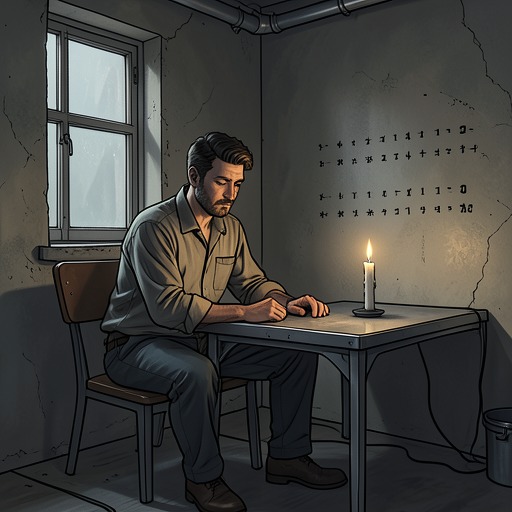
Limonov studies Pristavkin’s face, trying to determine whether the proposal is a trap. He shakes his head. The narration makes the reason explicit: more than freedom, he values his reputation as a tough man who refuses to fold. His answer is therefore neither a simple rejection of release nor a declaration that prison has become preferable. It is a refusal of these particular terms, because even a supposedly hidden and merely formal admission would alter what his refusal at trial means. Pristavkin tells him to think about it, leaving the immediate decision unresolved.
Refusal, revision, and release
After the visit, Limonov’s fate hangs in the balance, and the fact that it is being decided at the highest levels gives him an unusual standing among those around him. Respect and jealousy mingle with the sense that it may be safer to keep away. When people ask about the visit, he plays it down, suggesting that Pristavkin was drunk and nothing will come of the offer. That confidence proves mistaken: his lawyer arrives from Moscow and confirms that the circumstances have changed.
Public opinion has moved in Limonov’s favor. He is no longer regarded as a terrorist but as a kind of Dostoyevsky, writing great books from the house of the dead. The account presents Pristavkin as an opportunist who may have seen a chance to play the liberal. Yet Limonov continues to reject the offer as originally made, because he feels that his honor is at stake. The lawyer finds a different formulation: rather than concede guilt, the case can avoid that question and emphasize that Limonov never contested the verdict. The distinction gives him a way to accept the prospect of release without making the confession Pristavkin requested. Put in those terms, Limonov consents.
What changes is not the past refusal at trial but the language through which the present decision is represented. The initial bargain asks Limonov to perform an admission for the authorities’ benefit; the lawyer’s alternative lets him agree without explicitly making that admission. The narrative carefully preserves both facts: he refuses the proposed confession, then accepts a solution that emphasizes his failure to contest the verdict. This is not a simple triumph of defiance over the prison system, nor a straightforward capitulation. It is a negotiated distinction that allows release and preserves, as far as the available terms permit, the identity Limonov had defended.
The change in pace that follows underscores the practical consequence of that consent. Limonov has adjusted his thoughts, projects, and even his metabolism to the prospect of a long sentence; release then approaches in a rapid count of ten days, eight, three. The director, who had not summoned him during the earlier period, now invites him into the office and treats him like a VIP. He asks Limonov to sign his copy of The Book of Water and worries about the memories the prestigious former inmate will take away from the establishment. Limonov answers that he will recommend it to his friends, and the director laughs, delighted by the joke. The reversal does not erase the conditions of the bargain. It shows how quickly the institution’s manner changes once Limonov is about to leave, while the episode’s central compromise remains carefully bounded: he has agreed to a route out, not to the confession first demanded of him.