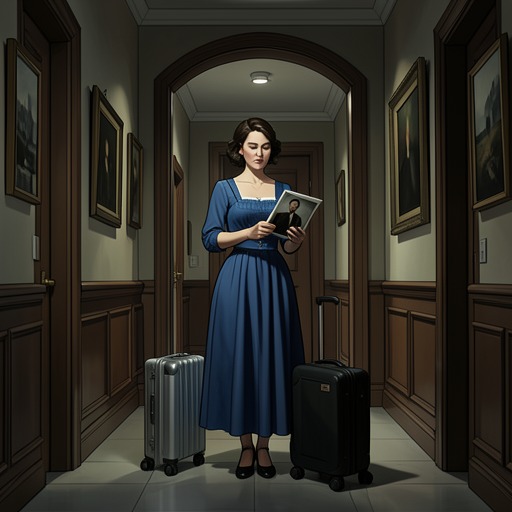
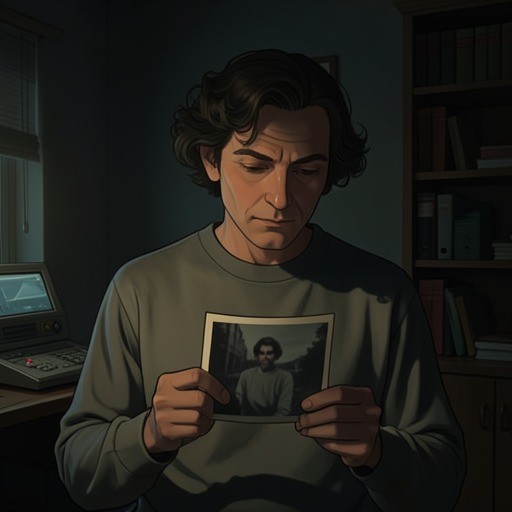
Decades before the murder
Germaine Takes the Stage
As a young woman, [Germaine Laboine](entity:character-recall-character-54ef95caa424) left her village in the Haute-Loire for [Paris](entity:location-recall-location-paris-c02b439ce220) and found small parts in theatrical productions. She later joined the Folies Bergère and traveled with touring companies, eventually performing in nightclubs across the Near East and Asia Minor under the name Lili France.
Her life on the road brought her to [Istanbul](entity:location-recall-location-istanbul-df7d5976695b), where she met [Julius Van Cram](entity:character-recall-character-889f3bd7bad3), a cultivated Dutchman who spoke several languages and moved among embassy circles. Their relationship set the course for the isolated, unstable family life that followed.
When Germaine was nearly forty
A Marriage in Istanbul
After Germaine discovered she was pregnant, Julius surprised her by proposing marriage. He took her to an office in [Istanbul](entity:location-recall-location-istanbul-df7d5976695b), where she signed papers and swore an oath, accepting his assurance that they were married.
The pair traveled to France by way of Marseilles and settled in [Nice](entity:location-recall-location-nice-f3800a4b4ae3). Germaine had no passport in his name, and she later learned that the Turkish document she had presented as proof of marriage was worthless.
Two months after Louise’s birth
Julius Disappears
Julius went out to buy cigarettes and never returned. Germaine was left in [Nice](entity:location-recall-location-nice-f3800a4b4ae3) with their infant daughter and no dependable explanation for his disappearance.
He continued to send money from different cities and ask after the child, while Germaine sometimes replied through poste restante. The money could be substantial, but its source remained obscure even to her.
Louise’s childhood and adolescence
Louise Grows Up in Nice
Louise grew up in [Nice](entity:location-recall-location-nice-f3800a4b4ae3) with Germaine, who survived by gambling at the [Monte Carlo Casino](entity:location-recall-location-monte-carlo-casino-aaf870ac2961) and had little capacity for ordinary maternal care. The girl attended school but lived apart from the patterns and security of the families around them.
A photograph of a handsome man in a light suit became one of Louise’s few links to the father she had never known. She kept it carefully, though she rarely spoke about him even to friends.
On her sixteenth birthday four years before the murder
Louise Leaves for Paris
On her sixteenth birthday, Louise left home for [Paris](entity:location-recall-location-paris-c02b439ce220), telling Germaine in a letter that she was going for good. Her mother did not report her missing and, by all appearances, was relieved to be rid of her.
Louise’s departure began a long effort to build a life without a family, money, or the social confidence that helped other newcomers find their footing. She and Germaine lost contact, although Germaine later received a warning letter from [Mademoiselle Poré](entity:character-recall-character-68ff2b8d8d53) about the girl’s situation.
During Louise’s journey to Paris
A Meeting on the Train
On the night train to [Paris](entity:location-recall-location-paris-c02b439ce220), Louise met [Jeanine Armenieu](entity:character-recall-character-jeanine-armenieu-c2a1bc12bb92), who was traveling to join her aunt, [Mademoiselle Poré](entity:character-recall-character-68ff2b8d8d53). The two girls spent the sleepless journey telling each other their stories and formed an attachment almost at once.
Jeanine was bold and socially assured, while Louise was shy and uncertain. Their differences did not prevent them from becoming companions, but they would shape the unequal friendship that followed.
The first months after arriving in Paris
Louise Hides Under the Bed
When Louise ran out of money and lost her cheap hotel room, Jeanine offered her a temporary refuge in the apartment of [Mademoiselle Poré](entity:character-recall-character-68ff2b8d8d53). Jeanine did not dare tell her aunt, so Louise slipped inside while Poré was away and hid under Jeanine’s bed until the household settled for the night.
The arrangement lasted for weeks and then months. Louise listened to Poré’s household from her hiding place and learned to move through the flat only when she could avoid being seen.
Several months after the girls met
Poré Discovers Louise
One morning [Mademoiselle Poré](entity:character-recall-character-68ff2b8d8d53) dropped a spool of thread beneath Jeanine’s bed and found Louise staring back at her. Louise explained that she was Jeanine’s friend and had been waiting for Poré to leave so she could get out.
Poré eventually expelled Louise and wrote to Germaine to warn her that the girl was alone in [Paris](entity:location-recall-location-paris-c02b439ce220). The discovery exposed how completely Louise had depended on Jeanine’s concealment and goodwill.
The years after Louise’s discovery
Two Girls Share an Apartment
Jeanine later established herself in a small apartment on [Rue de Ponthieu](entity:location-recall-location-rue-de-ponthieu-3ef031edae51), where Louise joined her as a companion and occasional housemate. Jeanine found work, learned Parisian social codes, and began dating prosperous men; Louise struggled to keep jobs and often remained alone in her room.
The concierge, Madame Marcelle, saw the girls’ closeness turn uneven. Jeanine could be irritated by Louise’s dependence, yet she also took comfort in having someone beside her as she built a life in the city.
During the last year the women lived together
Jeanine Climbs into Society
Jeanine’s prospects improved as she began appearing in more fashionable places and receiving flowers and expensive chocolates. She met [Marco Santoni](entity:character-recall-character-13a90fb96c61), a wealthy vermouth representative, and became increasingly determined to secure a future with him.
Louise remained poor, awkward in work, and unable to adapt to the social world Jeanine was entering. Their shared life continued, but the gap between them grew steadily wider.
About six months before the murder
Jeanine Leaves Louise Behind
Jeanine told Madame Marcelle that she was finished sharing an apartment with Louise and moved out while Louise was away. She gave no forwarding address, determined not to be burdened by her friend again.
Left with only a small blue suitcase, Louise asked Madame Marcelle where Jeanine had gone. The concierge could not tell her, and Louise walked away without knowing where she would live next.
A little over a month before the murder
Louise Seeks Jeanine Again
After hearing that Jeanine was being seen with [Marco Santoni](entity:character-recall-character-13a90fb96c61) at Maxim’s, Louise returned to Madame Marcelle’s building and rented an evening dress from Mademoiselle Irène on [Rue de Douai](entity:location-recall-location-rue-de-douai-f40d9f4ae88b). She hoped to get into the fashionable club and find her former friend.
The attempt failed: Jeanine was not there when Louise went, and she was not admitted to the world in which her friend now moved. A few days later Jeanine visited Madame Marcelle and joked that the club would never let poor Louise inside.
Three days before the murder
The Landlady Evicts Louise
Louise had been lodging for about two and a half months with [Madame Crêmieux](entity:character-recall-character-25af078fa705) on [Rue de Clichy](entity:location-recall-location-rue-de-clichy-15f353bda148). She had little money, no steady work, and had fallen behind on her rent; Crêmieux finally told her that she needed the room for a relative.
Louise accepted the eviction without argument and did not explain where she would go. She left behind most of her belongings, including her homemade black dress, checked coat, blue suitcase, and the photograph of the man she called her father.
About ten days before the murder
Jimmy Searches for Louise
A thin foreigner with an American accent came to the [Rue de Ponthieu](entity:location-recall-location-rue-de-ponthieu-3ef031edae51) building asking for [Louise Laboine](entity:character-recall-character-louise-laboine-80757cfca3a2). He left a penciled note for her, returned several days later when she had not appeared, and wrote another message before departing.
The concierge remembered his anxious insistence that the message mattered greatly to Louise. He was later identified as [Jimmy O’Malley](entity:character-recall-character-jimmy-o-malley-dd0485765bc6), recently released from prison and trying to reach the daughter he had never known.
A few days before the wedding
Jeanine Takes the Letter
Jeanine learned from Madame Marcelle that a man had left a letter for Louise. She took it with her, reasoning that Louise would soon come looking for her once news of the wedding appeared.
Jeanine opened the letter with [Marco Santoni](entity:character-recall-character-13a90fb96c61) and read its appeal for Louise to meet “Jimmy” at Pickwick’s Bar. The message promised that the barman would explain more and warned that Jimmy might soon have to leave France.
Monday night before the murder
The Santoni Wedding
[Marco Santoni](entity:character-recall-character-13a90fb96c61) and [Jeanine Armenieu](entity:character-recall-character-jeanine-armenieu-c2a1bc12bb92) held their wedding reception at [Le Roméo](entity:location-recall-location-le-rom-o-122d57b52d64), which had been rented for the occasion. The party drew a fashionable crowd and marked Jeanine’s arrival in the wealthy social world she had pursued.
At the same time, Louise was almost penniless and newly without a room. The wedding would bring the former friends together again, but only briefly and under circumstances Louise could scarcely control.
Monday evening around nine o’clock
Louise Borrows an Evening Dress
Louise went to Mademoiselle Irène’s shop on [Rue de Douai](entity:location-recall-location-rue-de-douai-f40d9f4ae88b) and asked for the same blue satin dress she had rented a month earlier. She had no deposit, so she left her own clothes as security and borrowed a velvet cape, shoes, stockings, and a silver evening bag.
She was in a hurry and looked at the shop clock while changing. The borrowed finery made her look like an outsider rather than a guest at the places she was trying to enter, but she left on foot toward Rue Blanche in the rain.
Monday night between about ten and midnight
Louise Repeatedly Calls
At a café near Rue Caumartin and Rue Saint-Lazare, Louise ordered several grogs and repeatedly tried to reach someone by telephone. The waiter counted at least ten attempts, each ending with her returning to her seat without speaking.
She appeared cold, anxious, and close to tears. The unanswered calls delayed her journey but did not turn her away from the reception she was determined to reach.
A little before midnight on Monday
Louise Finds Jeanine at the Reception
Louise entered [Le Roméo](entity:location-recall-location-le-rom-o-122d57b52d64) in her rented blue dress and found Jeanine among the wedding guests. The doorman and head waiter noticed her because she did not resemble the usual clientele; she managed to speak with the bride while Marco grew impatient nearby.
Louise asked Jeanine for money, saying she had nowhere to go and hinting at desperation. Jeanine gave her several thousand-franc notes and told her about the letter from Jimmy, including the instruction to ask for him at Pickwick’s Bar.
Shortly after leaving the wedding reception
Louise Goes to Pickwick’s
Louise walked away from the reception rather than take a taxi. A driver later saw her crossing Place Saint-Augustin and moving quickly toward Boulevard Haussmann and the Faubourg Saint-Honoré, the route toward Rue de l’Étoile.
She reached Pickwick’s Bar and asked for the message left for her. The bartender, [Albert Falconi](entity:character-recall-character-albert-falconi-92b8233eac8c), demanded identification as Jimmy had instructed; Louise went downstairs with her handbag, apparently to read what she had been given.
At Pickwick’s Bar before the murder
The Letter Is Replaced
Albert did not give Louise [Jimmy O’Malley](entity:character-recall-character-jimmy-o-malley-dd0485765bc6)’s real letter. He handed her an envelope containing a blank sheet, while keeping the genuine message and its promise of access to hidden money.
Albert and his accomplices wanted Louise’s identity card so that another woman could impersonate her and claim the funds. Their plan depended on a quiet theft, not a killing, but Louise’s presence put her in their way.
Around two o’clock Tuesday morning
Bianchi Attacks Louise
[Bianchi](entity:character-recall-character-bianchi-d57d2edd85b5) and an accomplice followed Louise in a car after she left the bar. Bianchi tried to snatch her silver handbag, not realizing its chain was wound around her wrist; the pull sent her down onto her knees.
When Louise tried to cry out and clung to him, Bianchi struck her in the face and then clubbed her repeatedly with a blackjack. The handbag theft became a murder, leaving the conspirators with the problem of hiding both the body and their involvement.
After two o’clock Tuesday morning
The Body Is Dumped
The men drove Louise’s body away from the bar district and left it on the pavement at [Place Vintimille](entity:location-recall-location-place-vintimille-81e81847e4cc). Her borrowed cape and silver handbag were gone, and one of her high-heeled shoes was missing.
The killers chose the location because her evening clothes seemed to fit Montmartre better than the neighborhood around Pickwick’s. They hoped the body’s placement would obscure the route back to the bar and its regular customers.
Just after three o’clock Tuesday morning
The Wall Borers Confess
At the [Quai des Orfèvres](entity:location-recall-location-quai-des-orf-vres-4dd9ff9cd7ab), [Jules Maigret](entity:character-recall-character-jules-maigret-373f96ba36fa) and his assistants finished an eighteen-hour interrogation of three tough burglars known in the newspapers as the wall borers. The men signed their statements shortly after three in the morning.
As the exhausted officers prepared to leave, the telephone rang with news that a young woman’s body had been found at [Place Vintimille](entity:location-recall-location-place-vintimille-81e81847e4cc). The completed burglary case gave way immediately to a new investigation.
A few minutes after three o’clock Tuesday morning
The Body Is Discovered
A couple leaving a nightclub found Louise lying on her side in the rain at [Place Vintimille](entity:location-recall-location-place-vintimille-81e81847e4cc) and raised the alarm. [Inspector Lognon](entity:character-recall-character-bf582d274e3a), whose district included the square, was already there when [Jules Maigret](entity:character-recall-character-jules-maigret-373f96ba36fa) and [Inspector Janvier](entity:character-recall-character-8abf54cb6531) arrived.
Louise had no identity papers or handbag, one shoe was missing, and her pale blue dress was wet and worn. The bruised face and bare shoulders suggested that the body might have been moved, while the lack of an obvious motive left the first theory uncertain.
Between three and four o’clock Tuesday morning
The First Examination
A local doctor confirmed that the young woman was dead and found no sign of blood on her dress. He observed bruising to her face, a swollen lip, and a severe head injury; he believed she had been struck with a heavy object and killed elsewhere.
The witnesses placed their discovery shortly after three, while the doctor estimated that Louise had died between two and three. [Maigret](entity:character-recall-character-maigret-8d2af30c4f2b) asked the [Technical Branch](entity:organization-recall-organization-technical-branch-ae99ec55347a) to photograph the scene before the body was moved.
Around four-thirty Tuesday morning
The Autopsy Reveals a Struggle
At the [Medico-Legal Institute](entity:location-recall-location-medico-legal-institu-67298e7d9870), [Dr. Paul](entity:character-recall-character-a6b3b1457a06) estimated Louise’s age at between nineteen and twenty-two and found that she had been struck at least three times. Shreds of dark wool beneath her fingernails showed that she had clutched at an attacker’s clothing.
The postmortem established that Louise was heavily intoxicated and had probably died around two, after first being slapped or punched and forced to her knees. Her clothing suggested a cheap, isolated life, while the absence of signs that she had ever slept with anyone complicated the assumption that she was a nightclub worker.
Before dawn Tuesday
The Dress Identifies Irène’s Shop
[Maigret](entity:character-recall-character-maigret-8d2af30c4f2b) and [Janvier](entity:character-recall-character-janvier-b05286178a29) examined Louise’s clothes at the [Medico-Legal Institute](entity:location-recall-location-medico-legal-institu-67298e7d9870) and found a faded label in the blue dress naming Mademoiselle Irène’s shop at 35b [Rue de Douai](entity:location-recall-location-rue-de-douai-f40d9f4ae88b). The shoe came from a nearby shop, strengthening the impression that Louise had been moving around Montmartre.
The dress pointed toward bar and cabaret life, but [Dr. Paul](entity:character-recall-character-a6b3b1457a06)’s findings made that explanation doubtful. The contradiction gave Maigret a reason to look beyond the obvious neighborhood clues.
Tuesday morning
Maigret Visits Irène
After only a few hours of rest, [Maigret and Lognon](entity:relation-recall-relation-maigret-and-lognon-4ec1f7ff1928) went to Mademoiselle Irène’s shop. Irène recognized the blue dress and explained that Louise had rented it once before, then returned on the murder night to borrow it again without a deposit.
Louise had left her ordinary clothes as security and departed on foot in a hurry. Irène remembered that she had a few folded banknotes, a brass key, and little else, but could not find the scrap of paper on which she had once written Louise’s name and address.
Tuesday morning
The Newspaper Photograph Appears
[Maigret](entity:character-recall-character-maigret-8d2af30c4f2b) arranged for a photograph of the unidentified woman to appear in the newspapers, hoping that someone would recognize her before the trail went cold. He also sent Louise’s clothing to the [Technical Branch](entity:organization-recall-organization-technical-branch-ae99ec55347a) for examination and assigned [Inspector Janvier](entity:character-recall-character-8abf54cb6531) to make identification photographs showing her in her ordinary clothes and in the borrowed dress.
The images made the absence of any response more troubling. Louise had lived in [Paris](entity:location-recall-location-paris-c02b439ce220) for months, yet no family member, employer, neighbor, or friend came forward to claim her.
Tuesday afternoon
A Name Emerges
Mademoiselle Irène called [Maigret](entity:character-recall-character-maigret-8d2af30c4f2b) with a partial recollection: the girl had been called Louise, and her surname began with L. She also remembered a small brass key and a few hundred-franc notes in the girl’s belongings.
Those fragments suggested that Louise had been carrying the means to reach a particular place, not merely the necessities of a night out. A photograph of her in evening dress reached the newspapers and police stations, but still produced no immediate identification.
Wednesday morning
A Call from Rose
An anonymous caller told [Maigret](entity:character-recall-character-maigret-8d2af30c4f2b) that the murdered girl had lived at 113B [Rue de Clichy](entity:location-recall-location-rue-de-clichy-15f353bda148) and directed him to [Madame Crêmieux](entity:character-recall-character-25af078fa705). The caller, a nervous young maid named Rose, had recognized Louise from the newspaper but was frightened of speaking openly.
Maigret and [Janvier](entity:character-recall-character-janvier-b05286178a29) went to the address, where the concierge confirmed that Louise had rented a room under the name [Louise Laboine](entity:character-recall-character-louise-laboine-80757cfca3a2). The first solid lead came not from a friend or relative, but from a girl who had watched Louise pass silently on the stairs.
Wednesday morning
The Concierge Identifies Louise
The concierge at [Rue de Clichy](entity:location-recall-location-rue-de-clichy-15f353bda148) said Louise had arrived shortly before New Year with one small blue suitcase. She remembered the girl as poor, quiet, and difficult to know, usually leaving in the morning and returning at varying hours.
The concierge also revealed that Louise had been [Madame Crêmieux](entity:character-recall-character-25af078fa705)’s latest unofficial lodger. Seeing Louise’s photograph in the paper had made Crêmieux angry that the police might expose her subletting, and she had discouraged the concierge from reporting what she knew.
Wednesday morning
Crêmieux Describes the Lodger
[Madame Crêmieux](entity:character-recall-character-25af078fa705) admitted that Louise had lived in her flat for more than two months, though she claimed not to know whether the girl’s name was genuine. Louise had said she worked in an office but rarely spoke, kept to herself, and avoided the older woman’s efforts to make conversation.
Crêmieux had recently evicted her after Louise fell behind on rent. She described a young woman with little money, one ordinary dress and coat, and no visible circle of friends—a portrait that helped explain why the body had remained unclaimed.
Wednesday morning
The Room Is Searched
[Maigret](entity:character-recall-character-maigret-8d2af30c4f2b) inspected Louise’s room and found only cheap toiletries, aspirin, sleeping pills, a few underclothes, an electric iron, a homemade dressing gown, and a locked blue suitcase. The suitcase was empty, while the drawers held a little writing paper and basic sewing supplies.
[Madame Crêmieux](entity:character-recall-character-25af078fa705) recalled seeing a photograph of a distinguished man in Louise’s notebook, along with two keys and a shabby notebook. The picture showed a man in a light suit near a palm tree; Louise had called him her father when Jeanine once asked about it.
Wednesday late morning
Rose Remembers the Garden
[Maigret](entity:character-recall-character-maigret-8d2af30c4f2b) questioned Rose, who said Louise used to smile at her on the stairs and looked unhappy, almost like a film actress. Rose had also seen her sitting alone on a bench in the [Trinité garden](entity:location-recall-location-trinit-garden-1cbe65bbc473), sometimes for hours, without reading or meeting anyone.
The account suggested that Louise had no regular work and spent much of her life within a small circle of streets. Her solitude was not simply a temporary circumstance; it had become the shape of her daily existence.
Wednesday late morning
Lognon Finds the Wedding Trail
[Inspector Lognon](entity:character-recall-character-bf582d274e3a) reported that a taxi driver had seen a young woman in a blue evening dress leave [Le Roméo](entity:location-recall-location-le-rom-o-122d57b52d64) shortly after midnight on Monday. The doorman and barman recognized the photograph, and [Lognon](entity:character-recall-character-lognon-5ebdf84b53de) established that the reception celebrated the wedding of [Marco Santoni](entity:character-recall-character-13a90fb96c61) and [Jeanine Armenieu](entity:character-recall-character-jeanine-armenieu-c2a1bc12bb92).
The driver later saw the woman walking toward the Champs-Élysées. Lognon had traced the route through taxi ranks, nightclub staff, and Santoni’s household, establishing a substantial lead before [Maigret](entity:character-recall-character-maigret-8d2af30c4f2b) had reached the same ground.
Wednesday around noon
Maigret Reconstructs the Walk
[Maigret](entity:character-recall-character-maigret-8d2af30c4f2b) reasoned that Louise had likely been drinking before or after her brief visit to the wedding reception. [Dr. Paul](entity:character-recall-character-a6b3b1457a06)’s findings placed her death near two in the morning, leaving a gap of roughly two hours between the time she left the wedding and the killing.
He sent [Janvier](entity:character-recall-character-janvier-b05286178a29) to question bars and cafés along her likely route from [Rue de Douai](entity:location-recall-location-rue-de-douai-f40d9f4ae88b) to Rue Caumartin. Maigret’s attention shifted from the place where Louise died to the ordinary stops and failed attempts that might reveal what she had been trying to do.
Wednesday afternoon
The Café Waiter Remembers
[Janvier](entity:character-recall-character-janvier-b05286178a29) found the waiter who had served Louise at the café near Rue Caumartin and Rue Saint-Lazare. She had arrived cold, ordered three grogs, and repeatedly entered the telephone booth to dial a number before returning without speaking.
The waiter could not say whether she ever reached anyone. His account confirmed that Louise had been alone, short of money, and urgently trying to contact someone before she went to the wedding reception.
Wednesday midday
The Laboratory Finds Coastal Sand
At the [Technical Branch](entity:organization-recall-organization-technical-branch-ae99ec55347a), Moers reported that Louise’s black dress carried traces of green paint and grains of sand. The sand matched the kind found on the Normandy coast rather than the Mediterranean or Atlantic varieties.
The clue suggested that Louise or her clothes had recently been near a specific coastal environment, though it did not yet identify a place or explain her movements. It added a physical detail to a case otherwise built from memories and secondhand accounts.
Wednesday afternoon
Nice Recalls the Mother
A call from [Féret](entity:character-recall-character-ccfff7654523) in [Nice](entity:location-recall-location-nice-f3800a4b4ae3) brought the first account of Louise’s early life. A fish seller remembered the girl and her mother living nearby four or five years earlier; Germaine was a former performer who dressed well, went out late, and left debts behind.
Féret tracked Germaine to the [Monte Carlo Casino](entity:location-recall-location-monte-carlo-casino-aaf870ac2961), where she played roulette each day to earn just enough to live. She confirmed that Louise had left home at sixteen and had not been heard from since.
Wednesday afternoon
Jeanine’s Aunt Tells the Past
[Maigret](entity:character-recall-character-maigret-8d2af30c4f2b) and [Janvier](entity:character-recall-character-janvier-b05286178a29) went to [Mademoiselle Poré](entity:character-recall-character-68ff2b8d8d53)’s flat on [Rue de Chemin Vert](entity:location-recall-location-rue-de-chemin-vert-160b63595641) and unexpectedly found [Lognon](entity:character-recall-character-lognon-5ebdf84b53de) already there. Poré explained that Jeanine had come to [Paris](entity:location-recall-location-paris-c02b439ce220) from Lyon and that Louise had secretly lived under her bed after losing her room and job.
Poré later threw Louise out and warned Germaine by letter. She described Jeanine as ambitious and Louise as a shy, difficult girl who could not keep work, helping Maigret understand how the friendship began and why its collapse left Louise so exposed.
Wednesday evening
Lognon Is Left Behind
After Poré’s account, [Maigret](entity:character-recall-character-maigret-8d2af30c4f2b) tried to acknowledge [Lognon](entity:character-recall-character-lognon-5ebdf84b53de)’s hard work and urged him to rest. Lognon heard the offer as another sign that he was being pushed aside and refused to stop investigating.
His diligence had uncovered crucial pieces of the story, but his touchy pride and fear of losing credit made cooperation difficult. Maigret recognized the injustice of the situation without being able to undo the habits that kept Lognon isolated inside the force.
Wednesday evening
Madame Marcelle Reveals the Letter
At the [Rue de Ponthieu](entity:location-recall-location-rue-de-ponthieu-3ef031edae51) building, [Maigret](entity:character-recall-character-maigret-8d2af30c4f2b) heard Madame Marcelle’s fuller account of Louise and Jeanine’s life together. She described Jeanine’s success with men and Louise’s repeated failures at work, then recalled that Jeanine had taken the letter meant for Louise.
Marcelle said Jeanine had kept the letter after a thin foreigner returned asking for Louise. She eventually passed it to Jeanine, who expected Louise to come looking once the wedding news appeared. That history connected Jimmy’s message to the fatal night.
Wednesday night
The Search Points to Pickwick’s
Jeanine told [Maigret](entity:character-recall-character-maigret-8d2af30c4f2b) by telephone that Louise had come to the wedding seeking money and that she had given her the message from Jimmy. She believed Louise probably went to Pickwick’s Bar, where the letter instructed her to ask for him.
Jeanine also admitted that she had opened the letter with Marco and read its directions. The message promised that a barman would provide proof and details, making the bar the key to understanding the motive behind the killing.
Wednesday night
A Hotel Adds Four Months
A hotel manager from Rue d’Aboukir told [Maigret](entity:character-recall-character-maigret-8d2af30c4f2b) that Louise had stayed at her establishment for four months before moving to [Rue de Clichy](entity:location-recall-location-rue-de-clichy-15f353bda148). Louise had worked at a cut-price stall on Boulevard Magenta and had once been ill in her garret without anyone to care for her.
The report filled another stretch of Louise’s life with poverty and isolation. By the time she was evicted, she had few places to turn except the friend who had already left her behind.
Late Wednesday night
Louise’s Father Is Identified
[Féret](entity:character-recall-character-ccfff7654523)’s extended interview with Germaine revealed that Louise’s father had been [Julius Van Cram](entity:character-recall-character-889f3bd7bad3), the man Germaine met in [Istanbul](entity:location-recall-location-istanbul-df7d5976695b). Germaine had once received money orders from him, and Louise had kept the photograph that [Maigret](entity:character-recall-character-maigret-8d2af30c4f2b) had heard about from [Madame Crêmieux](entity:character-recall-character-25af078fa705).
Germaine also admitted that she had never been legally married to Julius. Her scattered recollections made him seem at once a vanished father and a man with a concealed life, giving Maigret a new direction for the inquiry.
Thursday morning
Van Cram’s Criminal Aliases
[Maigret](entity:character-recall-character-maigret-8d2af30c4f2b) searched police records for [Julius Van Cram](entity:character-recall-character-889f3bd7bad3) and found no direct file under that name. By comparing international records and aliases, he identified the likely man as a seasoned confidence trickster who had used names including Hans Ziegler, John Donley, and Ernst Marek.
The records linked Van Cram to repeated frauds across Europe and the Americas, and noted that he worked with a younger accomplice. His last known major swindle had taken place in Mexico six years earlier, suggesting that the money promised to Louise might be part of an old criminal reserve.
Thursday before dawn
Lognon Follows the Brussels Lead
At Pickwick’s, Albert told [Lognon](entity:character-recall-character-lognon-5ebdf84b53de) that Jimmy had left for the United States and mentioned a second American who seemed to follow him. Albert also spoke of Jimmy’s questions about reaching [Brussels](entity:location-recall-location-brussels-4d1364f23b86) and staying at a hotel near the station.
Lognon accepted the false trail and went after the supposed American alone. He left without reporting back, intending to reach Brussels ahead of the other investigators and prove that he could solve the case himself.
Thursday morning
Lognon Vanishes from Contact
When [Maigret](entity:character-recall-character-maigret-8d2af30c4f2b) learned that [Lognon](entity:character-recall-character-lognon-5ebdf84b53de) had spent the night away from home and had not called the station, he worried that the sergeant was pursuing a lead on his own. The false American story had sent Lognon out of [Paris](entity:location-recall-location-paris-c02b439ce220), and no one knew exactly where he was.
Maigret resisted the temptation to take over every part of the investigation, but the silence increased his concern. The case had become entangled with the question of whether Lognon would be found before his unauthorized pursuit caused more trouble.
Thursday late morning
Maigret Reaches Pickwick’s
[Maigret](entity:character-recall-character-maigret-8d2af30c4f2b) and [Janvier](entity:character-recall-character-janvier-b05286178a29) went to Pickwick’s Bar and found Albert behind the counter. Albert admitted that Louise had come in and that she had asked for a letter, but his account made her appear to have sat at the bar, drunk martinis, and left with an American.
He also described the second American who supposedly followed Jimmy. The tale seemed to place the murder inside a manageable criminal plan, but Maigret listened for the small details that did not fit Louise’s character.
Thursday at Pickwick’s
Albert’s Story Unravels
[Maigret](entity:character-recall-character-maigret-8d2af30c4f2b) recognized that Louise would not have comfortably sat among Pickwick’s regulars or ordered a martini. The postmortem had found rum in her stomach, not the gin and vermouth in a martini, and it was unlikely that she had pushed through the crowded bar to read a letter downstairs.
Those contradictions showed that Albert had invented the scene. Maigret ordered him back to headquarters, then waited him out with food, beer, and silence until the bartender admitted that the letter he had given Louise was blank.
Thursday afternoon
The Hidden Money Is Revealed
Albert confessed that he had opened Jimmy’s real letter after Jimmy left for the United States. It instructed Louise to travel to [Brooklyn](entity:location-recall-location-brooklyn-e6b5895cd305) and visit a Polish tailor named Lukasek, who would give her money kept for her there.
Albert and his associates intended to steal Louise’s identity card and send another woman to claim the funds. The letter’s promise explained why Louise had gone to Pickwick’s and why the gang had targeted her, even though she had no idea the encounter could turn deadly.
Thursday afternoon
Bianchi’s Role Is Exposed
Albert named [Bianchi](entity:character-recall-character-bianchi-d57d2edd85b5) as the man who had helped him exploit the letter and arrange the theft. Bianchi had followed Louise with an accomplice driving, intending to take her handbag and identity card without attracting attention.
When Louise resisted the snatch, the chain of the silver bag caught around her wrist and pulled her down. Bianchi struck her after she tried to call for help, then killed her with a blackjack; Albert insisted that murder had not been the plan.
Thursday afternoon
Jimmy’s Death Is Confirmed
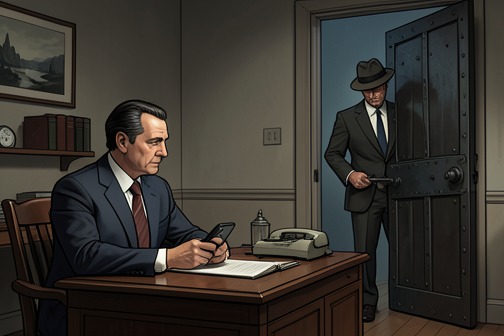
[Maigret](entity:character-recall-character-maigret-8d2af30c4f2b) reached [Clark](entity:character-recall-character-clark-b9a9594ee9bc) at the [FBI](entity:organization-recall-organization-fbi-b5f247fde897) and confirmed the identities behind the international aliases. [Julius Van Cram](entity:character-recall-character-889f3bd7bad3) had been buried under the name John Donley after dying in [Sing Sing Penitentiary](entity:location-recall-location-sing-sing-penitentia-6f612f0d7c89) a month earlier, while his partner [Jimmy O’Malley](entity:character-recall-character-jimmy-o-malley-dd0485765bc6) had served a shorter sentence and was recently released.
The money Jimmy had directed Louise toward was part of a large fraud, with roughly one hundred thousand dollars hidden in [Brooklyn](entity:location-recall-location-brooklyn-e6b5895cd305). Jimmy had crossed the Atlantic to leave his daughter instructions, but she was killed before she could claim the inheritance he had arranged.
Thursday afternoon
Albert Is Arrested
With Albert’s confession and the [FBI](entity:organization-recall-organization-fbi-b5f247fde897) confirmation, [Maigret](entity:character-recall-character-maigret-8d2af30c4f2b) had the essentials of Louise’s murder. He instructed [Janvier](entity:character-recall-character-janvier-b05286178a29) to take Albert’s statement, obtain his signature, and bring him to the cells while Maigret contacted the examining magistrate.
Albert offered to cover the drinks Maigret and Janvier had ordered, but Maigret refused and paid. The investigation’s formal conclusion came in the ordinary routines of arrest and paperwork, a stark contrast to the lonely chain of accidents that had brought Louise to her death.
At the novel’s ending
The Cost of Chance
Louise’s fate turned on small contingencies: the chain attached to her borrowed silver handbag, her failed telephone calls, and her arrival at Pickwick’s when Albert’s scheme was waiting. Had the bag slipped free, the gang might have stolen it and driven away without killing her.
She never learned that the man in her treasured photograph had been her father, or that Jimmy’s message offered a route to money and a new life. [Maigret](entity:character-recall-character-maigret-8d2af30c4f2b) solved the crime, but the truth arrived too late to undo Louise’s long experience of poverty, abandonment, and being unseen.