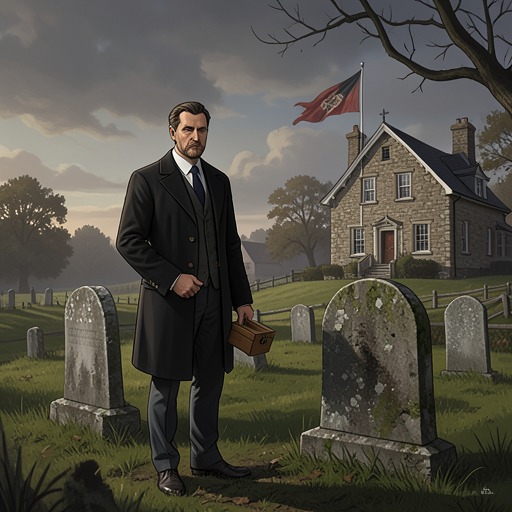
Miles Vorkosigan and Aral Vorkosigan
MemoryMiles Vorkosigan’s relationship with Aral Vorkosigan is presented less through shared scenes than through the weight Aral’s hopes and future responsibilities carry in Miles’s private decisions. His father’s attachment to old Barrayaran expectations makes a life outside the Imperium feel not merely like a career change but a betrayal; inheritance, meanwhile, promises a district, a political vote, and duties that will narrow Miles’s choices. The bond is affectionate and consequential, but also a source of constraint whose influence Miles sometimes mistakes for direct intervention.
Filial Loyalty and the Unchosen Life
Miles has repeatedly considered abandoning his identity as a Vorkosigan and living only as Admiral Naismith. He imagines leaving ImpSec, escaping its financial and patriotic obligations, and earning a living with the Dendarii Free Mercenary Fleet. Yet he understands this as an irreversible break: a Vor lord with a private military force would commit high treason, and he could not return home. That legal and political barrier gives his father’s continued life a personal force. Miles cannot take that path while Aral lives and continues to hope that his son will fulfill an older Barrayaran ideal.
The thought of his father is not interchangeable with Miles’s more general attachment to home or military service. Miles refers to him as the Count-my-Father, compressing office and kinship into a single figure whose hopes he feels bound to honor. He imagines that Aral’s death would not simply free him, either. It would make Miles Count Vorkosigan, with a district, an important vote in the Barrayaran Council of Counts, and daily obligations. His rueful wish that his father live a long time captures the paradox: Miles fears the duties waiting in Aral’s place, yet cannot wish away the person whose expectations help define those duties.
Miles distinguishes Aral’s outlook from his mother’s when considering a military future. He expects his mother, despite her deep Betan identity, to accept the principle of a more independent life, while believing she neither approves nor wholly disapproves of military service and thinks intelligent people might do better things. Aral’s old Barrayaran hopes, by contrast, are the obstacle Miles explicitly cannot bear to defy. This contrast locates the relationship’s pressure not in a reported argument but in Miles’s anticipation of what each parent values.
Career, Influence, and Misunderstanding
When Illyan tells Miles that his career will end quietly, Miles immediately wonders whether Aral asked for it. Illyan clarifies that he has not yet informed Aral and leaves that report to Miles, calling it one he does not want to make. He frames his decision through his own thirty years of service to Miles’s father: he can do no less, and no more. The exchange places Aral at the center of the professional history surrounding Miles without making him the agent of the dismissal.
Miles initially receives the news as evidence of his father’s influence and calls it a favor bitterly. Illyan corrects that impression: Miles’s own record, not paternal power, is what makes a quiet ending possible, and even Aral could not have obtained that mercy without it. The distinction matters to their relationship. Aral’s status can shape how Miles interprets events, but the scene denies him control over this particular decision. Miles must face both the loss of his career and the obligation to tell his father, rather than treating the outcome as a reprieve secured on his behalf.
That disclosure is difficult enough that Miles has not yet contacted his parents. Ivan warns him that they should hear the news from him before it reaches them in a distorted version from another source. Miles agrees, then asks whether Ivan could take on the task; Ivan refuses at first, relenting only if Miles truly cannot do it himself. The exchange shows the family news passing through a wider circle of trust, while leaving the precise reason for Miles’s hesitation unstated. Set beside his concern about Aral’s hopes, however, the delay gives the announcement more weight than an ordinary report of employment status.
Inheritance and Practical Responsibility
The family bond also appears in arrangements that are concrete rather than ceremonial. Just before Aral and his wife depart for Sergyar, Miles is made joint to all of their accounts and funds. Their administrator explains that the arrangement is a precaution and reminds Miles that he is his father’s executor. The information confronts Miles with a responsibility he had not connected to his parents’ departure; he had not imagined Sergyar as so wild a frontier and asks what he is able to do.
The limits of his authority make the inheritance specific. Miles cannot sell the entailed properties, including the residence at Hassadar and Vorkosigan House, though he can buy what he wishes or sell property his grandfather left solely in his name. Thus the future attached to Aral is not simply a title or a set of expectations. It is an estate with legal boundaries, money administered jointly, and obligations Miles must understand before he becomes its head. The arrangement prepares him to act on behalf of the family while Aral is away, but the evidence does not present it as a transfer of power or as proof that Aral expects an immediate succession.
A Relationship Shaped by Duty
Across these episodes, Miles’s relation to Aral is defined by a tension between personal possibility and inherited obligation. The Dendarii life represents freedom from Barrayaran constraints, but would sever Miles from home and violate the future his father hopes for him. Succession, in turn, is both a looming burden and a responsibility already foreshadowed by the accounts, the properties, and the executor’s role. His father’s influence is powerful even when Aral is absent from the scene: it inhabits Miles’s calculations about what he can choose and what he will eventually have to assume.
The relationship remains unresolved in the available scenes. Miles has yet to tell his parents that his career is ending, and no reconciliation or explicit response from Aral is shown. What is established instead is a form of loyalty that carries costs: Miles’s wish to become fully himself is entangled with his wish not to wound his father or abandon the family future. The distinction between Aral’s hopes and Aral’s actual interventions keeps that bond from becoming a simple story of paternal control. Miles may feel constrained by what his father represents, but the choices, the uncertainty, and the duty to speak remain his own.