Miles Vorkosigan and Simon Illyan
MemoryMiles Vorkosigan and Simon Illyan share a relationship that is at once professional, paternal, and bound by Vor obligation. Illyan is Miles’s demanding commander and trusted recipient of his mission reports; Miles, in turn, is a protégé whose concealed illness and falsified reporting wound that trust. Their separation from service does not erase the bond. When Illyan later becomes gravely impaired, Miles responds not as a former subordinate seeking access but as a member of the family who believes he must come for him.
A Commander and His Protégé
For years, Miles’s work for ImpSec takes the form of classified field reports addressed to Illyan. Preparing one aboard the flagship Peregrine, Miles reflects that he has completed fewer than forty assignments, yet can no longer recall their exact number without calculating it. The report is designed as a concise guide to appendices of raw data drawn from the Dendarii Free Mercenary Fleet’s files, material that Illyan’s analysts can examine in detail. The routine establishes the practical basis of the relationship: Miles supplies the account of his missions, and Illyan’s organization evaluates the record.
That reporting relationship also carries an unusually personal standard of candor. Faced with the possibility of leaving out a damaging squad record, Miles considers whether its absence might be hidden among the report’s other omissions. He rejects the idea: he cannot lie to Illyan, not even through passive phrasing. The refusal shows that his trust is not merely confidence in a superior’s judgment. It is an internalized obligation to tell Illyan what happened, even when the truth may cost him.
Concealment and the End of Service
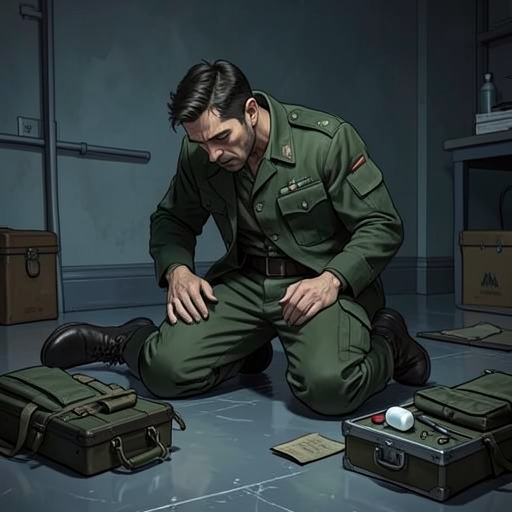
The bond is tested when Miles hides the seizures that followed his cryogenic revival. During a private meeting, Illyan gives him an opening to add something to his last report. Miles has come prepared to disclose his medical problem, but fears that speaking up will derail an anticipated assignment; he says nothing. The omission is not confined to that moment. Later, when urged to tell Illyan that the seizures may have been a consequence of his still-recovering condition, Miles argues that the explanation might once have helped, but that his actions toward Lieutenant Vorberg have made the situation harder to excuse. He even considers whether leaving the issue out of the mission report could keep Illyan from confronting it.
Illyan eventually receives the cryo-revival surgeon’s records, after delays caused by the Durona Group’s departure from Jackson's Whole and the dispersal of its records between Escobar and House Fell. What angers him most is not the seizures themselves but Miles’s concealment from the ImpSec physicians assessing his fitness for duty. The fleet surgeon’s independently obtained reports, including records kept in her cabin, support the conclusion that the deception was knowing. Illyan frames it as a betrayal of both the subordinates who relied on Miles and the superiors who trusted him, with Lieutenant Vorberg’s injury making the consequences concrete.
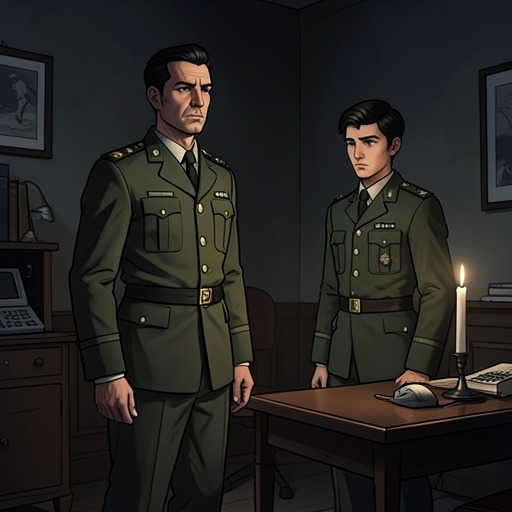
Miles answers by invoking his nine years of service, more than thirty missions, and record of risking his life. Illyan does not dismiss that history; he says it counts for much. But he offers Miles a medical discharge without prejudice if he resigns, judging that this is the best course for Miles and his name. The exchange turns accumulated loyalty into the reason for a painful decision, rather than a defense that can undo the breach. Miles resigns formally, while still shaking. Illyan gives him time to compose himself and wash before he leaves, an act of care that does not reverse the separation. When Miles hands over his service insignia, Illyan receives them with sorrow rather than triumph. Their trust has been damaged, but the scene does not reduce their history to a simple contest between victor and defeated subordinate.
A Foster-Uncle Bond
Miles’s later response to Illyan’s illness reveals how deeply the relationship extends beyond command. Before the collapse becomes public, Miles discusses four odd incidents from the preceding three days with Duv Galeni. In one, Illyan requests a digest Miles had already delivered; a secretary checks the office log, and the missing code card is found on Illyan’s desk. Miles initially sees such lapses as ordinary human errors. He also describes Illyan as a man of highly regular habits, with little apparent personal life, and considers whether stress, minor strokes, age, or the demands of a long career might explain the changes. At that point, he doubts the chip itself is responsible.
The emergency becomes undeniable during a department briefing. According to Galeni’s account, Illyan breaks a data card while fidgeting, then gives instructions whose individual sentences remain grammatical but no longer connect coherently. He seems unaware of the disarray until his colleagues’ reactions alert him; he then becomes angry and bewildered, and is shaking. Galeni recounts that Lucas Haroche urged him to seek medical evaluation. Miles’s concern shifts from interpreting small errors to fearing what the breakdown means for the person he knows.
When Gregor advises Miles to give Haroche time to take over Illyan’s duties, Miles accepts that Illyan would want security handled cautiously, but worries that no one appears equally focused on Illyan himself. His own post-cryo-revival amnesia gives him a point of comparison: he remembers the terror of losing his memories and sense of self, and feels that Illyan may now be lost among people who ought to be familiar to him. Gregor recognizes that Illyan has been a mentor. Miles confirms the relationship in family terms: he called him Uncle Simon until entering the Imperial Service Academy at eighteen, and afterward called him Sir. He describes Illyan as a foster uncle and his father’s retainer, making the crisis a family matter as well as an institutional one.
Loyalty After the Rupture
Miles’s loyalty becomes practical when he learns that Illyan has repeatedly asked for him during his hospitalization. Lieutenant Vorberg, assigned to Illyan from the first night, reports that Illyan babbles when awake or sedated, is often restrained, and seems to wander through different periods of history before intermittently returning to the present. During those intervals, he asks for Miles by name and complains that the young man has not been found. Miles recognizes the familiar manner behind the reported words, but has not previously been told that Illyan is asking for him.
Haroche blocks Miles from visiting twice and warns that he may have Miles stunned if he continues pressing. Miles asks Gregor to review the recording of his conversation with Haroche and argues that he has a right to see Illyan not as an ex-subordinate but as his father’s son. He describes the obligation as one that passes around ImpSec’s military hierarchy: professional separation does not cancel the family claim. His concern is not simply that he has been excluded. He fears that Illyan’s condition may resemble his own amnesia, and that Haroche is mishandling the crisis through inexperience or nerves. He also acknowledges the possibility of deliberate sabotage, without claiming to know that it has occurred.
The relationship therefore survives neither through unbroken trust nor through a tidy reconciliation. Miles once withheld essential information because he feared losing his service and the identity attached to it; Illyan responded by ending that service while preserving Miles’s dignity as far as he could. Later, when Illyan is the one who cannot reliably speak or act for himself, Miles’s sense of obligation persists. Their history makes the concern more than professional loyalty: the former commander is also the foster uncle who served Miles’s father, and the former subordinate considers it his responsibility to reach him.