Security Section
Mickey7The Security Section is the Niflheim colony’s armed perimeter force: its officers patrol the boundary of the human settlement, investigate incursions, and confront dangers that may exceed their weapons’ capabilities. Its work is defined by a stark mismatch between the small area humans occupy and the threats beyond it. The patrol system can register where teams have been, but it cannot make Niflheim habitable or ensure that an officer can save someone once an attack begins.
Role and Colonial Conditions
The section’s duties take place against the colony’s precarious conditions. Niflheim was expected to be habitable, but its snow, distant mountains, and difficult atmosphere make the world feel far removed from that promise. On patrol, Cat Chen describes walking the perimeter and being shredded by creepers as recognizable hazards of signing on for Security. Her anger is directed not simply at the danger but at the gap between the planet’s supposed suitability and the conditions officers actually face.
The colony’s dependence on dangerous human labor helps explain the stakes surrounding its defenses, though such work is not itself shown to be a Security Section function. A human body can endure some lethal exposures longer than a mech, and an Expendable is easier to replace on a beachhead than specialized machinery. That practical economy leaves people exposed to risks that remote equipment might otherwise take on. The Security Section operates within the same vulnerable settlement, where protection has to be maintained despite limited resources and the threat of lethal encounters.
Patrols and Field Operations
The perimeter patrol is organized around a kilometer-wide ring marking the human presence on the planet. Three teams are spaced equidistantly around it. Each team is expected to keep moving and circle the perimeter twice during a six-hour shift, walking in snowshoes from pylon to pylon. A pylon records the team’s presence and updates the officers’ oculars with the locations of the other teams. The system gives the patrol a shared account of position and coverage, making a scattered circuit legible across the colony’s boundary.
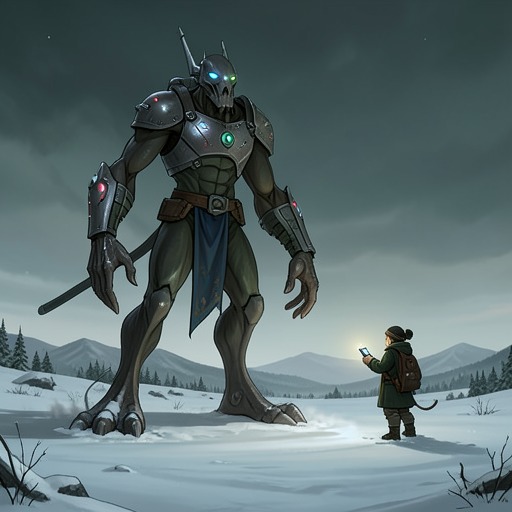
That routine is deliberately repetitive: the teams walk the same ring, pass the same markers, and check for signs of incursion. Yet the perimeter is not a wall that removes danger; it is a route along which officers may encounter it. During one patrol, Cat Chen spots a creeper and fires a Linear accelerator. Its front segments are destroyed in a burst of shrapnel, and its body drops into the snow. The weapon’s apparent effectiveness is immediately unsettled by the snow beginning to churn around a nearby rock. The encounter offers no assurance that one successful shot has ended the danger.
Weapons, Limits, and Decisions
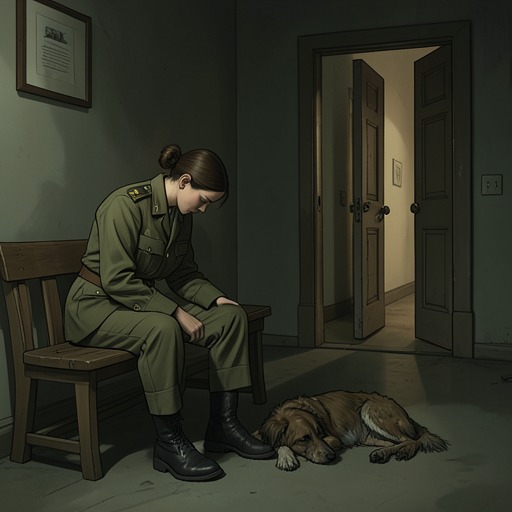
The account of Dugan’s attack shows the moral pressure created by the section’s limited ability to intervene. A Security officer explains that two fellow officers were her friends, but their weapons were not useful against the threat. She abandoned Dugan because she could see no way to help him and saw no point in feeding herself to the creatures as well. The decision is presented as a calculation under desperate conditions, not as indifference to her colleagues.
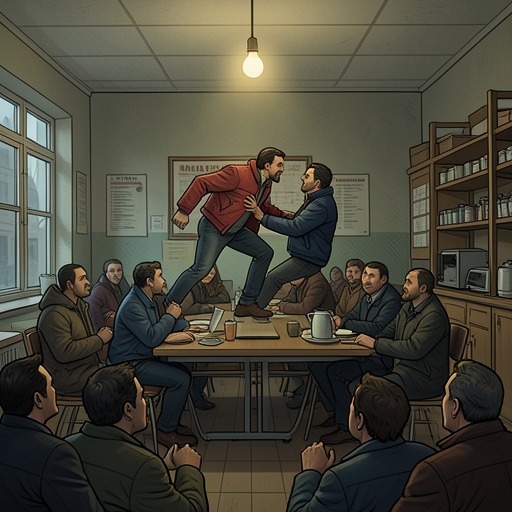
Marshall challenges that account by pointing out that Mickey Barnes had a weapon the officer could have taken. She acknowledges that possibility but says she would not have known how to use it effectively. A Linear accelerator is not a precision weapon: she might have blown off Dugan’s leg without saving him. The exchange exposes a gap between possessing a powerful weapon and being able to apply it usefully in a rescue. For Security, armed response does not automatically translate into control over events; officers must judge whether intervention can help before the threat takes more lives.
From Perimeter Defense to Wartime Security
The discovery that the creatures called creepers are not fully biological changes the scale of the section’s problem. After examining a specimen brought back from a hunt, the colony confirms that the creatures appear to be some kind of hybrid military technology. Their ability to damage the decking in the main lock had already raised suspicion; the specimen makes that suspicion a concrete security concern. Marshall announces that the colony is now on a war footing, placing earlier patrol encounters within the prospect of combat against hostile native sentients.
The organization’s position is therefore shaped by two connected uncertainties: how much protection its weapons can provide, and what kind of adversary the colony faces. The patrol pylons track human teams around a kilometer-wide perimeter, but the threat is not confined to what those teams can see or stop. A weapon that can disable a creeper’s front segments may still leave the surrounding snow in motion; a weapon available at an attack may still be unusable for a precise rescue. The Security Section’s work is both practical and constrained: it maintains a presence around the colony while the meaning of that presence shifts from routine watch to defense in a conflict the humans did not understand at first.